Drishyam: The Conclusion: A gripping game of perception, evidence and survival
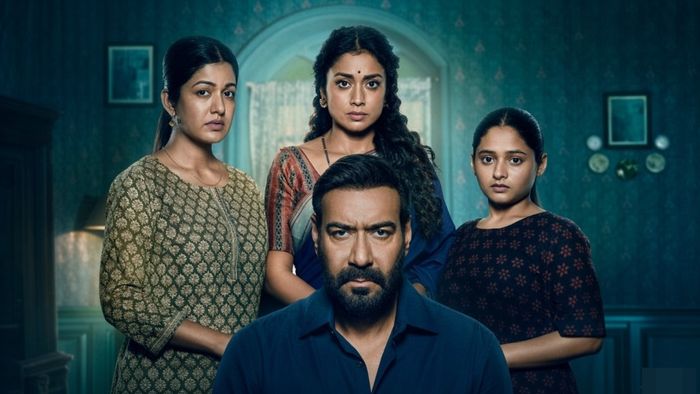
Drishyam: The Conclusion opens not with Vijay Salgaonkar and his family, but with the family on the other side of the tragedy, parents still struggling to come to terms with the death of their son. His mother remains trapped in a painful dilemma: what hurts more, the fact that her son no longer exists in this world, or the realisation that the world continues to function perfectly normally without him?
- Oct 03, 2026,
- Updated Oct 03, 2026, 10:12 PM IST
Drishyam: The Conclusion opens not with Vijay Salgaonkar and his family, but with the family on the other side of the tragedy, parents still struggling to come to terms with the death of their son. His mother remains trapped in a painful dilemma: what hurts more, the fact that her son no longer exists in this world, or the realisation that the world continues to function perfectly normally without him?
It is this quiet, unresolved grief that gives the film an emotionally heavy beginning.
While the bereaved family struggles to live with their loss, Vijay Salgaonkar and his family appear to be slowly moving forward, holding on to a new sense of hope. But barely ten minutes into the film, that fragile sense of normalcy is shattered when the case is reopened after investigators uncover a crucial piece of evidence that had previously been overlooked.
The film's central idea is summed up effectively by SP Crime Branch Rajveer Tomar, played by Jaideep Ahlawat: “The relation of blood often makes you miss the most evident evidence.”
Rajveer's arrival changes the entire dynamic of the story. He is introduced as an investigator who sees what ordinary eyes fail to notice. A cigarette is not merely a cigarette to him; it could contain DNA evidence capable of reopening an entire case. His ability to extract significance from seemingly insignificant details immediately establishes him as a formidable opponent.
Ahlawat brings an intimidating calmness to Rajveer. The character describes himself as the personification of Lord Shani, suggesting that the moment his gaze falls upon someone, their bad days begin. Yet what makes him interesting is that his confidence never turns into arrogance. He understands Vijay's intelligence and does not make the mistake of underestimating him.
And that is where Drishyam: The Conclusion finds its greatest strength.
The audience already knows what happened. The mystery, therefore, is not simply what happened, but how Vijay managed to make the world believe his version of events. The film builds itself around this idea of perception and manufactured reality.
As Vijay puts it, “It is not important whether whatever is told should really exist, but it is important to make people believe that it really exists.”
The line essentially becomes the philosophy of the film.
The narrative constantly plays with the difference between truth and what can be proven as truth. Vijay knows what happened, the audience knows what happened, and the investigators are desperately trying to discover what happened. The tension comes from watching each side construct its own version of reality.
With Rajveer Tomar entering the picture, the film transforms into a tense cat-and-mouse game. Every unresolved detail becomes a potential threat to Vijay and his family. Every seemingly insignificant decision from the past carries the possibility of coming back to haunt them.
The suspense lies in whether the burdens Vijay has left unattended will eventually become the very evidence that destroys the carefully constructed protection around his family.
The film also understands that the most compelling conflict is not always between good and evil, but between two people who are equally determined not to lose. Rajveer refuses to dismiss Vijay's intelligence, while Vijay knows that the man investigating him cannot be taken lightly.
That mutual recognition gives their confrontation its edge.
However, the film's strongest moments come when it trusts its central premise — that perception can sometimes become more powerful than truth.
How long can a story survive when someone is determined to uncover the truth behind it?
Drishyam: The Conclusion delivers a tense, tightly constructed continuation of Vijay Salgaonkar's battle with the system, while keeping the audience invested in the one thing the franchise has always understood best: the power of a convincing story.