Ha Lyngkha Bneng finds humour, grief and grace in a dying village
The future has arrived, but this village seems to exist outside its rush. In Ha Lyngkha Bneng, everyday lives unfold into a tender meditation on loss, humour and the meaning of home.
- Mar 10, 2026,
- Updated Mar 10, 2026, 5:59 PM IST
When was the last time a film made you laugh, made you ache, and then left you sitting quietly in your seat, wondering what exactly just happened to you? Pradip Kurbah's Ha Lyngkha Bneng does all three, sometimes within the same scene, and does it with a confidence that is almost unreasonable for a story this quiet.
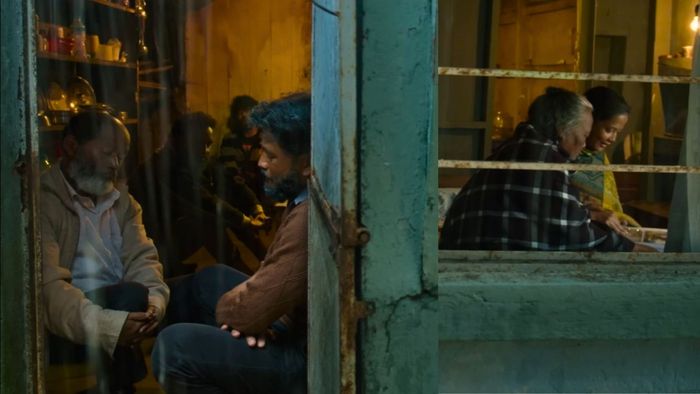
The setup is simple. It is 2047. A village in the East Khasi Hills has all but emptied out. People left for the city, or were asked to leave. Only six remain, in four households, in typically Khasi wooden homes that look like they've been holding the same memories for decades. India is out there somewhere celebrating a hundred years of independence. Here, the electricity still cuts out, the old wooden bus people call a "Bos Smit" is still the only way in and out, and someone occasionally makes the trip to Shillong and comes back with supplies, perhaps something from Mahari, and that is about as connected to the outside world as things get.
The film opens without dialogue for a full 22 minutes. No words at all. Just Livingstone arriving on that bus with a red bag around his neck and a coffin to carry home. The bag belonged to his wife, Belinda Sun. Her photograph sits in the house. He has brought her back to his village to bury her, and in a matrilineal Khasi society where a man traditionally lives in his wife's home, that single detail quietly opens up questions the film never spells out for you. The other men come to help carry the coffin. A choir drifts in from somewhere. And you realise, fairly quickly, that Kurbah is not going to hold your hand through any of this, and that this is entirely the right decision.
The six who remain are Complete, Livingstone, Friday, Promise, Miss Helen, and Maia. Anyone from Shillong will immediately clock the names: that very particular Khasi tradition of giving children wonderfully random English words as names, with total commitment. But watch how Kurbah uses them. Each name carries a weight the film lets you feel out for yourself. Miss Helen was once a schoolteacher. Her own son still addresses her as Miss Helen, not Mei, not mother. That one detail tells you more about their relationship than any amount of dialogue could.
There is a love triangle. There is grief. There is kiad being drunk in quantities that suggest it is doing a lot of emotional heavy lifting. There is the question of who will dig the graves when the men are gone, and whether the women can manage alone, and underneath all of it, a tenderness between these six people that is genuinely moving to watch. They sing together. They dance on ordinary days for no occasion. And when someone suggests the electricity problem be taken to the MLA, one man says he hasn't voted in ten years. Another says twenty. It gets a laugh from the audience. It's also not entirely a joke.
Then there is the yellow cap. There are no spoilers here. Just know that it produced the kind of laughter that was still rippling through the audience ten minutes after the scene had ended, the sudden helpless kind you don't see coming in a film like this.
This is what makes Ha Lyngkha Bneng worth watching. It is genuinely, stubbornly funny in places. It is also genuinely sad. It holds both without forcing either, which is far harder to pull off than it looks. The performances feel less like acting and more like people simply being, and the Khasi Hills are shot with an honesty that avoids postcard beauty while somehow being beautiful anyway. Light and darkness are handled with real care. Familiar landscapes carry unfamiliar weight.
There is a church at the centre of the village, empty and echoing, and a choir that appears at particular moments without explanation, like a grace that shows up whether it has been invited or not. There is a lot in this film that works that way, present and meaningful, without announcing itself.
Kurbah made this from observation and memory and was reportedly unsure whether Shillong audiences would follow it. They did, and then some. People found their own way into it, which is exactly how it should work. This is a film with enough layers that two people can walk out having watched the same story and understood entirely different things, and both be right.
The Elysian Fields in Greek mythology were not simply heaven. They were the afterlife reserved for those who had lived with honesty and endured with grace. Calling this film Ha Lyngkha Bneng is Kurbah's quiet argument that these six people, in this fading village, digging graves before they need them and worrying about who will be left to do the digging, are already there. Not because life is easy or beautiful or without loss. Because they have chosen, against every reasonable instinct, to remain. To stay with each other. To keep going.
That argument lands. See it for yourself.