Mirzapur: The Movie Review: The Throne Still Demands Blood
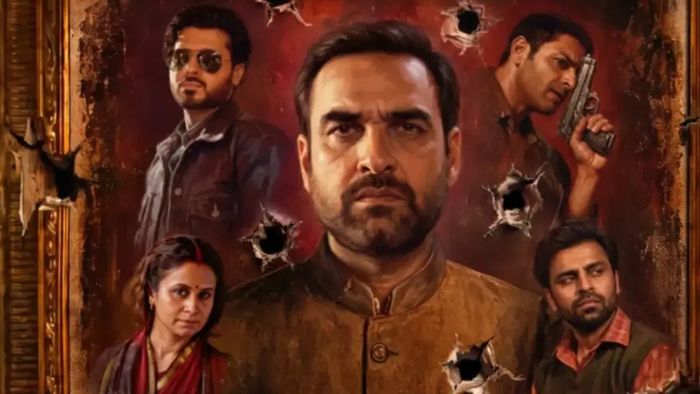
Mirzapur: The Movie returns to the fight for the gaddi with rival camps, new threats and an insider conspiracy. The film keeps the franchise's vicious energy intact while leaving the succession war open for another chapter.
- Sep 06, 2026,
- Updated Sep 06, 2026, 8:44 AM IST
The movie opens with the grand “Throne of Mirzapur” (Mirzapur ki Gaddi), and within the very first shot, the film establishes its most important truth: whoever sits on the throne is immediately marked for death. The power attached to the gaddi is immense, but so is the price of occupying it. Every pair of eyes is fixed on the throne, waiting for the slightest opportunity to claim it—and every character seems to be carrying their own version of vengeance.
That familiar sense of danger is what makes 'Mirzapur: The Movie' immediately recognisable to anyone who has followed the series. The characters retain much of what made them memorable, and the narrative moves with the same frantic energy that audiences have come to associate with the franchise. Yet, there is one glaring absence that is difficult to ignore: Vikrant Massey’s Bablu Pandit. His sincerity and understated intensity were an important part of the original series, and the void left by his absence is felt throughout the film.
Jitendra Kumar takes on the mantle of Bablu Pandit, but despite his efforts, he struggles to recreate the natural sincerity that Massey brought to the character. Bablu was never merely the intellectual counterpart to Guddu; he was the emotional and moral balance within the Pandit brothers. That chemistry is difficult to reproduce, and the film occasionally reminds us of what is missing.
Still, Mirzapur: The Movie understands the advantage of familiarity. The characters, their histories and their defining traits are already deeply established in the audience's mind. At first, this creates the impression that the film is heading towards a narrative we have seen before. But just when the familiarity begins to settle in, the film introduces new turns and nuances that keep the audience guessing.
At the centre of it all is the irony of the throne itself.
Kaleen Bhaiyya aka Akhandanand Tripathi may occupy the gaddi, but the question of succession remains unresolved. The obvious heir is his son, Munna Bhaiyya, yet Kaleen Bhaiyya himself cannot overlook his son's impulsiveness and recklessness. Munna's tragedy has always been that he desperately wants his father's approval but continually does things that push him further away from it.
Kaleen Bhaiyya's position is therefore both powerful and precarious. He may question Munna's intelligence, but bloodline remains an undeniable currency in Mirzapur. As he effectively makes clear, being the prince matters more than being the smartest person in the room. The gaddi belongs to the rightful heir—or at least that is what the old order dictates.
On the other side stand the Pandit brothers, who represent perhaps the most effective combination of strength and strategy. One possesses physical power, while the other brings intellectual sharpness. Together, they make the kind of duo any leader would want beside him. Guddu Pandit's equation with Sweety continues to form an important emotional thread, but as fans of the series know, love in Mirzapur has never been without consequences.
The film also introduces new players into this familiar universe, most notably Babban Yadav and his loyal associate Birju Lohar. Their presence expands the world beyond the conflicts audiences already know, giving the story a fresh threat while retaining the ruthless atmosphere of the original.
Perhaps one of the film's more interesting ideas is its treatment of death. Having watched several beloved characters meet brutal ends in the series, audiences enter the movie with a strange expectation—that the characters they remember might somehow get another chance.
But the biggest shift comes in identifying where the real danger lies.
In the series, threats often emerged from the outside before the audience gradually discovered the extent of the danger within the family. Mirzapur: The Movie reverses that dynamic. The enemy is already inside. The mole within the family is not a revelation waiting for the audience to discover much later; the conspiracy is already underway.
And that creates the film's central question: Will the family identify the traitor before it is too late?
When the story moves to Jaisalmer, the dynamics change again. Characters who have spent much of their lives fighting one another are suddenly forced to confront a larger threat. But Mirzapur has never been a story about easy alliances. Even when survival demands unity, distrust and ambition remain impossible to suppress.
The film consequently keeps asking whether these characters will unite against a common enemy—or destroy one another before they ever get the opportunity.
Ultimately, Mirzapur: The Movie feels less like a definitive conclusion and more like another chapter in the long-running battle for the gaddi. Because in Mirzapur, the throne has never really belonged to anyone.
It only belongs to the person who can survive long enough to claim it.
And with the film clearly stretching towards a sequel, the battle for the Mirzapur ki Gaddi is far from over.