Stranger Things final episode: Hawkins, the dice, and the 'End of Beginning'
It doesn’t end with a twist, a death, or a world-altering revelation—and that is precisely the point. Stranger Things chooses a far stranger way to say goodbye, one that quietly reframes everything the series was ever really about.
- Jan 01, 2026,
- Updated Jan 01, 2026, 9:09 PM IST
The lights dimmed. The familiar synth notes hummed. And on January 1, 2026, an era ended.
Stranger Things closed its nine-year journey with "The Rightside Up," a two-hour-and-eight-minute finale that prioritised emotional closure over shocking revelations. This wasn't the game-changing conclusion that would redefine television. Instead, it offered something more intimate—a farewell to Hawkins that felt like saying goodbye to childhood itself, delivered with sincerity even when the execution wavered.
The finale opens with immediate intensity. The final assault unfolds across multiple fronts—psychic battles waged in mental landscapes while physical preparations race against time. This is the culmination of five seasons, every character finally positioned to contribute their unique strength to the endgame. The visual design is striking, with otherworldly creatures and dimensional horror that justifies the theatrical release. When key confrontations arrive—when characters step up in unexpected ways, when split-second heroism redefines relationships—these moments carry genuine weight.
But then the emotional core of the finale reveals itself. After the major battle concludes, choices are made that shift everything. The Void—that endless dark space where deception is impossible—becomes the setting for the episode's most powerful sequence. What unfolds here will test viewers, exploring themes of sacrifice, love, and what we're willing to surrender to protect others.
The consequences ripple outward, leaving us to grapple with questions about survival's true cost.
An 18-month time jump follows, showing us where everyone lands. Characters find unexpected paths forward. Some discover purpose in surprising places, others reach relationship resolutions that feel bittersweet.
The weakest element remains the government conspiracy thread. Military antagonists feel more like narrative obstacles than fully realised threats, consuming screen time that could have deepened character moments. Certain fates remain frustratingly unclear when they deserve resolution.
The predictability proves disappointing. Stranger Things built its reputation on upending expectations, yet this finale follows a relatively straightforward path. The ending's shape becomes visible well before arrival. For a series that trained us to anticipate twists, this adherence to expected structure feels anticlimactic, even if the emotional beats still resonate.
Yet the Duffers understand their story's true foundation. This was always about connection—friendships forged through shared trauma, families chosen rather than given, young people discovering heroism they never sought.
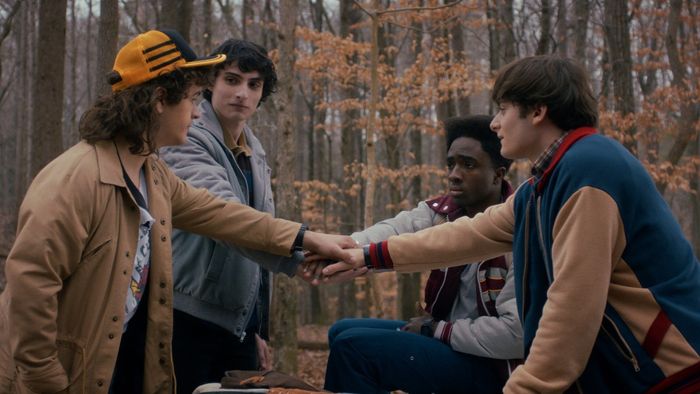
When Stranger Things premiered in 2016, it opened with children gathered around a basement table, rolling dice and imagining adventures. Mike served as Dungeon Master, crafting fantastical narratives where anything seemed possible. That session was interrupted by real-world horror—one of them vanishing into a nightmare dimension. The show's opening established belief as its central theme: in magic, in friendship, in the transformative power of shared imagination.
Nine years later, the finale returns us to that basement. To that table. To those dice. The group assembles for one final campaign, and Mike—still guiding the narrative, still maintaining faith—weaves a story that operates on multiple levels. What appears to be fantasy reveals deeper meaning about hope, survival, and connection. This circular structure proves elegant, bringing us full circle to where everything began. As the game's true purpose clarifies, we understand: this moment represents the real conclusion. Not the dimensional battles, but this—friends together, imagination alive, belief sustaining them.
Then new faces arrive, fresh character sheets and dice in hand, ready to begin their own adventures. The cycle perpetuates. Stories will continue. The legacy passes to the next generation in a moment both melancholic and optimistic.
The finale also introduces late-episode ambiguity that recontextualises what came before. A theory emerges, suggesting alternative interpretations of key events, offering hope where certainty seemed absolute. The Duffers deliberately leave this unresolved, allowing viewers to choose their own understanding. For a series centred on belief's power, this open-endedness works thematically, even if some will find it narratively frustrating.
Visually, the episode maintains high standards throughout. The alternate dimension has never appeared more fundamentally alien, more incompatible with our reality. Certain shots employ unconventional perspectives that heighten immediacy and tension. When impossible choices manifest, when heroism demands everything, the cinematography captures these moments without excessive dramatisation.
The finale succeeds in understanding Stranger Things' essential nature. This was never attempting to be prestige drama competing for critical acclaim. It sought to capture specific feelings—being young and frightened and courageous simultaneously, believing friends could save the world, maintaining hope against overwhelming darkness.
Did "The Rightside Up" deliver a satisfying conclusion? Largely yes, though imperfectly. This doesn't rank among the series's finest episodes—earlier installments balanced all elements more successfully. But it honours the journey, respects viewer investment, and demonstrates clarity about its priorities.
When credits rolled, accompanied by David Bowie's "Heroes," tears flowed. Not because of flawless execution, but because of finality. We'll never again experience discovering this world for the first time. These characters now exist in completed form, their stories concluded.
The series that began in 2016 with children rolling dice in a basement concluded in 2026 with children rolling dice in a basement. The circle completes. The story resolves. And somewhere, new adventurers gather around tables, imagining themselves as heroes, not yet realising they already are.
Thank you, Stranger Things. For this end of beginning.
"The Rightside Up" premiered January 1, 2026, at 6:30 am IST on Netflix, simultaneously with a limited theatrical release. Runtime: 2 hours, 8 minutes.