‘We want to be understood, not just showcased’: Nagaland filmmaker Theja Rio on ‘Angh’s’ Oscar journey
For Nagaland filmmaker Theja Rio, the journey of his Konyak-language film ‘Angh’ from the hills of Nagaland to the Toronto International Film Festival and now the Oscars is not just a personal milestone but an opportunity to help audiences understand the Northeast through its own stories.
- Oct 01, 2026,
- Updated Oct 01, 2026, 5:29 PM IST
For Nagaland filmmaker Theja Rio, the journey of his Konyak-language film ‘Angh’ from the hills of Nagaland to the Toronto International Film Festival and now the Oscars is not just a personal milestone but an opportunity to help audiences understand the Northeast through its own stories.
“We don't want to be just showcased, we want to be understood,” Rio, 31, told PTI in an interview, expressing hope that the film would encourage audiences to learn more about Naga culture and see the world from its perspective.
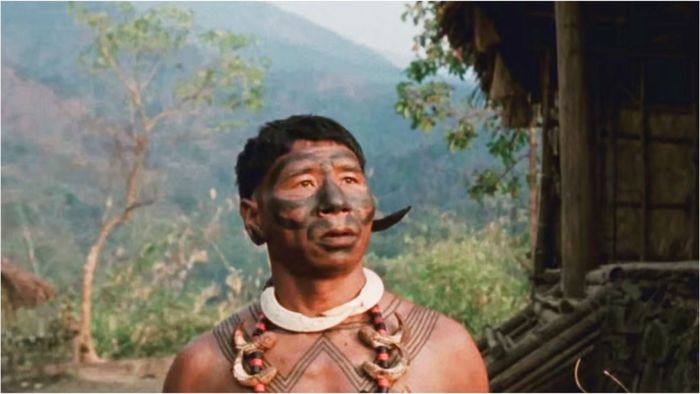
Set in Nagaland in the 1960s and shot on 16mm, Angh won the Platform Prize at the Toronto International Film Festival (TIFF), opening the way for the film to qualify for consideration in the Best International Feature category at the Oscars.
If selected, Angh would become India's second film in contention in the category this year after Marathi film Gondhal, which has been named India's official entry.
The 103-minute film follows Anghba, an ageing hereditary chief of a Konyak village, and his young son, as their community undergoes a major social and cultural transformation.
The father and son are among the last in their region to follow their ancestral faith as Christianity begins to spread. Their lives are further disrupted by the arrival of an American missionary, played by Scottish actor Douglas Henshall.
The Konyaks are one of Nagaland's 17 major tribes and are concentrated largely in Mon district, where traditional village chiefs are known as Anghs.
Rio said the film is deliberately told from the perspective of a Naga character and made by Naga people.
“Angh is told through the perspective of a subject and not that of an explorer,” he said, adding that films can provide audiences with an insight into a culture and its people.
From Nagaland to Toronto
Rio said winning at TIFF was an unexpected moment, despite his producers' confidence that the film would succeed.
“I had no idea that we were going to win... I had no expectations. My producers were more arrogant in that sense. They believed that we were going to win,” he said.
He described the announcement as “surreal”, saying that simply taking the film to Toronto had itself been a major achievement.
The Oscar journey, he said, is another opportunity the team intends to pursue seriously.
“We have been given the opportunity, so we will try our best to secure a nomination. We are also looking to release the movie here,” Rio said.
‘Industry that barely exists’
Rio pointed out that Nagaland has historically lacked a sustainable filmmaking ecosystem, with limited theatrical infrastructure.
“Angh comes from a film industry that barely exists and that is definitely not self-sufficient,” he said.
Growing up in Nagaland, Rio watched films primarily on television, later turning to pirated DVDs and illegal streaming services. His first theatrical experience came when he watched Peter Jackson's The Lord of the Rings: The Return of the King in Delhi at the age of seven.
That experience, he said, stayed with him and eventually inspired him to pursue filmmaking.
“Despite making films that are rooted in our culture, we have to look elsewhere for the audience and validation. That's where platforms like TIFF and all these film festivals play a role in getting us visibility,” he said.
Rio also pointed to filmmakers from the Northeast, including Pradip Kurbah, Rima Das and Lakshmi Priya Devi, who have found recognition at major international film festivals.
He expressed hope that the success of Angh would encourage more filmmakers from Nagaland and the wider Northeast.
Why the 1960s?
Rio travelled to Mon district in 2016 while researching another project and was drawn to the region's unique cultural landscape.
“It's such a beautiful world where it almost feels like the past and the present coexist together,” he said.
He recalled seeing stark generational contrasts, with older people carrying traditional tattoos and younger generations embracing contemporary lifestyles, including rock music.
Rio chose the 1960s because Nagaland was undergoing a particularly rapid transformation during that period.
“We've gone from being former headhunters and being very traditional to becoming, very quickly, culturally and lifestyle-wise, gentrified into the modern day that we live in today,” he said.
He wanted the film to capture that transition at its peak.
‘I’m interested in conflict’
Despite the film's focus on the spread of Christianity, Rio said he did not want Angh to be viewed as an anti-Christianity film.
He said he tries to maintain neutrality in his writing and prefers stories that explore subjects about which he himself has conflicting thoughts.
“I like to write about things that I'm conflicted about. I'm not really interested in making films about things I'm sure about,” he said.
Rio said certainty could make it easier for a film to become an “agenda” or “propaganda”.
In Angh, the traditional chief and the American missionary are both deeply convinced of their respective beliefs, creating the central conflict of the story.
“These are two worlds coming and colliding, and that's where the conflict arises, and I'm interested in those,” he said.
For Rio, the larger question facing Nagaland is how communities negotiate the tension between preserving traditions and embracing change.
“We're still dealing with the hangovers of the change that has happened, but it's the conflict of what to let go and what to hold on to,” he said.
Angh is produced by Nancy Nisa Beso and Rio and features an indigenous Naga cast alongside Henshall, who won a BAFTA for his role in the television series Shetland.