3.3-mm wasp discovered in Assam's Dibru-Saikhowa, first of its genus found in India
A tiny parasitic wasp discovered in Assam's Dibru-Saikhowa National Park has added a new chapter to India's insect biodiversity, with scientists formally describing a new species and recording its genus in the country for the first time.
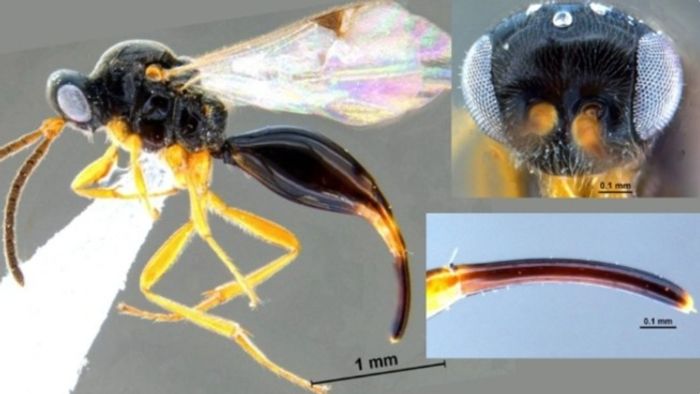
- Sep 25, 2026,
- Updated Sep 25, 2026, 7:05 PM IST
A tiny parasitic wasp discovered in Assam's Dibru-Saikhowa National Park has added a new chapter to India's insect biodiversity, with scientists formally describing a new species and recording its genus in the country for the first time.
Named Oxyserphus narendrani, the species was described by Zoological Survey of India (ZSI) researchers Rupam Debnath and K. Rajmohana. Their study, published in September 2026, records the first occurrence of the genus Oxyserphus in India and the first formally described species of the genus from the Oriental biogeographic region.
Measuring just around 3.3 mm, the wasp was collected in November 2024 using a yellow pan trap, a water-filled device commonly used by entomologists to sample flying insects.
Detailed microscopic examination subsequently established that the specimen represented a previously undescribed species.
One of the key features distinguishing Oxyserphus narendrani is a single horizontal groove on the side of its thorax. In comparison, the closely related Australian species Oxyserphus sulcatus has six to seven fine, radiating grooves in the corresponding area.
The newly described species also has a shorter ovipositor sheath and a distinctive wing spot, further helping researchers differentiate it from related species.
The species has been named in honour of the late Dr T. C. Narendran, whose work contributed significantly to the taxonomy of parasitic wasps in India.
Researchers noted that members of the Oxyserphus genus are extremely rare in insect collections and have generally been associated with high-altitude habitats. Its discovery in the lowland ecosystem of Dibru-Saikhowa therefore adds particular significance to the finding.
Tinsukia's hidden biodiversity
The discovery also draws attention to the largely unexplored diversity of smaller organisms inhabiting Tinsukia, Assam's easternmost district.
Dibru-Saikhowa's landscape comprises riverine forests, wetlands, grasslands and river islands, creating a mosaic of habitats that supports a wide range of species. The region also forms part of Assam's biodiversity-rich eastern frontier adjoining Arunachal Pradesh and the eastern Himalayan foothills.
Much of the biodiversity in these ecosystems remains difficult to document, particularly organisms that are small, elusive or poorly studied.
The discovery of Oxyserphus narendrani illustrates how scientific exploration can continue to reveal new species even in landscapes already recognised for their rich wildlife.
Before this finding, researchers noted that only eight species of the family Proctotrupidae were known from India.
Spread across Tinsukia and Dibrugarh districts, Dibru-Saikhowa is known for its forests, wetlands, grasslands and rich bird diversity. The area was designated a Biosphere Reserve in 1997 and became a national park in 1999.
The discovery of the 3.3-mm wasp underscores a broader point about biodiversity in eastern Assam: the region's ecological richness extends far beyond the larger and more visible species that typically attract attention.
Amid the forests, wetlands and riverine habitats of Dibru-Saikhowa, scientists may still have many more species to document.