Assam fossil discovery reveals Kevda plant has survived in India for 24 million years
A remarkable fossil discovery in Assam's Makum Coalfield has revealed that the Kevda plant, famed for its fragrant kewra essence used in sweets, perfumes, traditional medicine and religious rituals, has existed in the Indian subcontinent for at least 24 million years, making it a living survivor of India's ancient tropical forests.
- Jul 20, 2026,
- Updated Jul 20, 2026, 7:37 PM IST
A remarkable fossil discovery in Assam's Makum Coalfield has revealed that the Kevda plant, famed for its fragrant kewra essence used in sweets, perfumes, traditional medicine and religious rituals, has existed in the Indian subcontinent for at least 24 million years, making it a living survivor of India's ancient tropical forests.
The discovery, made by scientists from the Birbal Sahni Institute of Palaeosciences (BSIP), Lucknow, sheds new light on India's role as a refuge for ancient plant species and offers fresh insights into how tropical biodiversity evolved amid global climate change.
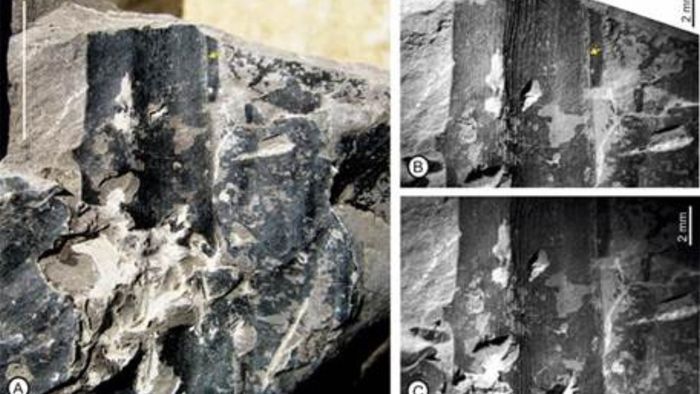
Researchers Harshita Bhatia and Gaurav Srivastava unearthed four well-preserved fossil leaves from the Tikak Parbat Formation in the Makum Coalfield of Assam. Detailed morphological and microscopic analyses showed the fossils closely resemble modern Kevda (Pandanus), with distinctive long sword-shaped leaves, parallel veins and characteristic prickles along the margins.
The team compared the fossils with modern Kevda specimens preserved in herbaria and botanical databases, as well as fossil records from across the world. Their findings confirmed that the fossils belong to the Pandanaceae family, indicating that this ancient plant lineage was already established in India millions of years before humans appeared on Earth.
Published in the journal Geobios, the study bridges a significant gap in the evolutionary history of the Pandanaceae family by linking fossil records from Europe and North America dating back 85–66 million years with younger records from tropical Asia and Australia.
Scientists noted that while Pandanus is now largely confined to tropical and subtropical regions, its ancestors were once widespread across the Northern Hemisphere. As the Earth's climate cooled around 34 million years ago, the plant gradually disappeared from Europe and North America but survived in tropical regions such as India.
The Assam fossils suggest that the Indian subcontinent served as a crucial refuge where this ancient lineage persisted while vanishing from much of the rest of the world.
Researchers said the discovery enhances understanding of the evolution of tropical plant life, the development of India's biodiversity, and how ancient ecosystems responded to climatic shifts. The findings could also help scientists better predict how modern ecosystems may respond to future climate change.