Himanta highlights human-gibbon bond as Assam’s forest gem faces habitat crisis
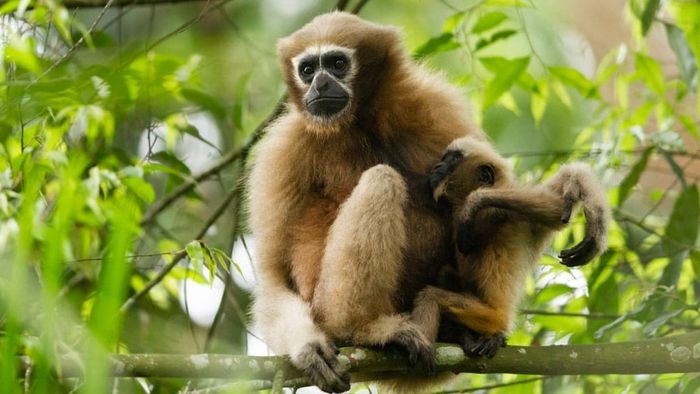
Assam Chief Minister Himanta Biswa Sarma on April 29 highlighted the close relationship between local communities and the endangered hoolock gibbon, even as concerns grow over shrinking habitats and threats to the species’ survival.
- Apr 29, 2026,
- Updated Apr 29, 2026, 10:28 PM IST
Assam Chief Minister Himanta Biswa Sarma on April 29 highlighted the close relationship between local communities and the endangered hoolock gibbon, even as concerns grow over shrinking habitats and threats to the species’ survival.
In a post on X, the Chief Minister praised the affection shown by people towards the primate, describing it as a symbol of Assam’s deep respect for nature and wildlife.
“Heartwarming to see how our people treat the hoolock gibbon, Assam’s forest gem, as part of the family. This beautiful bond, where a family calls and feeds them with such warmth, reflects our deep-rooted respect for nature and wildlife,” Sarma wrote.
The hoolock gibbon, India’s only ape species, is found in fragmented forest areas across Assam and other parts of the Northeast. Important habitats in Assam include Tinsukia’s Barekuri forest, Hollongapar Gibbon Sanctuary, and forest tracts in Karbi Anglong and Barak Valley.
Wildlife experts estimate that around 7,000 hoolock gibbons remain in Assam, making the state one of the most significant strongholds for the species.
Barekuri is often cited as a rare example of successful coexistence, where villagers have informally protected gibbons for decades and treated them as part of the community.
However, conservationists warn that the species faces mounting threats from habitat fragmentation caused by deforestation, encroachment, oil exploration and infrastructure development.
As arboreal primates, hoolock gibbons depend entirely on continuous forest canopy for movement. Breaks in tree cover often force them to descend to the ground, exposing them to predators and other dangers.
Experts also point to declining food sources due to the loss of fruit-bearing trees, electrocution from power lines and occasional hunting pressures.
They stress that restoring forest connectivity, expanding habitat protection and strengthening community-led conservation efforts will be vital to ensuring the long-term survival of Assam’s iconic “forest gem.”