Ayatollah Alireza Arafi named interim Supreme Leader after Khamenei killed in US-Israeli strike
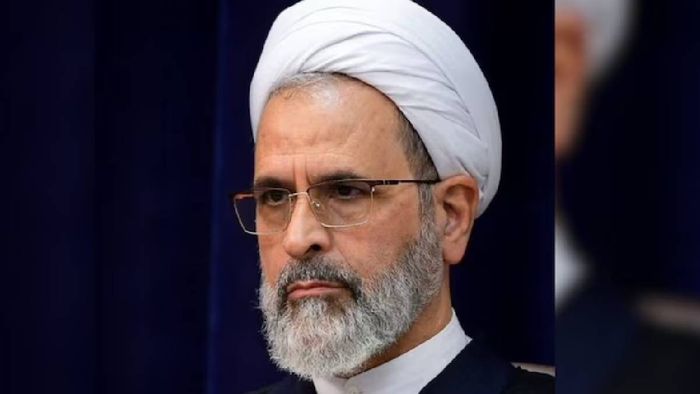
Iran has invoked its constitutional emergency provisions following the killing of Supreme Leader Ayatollah Ali Khamenei in a reported joint US-Israeli airstrike on Tehran. Senior cleric Ayatollah Alireza Arafi has been appointed as the jurist member of a three-man interim leadership council, effectively positioning him as Iran’s acting Supreme Leader during a period of extraordinary national crisis, according to state-linked media reports.
- Mar 01, 2026,
- Updated Mar 01, 2026, 4:56 PM IST
Iran has invoked its constitutional emergency provisions following the killing of Supreme Leader Ayatollah Ali Khamenei in a reported joint US-Israeli airstrike on Tehran. Senior cleric Ayatollah Alireza Arafi has been appointed as the jurist member of a three-man interim leadership council, effectively positioning him as Iran’s acting Supreme Leader during a period of extraordinary national crisis, according to state-linked media reports.
The development marks the first time since the establishment of the Islamic Republic that Article 111 of the Constitution has been activated under such circumstances, transferring the Supreme Leader’s sweeping powers to a temporary collective authority.
Following Khamenei’s assassination, Iranian authorities activated Article 111, which provides for an emergency arrangement in the event of the Supreme Leader’s death or incapacitation. Under this provision, a three-member council assumes the full constitutional powers of the Supreme Leader until the Assembly of Experts appoints a permanent successor.
Arafi’s appointment as the clerical jurist from the Guardian Council completes the interim body. He will jointly exercise supreme authority alongside President Masoud Pezeshkian and Chief Justice Gholam-Hossein Mohseni-Eje’i.
While authority is technically shared among the trio, Arafi—being the only senior cleric in the group within a political system traditionally led by a religious Supreme Leader—is expected to emerge as the dominant figure in the transitional leadership.
Born in 1959, the 67-year-old Arafi is a prominent figure in Iran’s clerical establishment. Before assuming his interim leadership role, he headed Iran’s national network of Islamic seminaries, served as a clerical member of the Guardian Council, and was part of the Assembly of Experts—the powerful body responsible for selecting and supervising the Supreme Leader.
His elevation comes at a moment of acute geopolitical tension and internal uncertainty, as Iran navigates both a leadership vacuum and escalating confrontation with external adversaries.
The crisis has extended into Iran’s powerful military establishment. The Islamic Revolutionary Guard Corps (IRGC) confirmed that its commander-in-chief, Mohammad Pakpour, was killed in the same wave of strikes.
In a swift move to stabilize command structures, Iranian state media announced the appointment of Ahmad Vahidi as the new IRGC chief.
The IRGC remains one of Iran’s most influential institutions, wielding significant military, political and economic power while operating parallel to the country’s regular armed forces. Any shift in its leadership carries profound implications for domestic stability and regional security.
Khamenei’s death ends a decades-long tenure that defined Iran’s ideological direction, foreign policy posture and internal power balance. The activation of Article 111 and the emergence of a collective leadership model signal a critical transitional phase for the Islamic Republic.