Indonesia rocked by third earthquake in hours, death toll from 7.7 quake hits 38
Indonesia was struck by a third earthquake within hours as rescue teams responded to the deadly 7.7-magnitude Flores quake. The fresh tremors, damage, power cuts and evacuations have complicated relief efforts across East Nusa Tenggara.
- Aug 16, 2026,
- Updated Aug 16, 2026, 8:33 AM IST
Indonesia was hit by a third earthquake within hours on August 15 as authorities continued rescue and relief operations following a powerful quake that killed at least 38 people and triggered a tsunami warning.
The latest earthquake, measuring 6.0 in magnitude, struck the Gulf of Tomini at 9.55 pm IST on Saturday, according to the National Centre for Seismology (NCS). The quake occurred at a depth of 68 kilometres, with its epicentre located at 0.174°N latitude and 120.312°E longitude.
The tremor came hours after a magnitude 6.5 earthquake struck Indonesia on Saturday afternoon. Earlier in the day, a stronger 7.7-magnitude earthquake hit the Flores region, leaving at least 38 people dead and prompting a tsunami warning.
Indonesian National Disaster Mitigation Agency chief Suharyanto said 38 people had been confirmed dead, while two people suffered serious injuries and 11 sustained minor injuries. Around 2,000 people had evacuated their homes on their own.
The earlier earthquake struck at around 5.58 am local time, with its epicentre about 68 kilometres north-northwest of Ende city in East Nusa Tenggara province, according to the US Geological Survey.
Several aftershocks were reported following the main quake, while rescue teams continued searching for two villagers believed to be trapped under mud after a landslide.
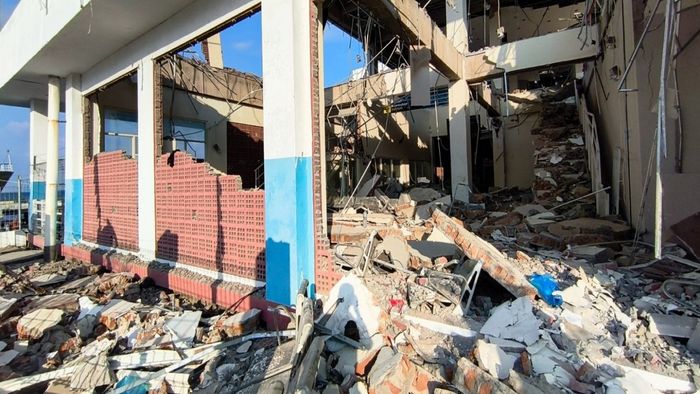
The earthquake also caused severe damage and brought down buildings, according to East Nusa Tenggara Police Chief Rudi Darmoko. Power outages across towns and villages disrupted communications and made rescue operations more difficult.
Authorities have deployed a helicopter to support emergency operations, including the movement of supplies and potential evacuations. The air operation is particularly important in East Nusa Tenggara, an archipelago where travel between affected areas can be difficult.
Around 2,000 villagers in Nagekeo regency also left their homes and moved to temporary shelters as authorities assessed the damage and continued relief efforts.