Nepal flood death toll rises to 165 as hundreds remain missing
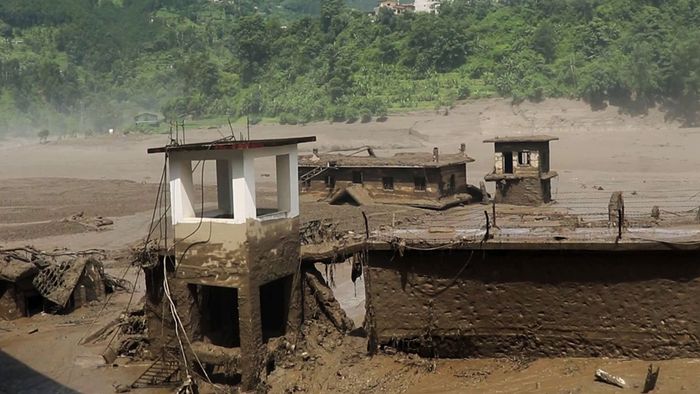
A debris-laden flood swept through Nepal's Rasuwa district, killing 165 and leaving hundreds missing. The disaster has crippled bridges, roads and utilities as rescue teams race to reach survivors.
- Aug 27, 2026,
- Updated Aug 27, 2026, 10:35 AM IST
The death toll from the Bhote Koshi flood in Nepal’s Rasuwa district has risen to 165, with authorities continuing efforts to identify the bodies recovered from the disaster-hit areas, the National Disaster Risk Reduction and Management Authority (NDRRMA) said.
The NDRRMA said 44 Nepal Army personnel, 28 Nepal Police personnel and 13 Armed Police Force personnel deployed in the affected areas and at various police posts remain missing and out of contact.
Preliminary figures from the Nepal Tourism Board indicate that 579 people, including 466 foreign nationals and 113 Nepali citizens, are missing from the affected area.
Rescue operations have so far evacuated 123 people by air from Timure in Rasuwa. They include 94 Nepali citizens and 29 foreign nationals.
The flood has caused extensive damage to infrastructure, affecting 35 motorable bridges, 45 suspension bridges and around 40 kilometres of paved roads. Authorities said detailed assessments of the human and material losses are still underway.
The disaster occurred at around 8.40 am on Wednesday when a major debris-laden flood swept through Lhende Khola following what authorities described as a glacier or ice-rock collapse about 20 kilometres north-east of the Rasuwagadhi border point along the Nepal-China frontier.
The flood entered the Bhote Koshi River from the Tibet side and moved through Rasuwagadhi, Timure and Syaphru Besi before joining the Trishuli River. The flooding has created a critical situation along the Trishuli river corridor across Rasuwa, Nuwakot, Dhading, Gorkha and Chitwan districts.
The Nepal Army and private operators have deployed helicopters to step up search and rescue operations in Rasuwa and Nuwakot.
Medical teams from Nuwakot District Hospital, the Nepal Army, Nepal Police, Armed Police Force, National Trauma Center, Bir Hospital and Tribhuvan University Teaching Hospital have also been sent to treat those injured in the disaster.
Temporary shelters have been set up, while food, drinking water and medicines are being provided to affected people at nearby Nepal Army barracks.
Rescue and treatment of the injured, locating missing people, maintaining security and distributing relief remain the immediate priorities. Authorities are also collecting detailed damage reports and working to restore roads, bridges, hydropower facilities, communication networks and water supply systems.
Efforts are under way to clear blocked routes and begin reconstruction of damaged infrastructure, while displaced families are being moved to safer locations.