Power, succession, and stability: Assessing Iran’s post Khamenei landscape
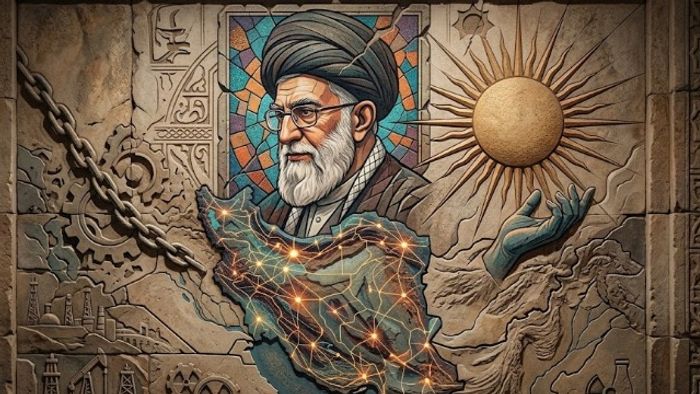
Khamenei’s leadership, which spanned nearly 37 years, saw Iran evolve into a central actor in regional conflict, a sustained adversary of the United States and Israel, and a steward of an ambitious nuclear programme that has been the focus of intense international attention and contention.
- Mar 02, 2026,
- Updated Mar 02, 2026, 5:37 PM IST
On February 28, 2026, reports emerged that Ayatollah Ali Khamenei, the Supreme Leader of the Islamic Republic of Iran since 1989, was killed during coordinated military strikes by the United States and Israel targeting Iranian leadership and nuclear infrastructure. President Donald Trump confirmed Khamenei’s death, describing it as the culmination of long-standing tensions with Tehran. Iranian state media shortly thereafter also confirmed his death, marking an extraordinary turning point in Middle Eastern geopolitics and global power balances.
Khamenei’s leadership, which spanned nearly 37 years, saw Iran evolve into a central actor in regional conflict, a sustained adversary of the United States and Israel, and a steward of an ambitious nuclear programme that has been the focus of intense international attention and contention.
Who Was Ayatollah Ali Khamenei?
Born in 1939 in Mashhad, Iran, Ayatollah Ali Khamenei rose through the ranks of the clerical establishment after the 1979 Iranian Revolution, which overthrew the Shah of Iran and established the Islamic Republic. He served as president of Iran during the 1980s before being appointed Supreme Leader in 1989 following the death of Ayatollah Ruhollah Khomeini, the architect of the revolution.
As Supreme Leader, Khamenei held ultimate authority over all branches of the Iranian state, including the military, judiciary, and media and exercised control over foreign policy, national security, and the Revolutionary Guards (IRGC), the powerful elite force that became a pillar of his rule. His tenure was defined by:
• Hardline ideological governance, prioritising political survival above reforms.
• Suppression of dissent and repeated violent crackdowns on domestic protests.
• The expansion of Iran’s strategic influence across the Middle East through proxy groups such as Hezbollah, Iraqi militias, and the Houthis in Yemen.
• Enduring opposition to Washington and Israel.
Under Khamenei’s leadership, Iran pursued a policy of resistance to Western influence, often described as the “Axis of Resistance,” extending reaches from Lebanon to Iraq, Syria, and beyond.
The Iranian Nuclear Programme
Iran’s nuclear programme has long been central to global anxieties about proliferation and regional security. Historically, Iran pursued nuclear technology under the umbrella of peaceful energy production, but suspicions of potential weaponisation have driven diplomatic crises for decades.
Key Phases:
1970s–2000s:
Iran’s nuclear activities began in the late 1950s, and after years of expansion and covert efforts, facilities like Natanz and Fordow became internationally known. Western intelligence accused Iran of seeking enrichment technologies potentially capable of weapons production.
2015 JCPOA:
Iran agreed to curbs on its nuclear work under the Joint Comprehensive Plan of Action (JCPOA), limiting uranium enrichment levels and stockpiles in exchange for sanctions relief. Khamenei supported the deal publicly, though with caution toward Western intentions.
2018–2020:
The Trump administration withdrew the U.S. from the JCPOA and reimposed punitive sanctions, undercutting diplomatic cooperation. Iran responded by incrementally expanding enrichment beyond the limits set by the agreement, including levels up to 60% purification, close to weapons-grade thresholds.
2020s tensions and attacks:
Israeli and U.S. strikes in 2025 damaged parts of Iran’s nuclear infrastructure amid continued international concerns about Tehran’s potential to break out toward weapons capabilities.
Notably, U.S. intelligence maintained that Iran had not officially restarted a weapons programme after its suspension in 2003, but enrichment activities at high levels remained a flashpoint.
The future of Iran’s nuclear ambitions now depends heavily on the path Iran’s post-Khamenei leadership chooses — whether to de-escalate, re-enter negotiations, or take a more confrontational stance that could trigger fresh sanctions, diplomatic ruptures, or even new conflict.
Iran’s Oil and Gas: Strategic Economic Weight
Iran is a global energy powerhouse with vast fossil fuel resources that anchor its economic and geopolitical weight:
• Proven oil reserves: Iran holds around 10–12% of the world’s total, ranking among the largest reserves globally.
• Gas reserves: It possesses the world’s second-largest natural gas reserves, crucial to domestic energy and export potential.
• Despite sanctions, Iran’s oil exports have continued, often through shadow or covert markets, with China as the dominant buyer.
Iran’s petroleum industry not only drives its domestic economy but serves as a vital component in global energy markets. Oil exports represent significant foreign currency revenue, and any major disruption, such as instability near the Strait of Hormuz — could dramatically affect global supply routes. Approximately 20% of the world’s oil transit passes through this narrow waterway, meaning instability in the Gulf has historically triggered price shocks.
Indeed, the recent military offensive and fears of constrained shipments drove Brent crude prices up sharply, with analysts warning that a protracted conflict or direct blockage of export routes could send oil prices well above $100 per barrel, exacerbating inflation and economic stress worldwide.
Immediate Regional and Global Implications
The reported elimination of Iran’s Supreme Leader has triggered a complex set of immediate consequences and longer-term global considerations:
1. Power Vacuum and Succession Crisis
With Khamenei’s death confirmed, Iran has entered a constitutional and political leadership crisis, implementing temporary governance measures while political factions jockey for influence. The Assembly of Experts, a clerical body, will select his successor, but internal divisions, particularly between hardliners and pragmatists, risk intensifying instability.
Analyses suggest that in such periods of leader transition, Iran’s decision-making could become more aggressive or fragmented, increasing the risk of retaliation, proxy escalations, and unpredictable foreign policy moves.
2. Regional Conflict Escalation
Iran’s allies and proxy networks, from Hezbollah in Lebanon to militias in Iraq and Yemen’s Houthis may be emboldened or compelled to act against U.S., Israeli, or allied interests. Already, missile and drone strikes have been reported targeting coalition forces in the Gulf and neighboring regions, underscoring the broader potential for conflagration.
This dynamic could pull in regional powers such as Saudi Arabia, the UAE, and even distant partners like Russia or China, complicating efforts at de-escalation.
3. Global Energy Market Volatility
Beyond the direct economic effects of higher oil prices, a sustained disruption in Middle Eastern stability threatens global energy security. In response to fears of supply shortages, OPEC+ nations are considering increasing output to buffer markets — a move that echoes earlier contingency plans ahead of the 2026 strikes.
Even without physical infrastructure damage, fear alone often drives commodity price volatility, creating ripple effects across inflation-sensitive sectors from transportation to manufacturing.
4. Nuclear Diplomacy and Proliferation Risks
Khamenei’s death removes a central figure in decades-long nuclear negotiations. His successor’s stance — whether toward compromise with international oversight or toward unchecked enrichment — will significantly shape future arms control efforts.
A more hardline successor could reject renewed talks, potentially accelerating enrichment and raising international tensions to new heights. Conversely, a pragmatic leadership faction could view negotiations as a path to easing sanctions and restoring economic stability.
5. Broader Geopolitical Shifts
Iran’s removal as a single, long-standing figurehead reshapes calculations for many global actors:
• The U.S. and Europe may grapple with balancing containment with diplomatic engagement.
• China and Russia may see openings to deepen partnerships if Western influence wanes.
• Middle Eastern states could recalibrate alliances or pursue regional security architectures outside the shadow of Iranian power.
Conclusion
The death of Ayatollah Ali Khamenei marks a watershed moment in contemporary geopolitics, with wide-ranging implications for Middle Eastern stability, global energy markets, nuclear proliferation concerns, and the international system at large.
While the long-term outcomes remain uncertain and heavily contingent on internal Iranian politics and regional responses, it is clear that this moment, the abrupt removal of a leader whose influence spanned generations, could usher in a period of significant transformation, disruption, and unpredictability for both Iran and the world.