Rapper-turned-politician Balen Shah sworn in as Nepal’s youngest Prime Minister
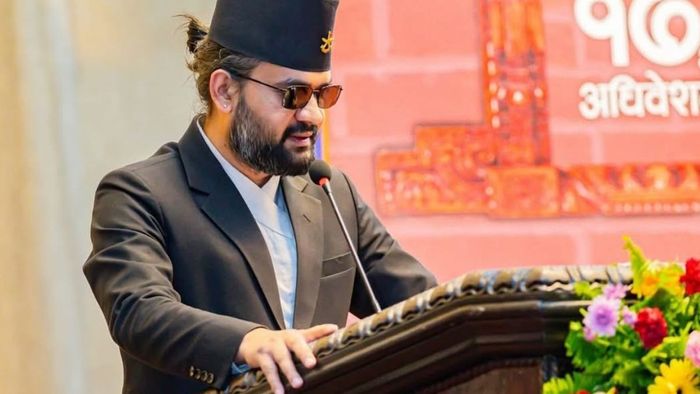
Balendra Shah, a rapper-turned-politician, was sworn in as Nepal’s prime minister on Friday, marking a significant political shift nearly six months after the fall of the K P Sharma Oli-led government amid widespread youth protests.
- Mar 27, 2026,
- Updated Mar 27, 2026, 12:54 PM IST
Balendra Shah, a rapper-turned-politician, was sworn in as Nepal’s prime minister on Friday, marking a significant political shift nearly six months after the fall of the K P Sharma Oli-led government amid widespread youth protests.
The 35-year-old leader of the Rastriya Swatantra Party took the oath of office at the President’s Office in Sheetal Niwas at 12.34 pm. He becomes the youngest prime minister in Nepal’s history and the first from the Madhes region to hold the post.
President Ram Chandra Paudel appointed Shah as the country’s 47th prime minister under Article 76(1) of the constitution earlier in the day, following his party’s decisive electoral victory.
His swearing-in follows months of political instability triggered by Gen Z-led protests against corruption, nepotism and restrictions on social media. The demonstrations, which escalated into violence, led to the removal of the previous coalition government in September last year.
The ceremony combined Hindu and Buddhist traditions, featuring conch blowing by seven Brahmins, Vedic recitations by 108 young priests, and Buddhist chants by 107 Lamas, reflecting Nepal’s cultural diversity.
Shah is expected to lead a compact cabinet of 15 to 18 ministers, according to sources, signalling a possible focus on streamlined governance.
The political transition was cemented after the March 5 general election, where Shah defeated Oli in Jhapa-5, a long-time stronghold of the Communist Party of Nepal (Unified Marxist-Leninist). His party secured 182 out of 275 seats in the House of Representatives, comfortably crossing the majority mark.
Traditional parties suffered major losses, with the Nepali Congress winning 38 seats and the CPN-UML reduced to 25. The Nepali Communist Party secured just 17 seats.
Following Oli’s ouster, former chief justice Sushila Karki had been serving as interim prime minister on the recommendation of protest groups.
Earlier on Friday, newly elected members of the House of Representatives, including Shah, were sworn in at the federal parliament, formally initiating the process of government formation weeks after the election results were declared.