’Dancing With Joy’: A memoir of a dancer’s cancer-defying journey
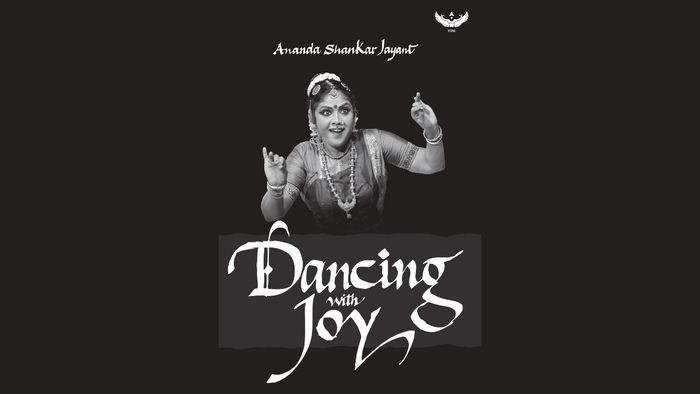
In Dancing with Joy, Ananda Shankar Jayant traces her journey from Bharatanatyam prodigy to breast cancer survivor. The memoir shows how dance, discipline and self-belief carried her through illness and public life.
- Sep 02, 2026,
- Updated Sep 02, 2026, 12:59 PM IST
“…Losing almost all hair is a given during chemotherapy…when I actually saw clumps of hair just falling off, I was devastated. We were still a little more than ten days away from the show, and I had wanted to perform this programme with my own hair. With the rate of hair fall, I felt that it would not last another ten days…”
There is something arresting about the fact that, amid everything cancer was taking from her, Dr Ananda Shankar Jayant was still thinking about the stage. Not because she had forgotten what was happening to her, but because she knew exactly who she was.
That clarity runs through ‘Dancing with Joy’.
“Dancer is better than Cancer!” – one of the opening lines, sets the entire rhythm of the memoir, which reverberates with the dancer’s meaning of life.
The book stands as an ode to her “unconventional life journey” and is bound to inspire many who find themselves navigating their own share of struggles, setbacks and uncertainties.
Ananda starts afresh – straight at Secunderabad, 1965 – where her four-year-old self met her destiny through a Bharatanatyam teacher, unexpectedly, at a temple. She speaks at length of the many performances she did and how her parents were always by her side.
‘Humble’ has clearly been the author’s motto since she began living life. She credits her upbringing rather elegantly as she proudly describes her mother’s teachings and father’s modest job.
Ananda goes on to talk about her studies and her career, and how she was admitted to Kalakshetra. Hers was a busy life, but what stands out is how she managed so much on her own as a young girl while continuing to give equal importance to academics and dancing. “I chose to take my high school exams as a private student. My schedule would encompass dance-related lessons all day, and studying for the high school exams on my own...”
The celebrated dancer and choreographer, motivational speaker, scholar and the first woman officer of the Indian Railway Traffic Service (IRTS) on South Central Railway, Ananda was also conferred with the Padma Shri and the Sangeet Natak Akademi Award.
“I became the first lady traffic officer of South Central Railway. Here was a dance graduate, with a commerce degree through correspondence, also having an MA in History, Culture and Archaeology, who stood alongside male officers who came from sought-after universities with fancy degrees.” The author shares she was not given a “leeway” for being a woman during that time, and still she went on with life – determined.
She narrates her many experiences and how she tread through every indignance with perseverance. Despite lows and amidst ups, the author, who also earned a PhD, stood stable and confident, ready to face come what may.
And then comes the chapter that changes the rhythm entirely.
“I then heard other words: Cancer, Stage, Grade. Until then; Cancer was my friend’s zodiac sign, stage was what I danced on, and grades were what I got in school. Suddenly these words took on a new ominous meaning. I was now diagnosed with cancer of the breast.”
What follows is perhaps the most powerful part of the memoir – not because it romanticises illness, but because it shows what it means to live through it without allowing it to become the entirety of one’s identity.
Just weeks after surgery and between chemotherapy cycles, she danced for 45 minutes non-stop on stage. She also went on to speak at the TED Conference in India, sharing her story. The photographs in the book, including those from the period when she lost her hair to chemotherapy, make the journey feel even more personal and real.
Ananda does not romanticise the difficult parts of her life. She simply records them, almost matter-of-factly, and in doing so reveals something far more powerful: the mind can remain its own territory even when the body is going through war.