Nihilist penguin's 'Death March': Why we are marching with it in 2026
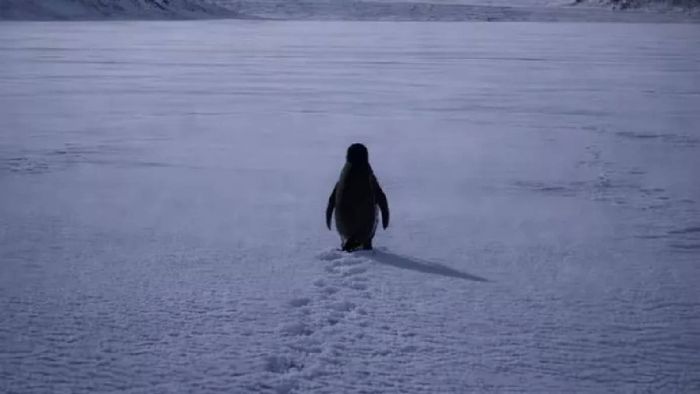
In the vast, frozen expanse of Antarctica, where survival hinges on the sea's edge and the clamour of the colony, one Adelie penguin broke rank. Nearly two decades ago, it waddled away, steady, solitary, defiant, toward the towering mountains and certain death.
- Jan 27, 2026,
- Updated Jan 27, 2026, 10:51 AM IST
In the vast, frozen expanse of Antarctica, where survival hinges on the sea's edge and the clamour of the colony, one Adelie penguin broke rank. Nearly two decades ago, it waddled away, steady, solitary, defiant, toward the towering icy mountains and certain death. Captured in Werner Herzog's 2007 documentary, 'Encounters at the End of the World', this "death march" has resurfaced in 2026, exploding across social media as the "Nihilist Penguin."
rPaired with brooding soundtracks and captions like "When you realize the grind is pointless," the clip has amassed millions of views, spawning memes, edits, and even an AI-generated White House image of Donald Trump striding alongside the bird toward Greenland's peaks, penguin clutching an American flag. Why now? In an era of quiet quitting and collective exhaustion, this penguin has become our unlikely oracle.
The footage, unadorned and raw, shows the penguin trudging inland for roughly 70 kilometers, forsaking the ocean's bounty and its flock's safety. Herzog's gravelly narration seals its fate: a doomed pilgrimage into starvation, exhaustion, or hypothermia. No grand rebellion, just a bird's inexplicable detour from instinct. Yet in 2026, as algorithms resurrect old clips for fresh virality, the internet has anointed it a symbol. TikTok stitches overlay the march with office drudgery montages; Twitter threads debate its "inner human"; Instagram Reels sync it to existential anthems. The penguin's calm gait mirrors our own faltering steps through burnout culture.
A meme for the moment: Burnout, rebellion, and the pull of the void
What elevates a 20-year-old clip to zeitgeist status? Relatability, for one. In a world of hustle worship and performative productivity, the penguin's solo exodus resonates like a primal scream. "Quiet quitting" went mainstream years ago, but this bird embodies the urge to fully opt out, not just dial back effort, but vanish into the mountains of irrelevance. Social media users project their crises onto its flippers: the overworked coder ditching Silicon Valley dreams, the parent unraveling under endless expectations, the Gen Z scorning corporate ladders. One viral post quips, "POV: You've clocked out of life itself."
Humor fuels the fire, too. Humanizing a penguin as a brooding nihilist, plump tuxedo rejecting life's absurd theater, is peak internet absurdity. Nihilism, that philosophy of meaninglessness popularized by Nietzsche and echoed in Camus' absurd hero, finds a feathered avatar here. The penguin doesn't rage; it simply walks, embracing oblivion over rote survival. This taps universal anxieties: post-pandemic isolation, economic precarity, AI's job-eating march. Even the White House meme, "Embrace the Penguin", twists it political, Trump and bird as unlikely allies in territorial absurdity, Greenland flags fluttering mockingly.
Yet beneath the laughs lies something poignant. The trend's surge reflects a cultural opt-out epidemic. Surveys from last year showed 40 per cent of workers "quiet quitting," while therapy apps report spikes in existential queries. The penguin doesn't preach; it performs the escape we fantasize but rarely take. As one Redditor put it, "It's not depression, it's enlightenment. The colony is the matrix."
Science grounds the symbol: Navigation gone awry, not a philosophical quest
Strip away the memes, and biology tells a starker tale. Penguins don't ponder the void; they navigate by instinct, tuned to ocean scents and flock calls. This lone Adelie, as experts in Herzog's film note, likely fell victim to disorientation, perhaps illness, injury, or a physiological glitch like a faulty magnetic sense disrupted by storms or age. Dr David Ainley, a penguin researcher featured in the documentary, observed such "rogue" birds heading inland, only to perish. "It's tragic, not intentional," he explains. Even if herded back, they often retry the march, driven by compulsion rather than choice.
Antarctica's interior offers no mercy: no fish, no shelter, just ice and wind. Survival odds plummet without the colony's collective warmth. Climate change exacerbates this, with shifting ice and warmer seas confusing more birds. A 2024 study in Nature documented rising Adelie disorientation rates, linking them to environmental stress. The penguin isn't rebelling; it's adrift in a world askew.
This science-meme clash fascinates. Herzog himself blurred lines, his films blending fact with poetic dread, think Grizzly Man's fatal hubris. The "Nihilist Penguin" endures because we crave the projection. It says less about winged worries than our own: in mapping human despair onto instinct, we confront what lurks unspoken.
Echoes in ice: What the penguin reveals about us
Twenty years on, the penguin's resurgence feels prophetic. Released amid 2007's financial crash whispers, "Encounters at the end of the World" probed humanity's fringe, scientists chasing knowledge in isolation. Now, in 2026's AI boom and geopolitical churn, it mirrors our drift. Trump's AI meme nods to this, blending absurdity with ambition. Philosophers might call it pareidolia: seeing faces in clouds, meaning in marches.
Ultimately, the Nihilist Penguin endures not for its truth, but our hunger for it. It invites us to laugh at the void, question the colony, and maybe, turn back before the mountains claim us. In its waddle, we glimpse permission to rest, rebel, or simply exist. Whether navigational error or existential icon, it waddles on, reminding us that even in absurdity, the march continues.