The Death of Ahimsa: From massacres to the criminalization of kindness
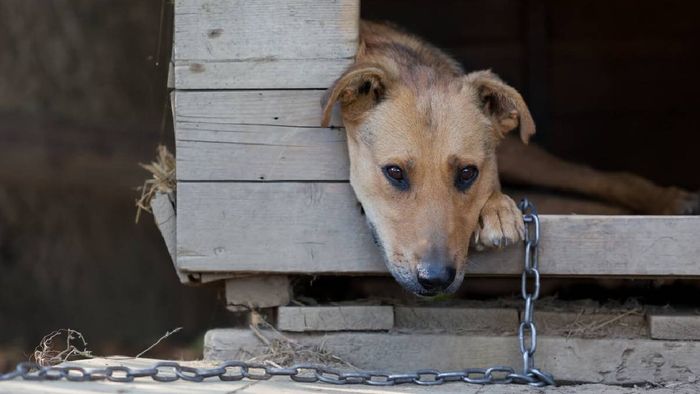
India is often called "the land of Ahimsa", yet the reality on the ground tells a far darker story. The blood on our streets today is not only the result of accidents; it reflects a silent, state-sponsored massacre. In 1960, India placed a nominal value of fifty rupees on an animal’s life, but by 2026, people have stopped paying even that. From mass poisoning of dogs across multiple states to the killing of friendly animals on university campuses, and the relentless clearing of forests that leaves wildlife with nowhere to go, India is no longer facing merely a stray-animal problem. It is confronting a profound crisis of conscience. The question today is no longer how we manage animals, but whether we have any humanity left to offer them.
- Jan 27, 2026,
- Updated Jan 27, 2026, 8:50 AM IST
India is often called "the land of Ahimsa", yet the reality on the ground tells a far darker story. The blood on our streets today is not only the result of accidents; it reflects a silent, state-sponsored massacre. In 1960, India placed a nominal value of fifty rupees on an animal’s life, but by 2026, people have stopped paying even that. From mass poisoning of dogs across multiple states to the killing of friendly animals on university campuses, and the relentless clearing of forests that leaves wildlife with nowhere to go, India is no longer facing merely a stray-animal problem. It is confronting a profound crisis of conscience. The question today is no longer how we manage animals, but whether we have any humanity left to offer them.
The ‘Lethal’ Promise
In the early weeks of 2026, a disturbing incident unfolded in Telangana—one that should haunt the nation’s collective conscience. More than 500 dogs, familiar presences on local streets, were rounded up and eliminated through lethal injections. This was neither a veterinary necessity nor a response to a public health emergency. It was the cold execution of a “poll promise,” signaling a grim reality where the breath of a living being has become a currency exchanged for votes.
This moral decay is not confined to rural or fringe spaces; it has seeped into the ivory towers of elite institutions. At Symbiosis International University’s Hyderabad campus in Mamidipalli, cruelty cast a long shadow over 40 sterilized, vaccinated, and friendly dogs who had lived in trust alongside humans. These animals were seized by the local panchayat and later confirmed to have been killed. When premier centres of education become sites of secret culls, it sends a chilling message: no animal is safe, and no amount of good behaviour can shield the voiceless in a society that has lost its moral compass.
The War on Kindness
As authorities carry out these removals, a parallel war is being waged against everyday citizens—the animal feeders. Often the only barrier between a stray animal and starvation, feeders have increasingly been branded as public enemies. Many face coordinated harassment, physical assault, and even social boycott.
This tragedy is compounded by a troubling judicial void. Observations made by the Supreme Court in early 2026 have shifted significant focus toward “feeder accountability,” even suggesting that those who feed animals could be held liable for compensation in bite-related cases. While public safety is undeniably important, this approach has largely ignored the systematic harassment of feeders as a serious human rights issue. By failing to draw a firm line against mob intimidation, the system risks amplifying the voice of the neighborhood bully.
When the law penalizes the person holding a food bowl rather than confronting the mob wielding sticks, it sends a dangerous signal: in today’s India, compassion is a liability. A society has emerged where it is safer to remain indifferent to suffering than to attempt to alleviate it. By leaving compassionate citizens exposed to violence and intimidation, we are not only failing animals—we are failing humanity itself.
The Paradox of Industrial Slaughter and Choking Habitats
India’s relationship with animals is riddled with contradiction. While the nation prides itself on compassion, it is also among the world’s largest exporters of beef and carabeef. This vast, invisible industrial slaughter occurs quietly in the background of public discourse, creating a grim irony where some animals are sacred, others are commodities, and the rest are dismissed as pests.
The current crisis is not merely a policy failure; it is the product of deep-rooted human greed. Millions of hectares of forest have been cleared for wider roads and gleaming skyscrapers, effectively demolishing the only homes wildlife has ever known. When a leopard wanders into a housing colony or an elephant enters a village, they are branded “invaders” or “threats.” In truth, these animals are not encroaching on human land—humans have encroached on theirs, severing ancient corridors they have traversed for centuries.
Beyond habitat loss, the remaining environment is being poisoned by modern waste. Rampant littering has transformed landscapes into deadly minefields. Every year, thousands of animals endure slow, agonizing deaths—choking on plastic, strangled by discarded wires, or trapped in toxic refuse. This silent tragedy rarely makes headlines, yet it is a direct consequence of a society that prioritizes convenience over life. Forests have been erased, and in their place, a lethal trail of trash remains.
The Shadow of Depravity: The Monster in the Alley
Perhaps the most harrowing indicator of India’s moral collapse is the rising tide of sexual violence against animals. Beyond public debates on street safety lies a deeply disturbing reality—a surge in the sexual assault and mutilation of the voiceless. These are not speculative fears; they are documented atrocities. From the gang rape of a community dog named *Mili* in Karnataka to the arrest of a man in Delhi’s Gandhi Nagar for sexually assaulting a stray dog while intoxicated, these incidents expose a darkness festering within society’s shadows.
Criminological research confirms that individuals who derive pleasure from sexually torturing defenseless animals are often rehearsing violence for future human targets. When such depravity is met with judicial indifference, a dangerous class of predators is quietly nurtured. The monster lurking in an alley today may very well knock on a human doorstep tomorrow.
The “Misrecorded” Crisis
Recent calls for the mass relocation of dogs—often echoed even in judicial observations—are frequently built on a foundation of misrecorded data. Sensational headlines and inflated bite statistics tend to overshadow scientific evidence related to Animal Birth Control (ABC) programs.
In reality, “relocation” is little more than a sanitized term for a death sentence. Dogs are highly territorial animals; moving them to unfamiliar areas or overcrowded shelters leads to violent conflicts, rapid disease spread, and eventual starvation. When fear replaces biology in policymaking, justice becomes the first casualty.
The Parallel World or the Final Silence
There exists an alternative to this carnage—a “parallel world” where humans and animals coexist through informed management and empathy. This is not a utopian fantasy but a practical necessity rooted in the understanding that humanity is defined not by the absence of animals, but by the presence of compassion. It is a world where scientific sterilization is prioritized, feeders are recognized as civic partners, and the right to live is not reserved solely for humans.
Yet today, social media reflects a grimly different reality. Our feeds are filled with contradictions: one post celebrates a viral rescue, while the next shows a dog dragged behind a vehicle or a feeder surrounded by an angry mob. These are not isolated images—they are the pulse of a nation undergoing a historic collapse of empathy. Living beings are increasingly viewed as urban inconveniences rather than companions in our shared journey.
If the state continues to respond to vulnerability with syringes and to compassion with fists, the damage to India’s national character may become irreversible. We cannot kill our way to cleaner cities, nor bully our way to safer societies. A civilization is measured by how it treats its most vulnerable—and today, as needles are prepared and sticks are raised, India’s moral thermometer is dangerously close to zero.