This Meghalaya author dares to question everything women are taught
Can a book rooted in Meghalaya's matrilineal society challenge the way women across India think about love, sex, marriage and self-worth? Beneath familiar conversations on empowerment lies an uncomfortable question: are women truly free, or have they simply learned to live within invisible boundaries?
- Jul 08, 2026,
- Updated Jul 08, 2026, 3:20 PM IST
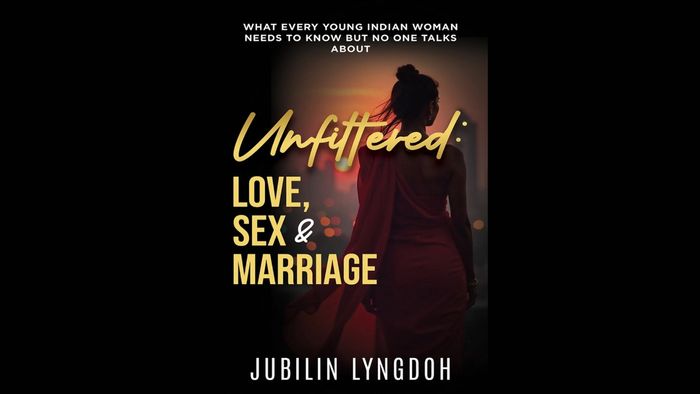
A voice from Meghalaya, speaking to women everywhere. That is what makes ‘Unfiltered Love, Sex, Marriage’ by Jubilin Lyngdoh stand out. While deeply rooted in Meghalaya’s social fabric, the book raises questions that resonate far beyond the state, making it an honest and thought-provoking read.
“…for women in India—especially in traditional and close-knit societies—the weight of these labels is even heavier.”
The book is divided into three broad sections centred around mindset and confidence; intimacy and relationships; marriage and the many responsibilities that come with it.
The Meghalaya author with the vision of transforming women’s lives – through her book – stresses the need to recognise their true potential. She encourages women to not let society and its opinions define or confine them, urging them instead to reclaim their confidence, identity and voice.
One of the book’s strongest aspects is its conversation around Meghalaya’s matrilineal society. While often celebrated as a symbol of women’s empowerment, Lyngdoh highlights the realities and contradictions that frequently go unnoticed. “From the outside, it looks like a model of equality and female empowerment. But beneath the surface, many women face challenges that are rarely spoken about.” She explains that despite women in Meghalaya inheriting property, managing wealth, owning land and enjoying the freedom to choose a partner, their self-worth often remains compromised and, ultimately, many continue to live under male dominance.
She also addresses a grave yet “trending” concern that extends beyond Meghalaya to the rest of the country – ‘pregnancies’ and ‘accident marriages’. One extract reads: “Many teenagers in Meghalaya now see romantic relationships as a sexual experiment instead of a deep connection... Influenced by modern trends, young people test love through physical intimacy rather than building emotional bonds first.”
The book also works well as a self-help read, with the author candidly sharing episodes from her own life and reflecting on how she once allowed negativity to define her. Lyngdoh consistently emphasises self-love, self-worth, confidence, education and, above all, celebrating oneself. That, for me, is what makes this book work. It is a refreshingly no-nonsense read, and there is something immensely satisfying about an author who is clear, direct and unafraid to say exactly what she means.
She writes about how being a woman comes with countless challenges, but also why none of those challenges should become reasons for shame. At several points, I found myself pausing to reflect and relate - just as I imagine many women would while reading this book.
Lyngdoh’s writing is well-researched, accessible and deeply relatable. What I particularly appreciated was how effortlessly it can be read in one sitting – a definite bonus, at least for me. She also explores how many women, from a very young age, are conditioned to believe that “good girls don’t talk about such things,” with “such things” referring to conversations around sex, desire and intimacy.
The author also touches on subjects such as arranged marriage versus love marriage, the pressure to choose between marriage and career, and the expectation that women should prioritise running a household over pursuing their ambitions. By the time I reached the final page, I was left wondering whether women are really doing it right. Perhaps this book is a plea - a reminder that it is time to encourage women to step beyond the 'typical' mindset, challenge deeply rooted barriers, and give themselves the freedom to shine and thrive.