Why 'The Silent Patient' did not speak to me
In an age where “must-read” lists often drown out personal curiosity, The Silent Patient stands as a reminder that hype can be louder than substance. What happens when a widely celebrated thriller delivers polish and popularity—but leaves the reader wondering whether the noise, not the narrative, drove its acclaim?
- Jan 29, 2026,
- Updated Jan 29, 2026, 3:43 PM IST
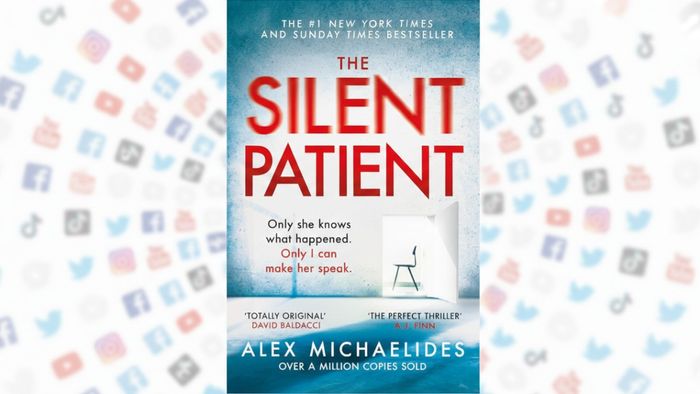
It may be time to give “What did I just read?”, “This book was SO good”, and “Best read of the year”, a rest because not all books live up to the hype. Alex Michaelides’ 'The Silent Patient', armed with impressive 4+ ratings across platforms, is not only unfascinating, but it is also nowhere near as thrilling as it is made out to be. Despite its polished, engaging prose, the book failed to strike a chord with me. Instead, it left me questioning my TBR (To Be Read) for the year — one that, admittedly, had been heavily influenced by external noise.
Cut to December last year. Wandering through a well-known bookstore, shelves brimming with neatly stacked titles across genres, my eyes paused at the 'bestsellers' section. Tempting, yes — but I was looking for something specific: a thriller, popular, widely recommended. Today, recommendations hold far more power than the blurb printed at the back of a book. Thanks to social media and book-related accounts — bookstagram, in particular — choices are now shaped less by curiosity and more by hype. All that it has shaped to be is a trend.
That pattern dictated my decision, too. I stood there for minutes, scrolling through Instagram, narrowing down my shortlisted picks. As staff and customers moved around me, I noticed others doing the same: books in hand, eyes glued to their phones — perhaps also letting an external opinion tip the scale. While most readers flip to the back cover, many now pick up a book simply because “that bookstagrammer said so.” Ironically, I did the same. I welcomed the interference. I picked up 'The Silent Patient'.
Present day, I sit disappointed, having cracked the supposedly “unbelievable” plot fairly early into the book. Once again, I rushed to social media, allowing it to guide my reading discourse, a habit I let get the better of me. As I read on, parts of the narrative began to feel unintelligible. Those recommendations, I realised, were never recommendations at all — they were assertive opinions declaring the book a “must-read,” rarely offering any explanation as to why. And then it struck me: I had chosen a book because someone told me to, not because I truly wanted to read it. The answer had been right there all along.
'The Silent Patient' is undoubtedly well-written. The language is accessible, the narrative flows with ease, and the structure is reader-friendly. While I wouldn’t call it a must-read, it works well for thriller beginners. A silent, suffering patient. A psychotherapist who crosses professional boundaries, almost turning detective. Supporting characters who fail to sustain momentum. And a plot that is, unfortunately, predictable. The book unfolds through two narratives: the primary storyline and a diary running parallel, slowly opening a Pandora’s box of secrets, mystery, and an unsolved crime. Michaelides ensures the story remains engaging, never overly dramatic or alienating. At times, the plot does pick up, urging the reader to decipher the story quickly. Thankfully, the narration isn’t stretched. It remains oddly interesting — enough to keep readers turning pages, eager for an ending. Just not thrilling enough.
My disappointment does not stem from unmet expectations alone, but from the fact that I allowed external introspection to overpower my own. The book isn’t entirely without merit, but who are these experts deciding what the world "must" read, and why do we so willingly allow them to tamper with our choices? There are two kinds of voices: the genuine ones, who explain 'why' a book worked for them; and the advocates, who brand a book a "revolution," a “must-read,” or a “global sensation", assuming that what resonated with them will resonate with everyone else.
“Read this if you enjoy these themes” and “Read this because I liked it” are fundamentally different ideas. They need not dictate a process that should come from the heart. The same applies to “use this,” “drink this,” “eat this,” “wear that,” “go there,” and countless other influential directives — unless, of course, explanations and experiences accompany them. As for the credible, ethical, popular advisers — the ones who don’t enforce decisions but simply share perspective — I will always turn to them. That is the kind of guidance worth trusting.
Coming back to 'The Silent Patient': the hype, anticipation, and excitement failed to appeal to me. It felt like a one-time gripping read, one where I had already guessed the twist, yet still hoped to be wrong. I wasn’t. After nearly 350 pages, all I was left with was silence — just not one worthy of a psychotherapist.