Kiran Nadar Museum of Art to spotlight Manipur’s martial art ‘Thang Ta’ in legacy series
The Kiran Nadar Museum of Art (KNMA) will present “Thang Ta: The Traditional, Technical and Temporal Journey of a Martial Art Form” on February 20, exploring the historical, ritual and contemporary dimensions of Manipur’s indigenous martial art tradition.
- Feb 18, 2026,
- Updated Feb 18, 2026, 7:44 PM IST
The Kiran Nadar Museum of Art (KNMA) will present “Thang Ta: The Traditional, Technical and Temporal Journey of a Martial Art Form” on February 20, exploring the historical, ritual and contemporary dimensions of Manipur’s indigenous martial art tradition.
As part of the third edition of KNMA’s Legacy Series, the presentation will examine Thang Ta—formerly known as Huyen Lallong—as a living system of knowledge that has evolved across centuries while retaining its philosophical and cultural foundations.
Conceptualised by Aditi Jaledia, senior curator (performing arts) at KNMA, along with Priti Patel as curatorial advisor, the programme seeks to expand the understanding of legacy beyond hereditary transmission to collective cultural memory, highlighting how gurus have preserved and adapted the tradition over time.
According to organisers, the legacy of Thang Ta underscores that its practitioners were not merely custodians of technique but also interpreters of socio-political realities, enabling the form to adapt while maintaining philosophical depth.
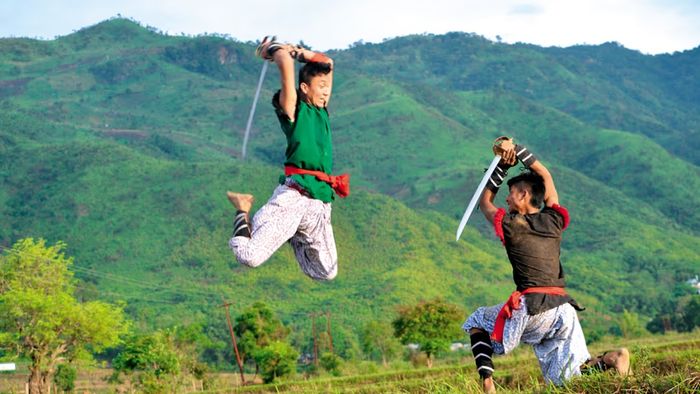
The event will feature demonstrations by students from different Thang Ta traditions, followed by interactive sessions with senior exponents. Participating institutions include the Huyen Lallong Manipur Thang-Ta Cultural Association, Kanglei Saktam Langba Kanglup and Arjika Center for Manipuri Dance and Movement Therapy, with a focus on the pedagogical lineage of the martial art.
The evening will conclude with two group performances choreographed by Surjit Nongmeikapam and Priti Patel, showcasing how Thang Ta’s movement vocabulary continues to influence contemporary artistic expressions.
Dating back to around 33 AD, Thang Ta derives its name from “thang” (sword) and “ta” (spear), and historically developed into a sophisticated system of armed and unarmed combat rooted in Meitei cosmology. Scholars note that the martial tradition integrates self-defence, ethical discipline and mental training, reflecting its broader cultural and spiritual significance.