Kiwi farming reshapes Manipur's Senapati economy as growers seek cold storage support
Kiwi farming is transforming Senapati's economy, offering new income avenues for farmers. However, the need for cold storage facilities remains critical to sustain growth and reduce losses.
Phurailatpam Keny Devi
- Mar 17, 2026,
- Updated Mar 17, 2026, 1:02 PM IST
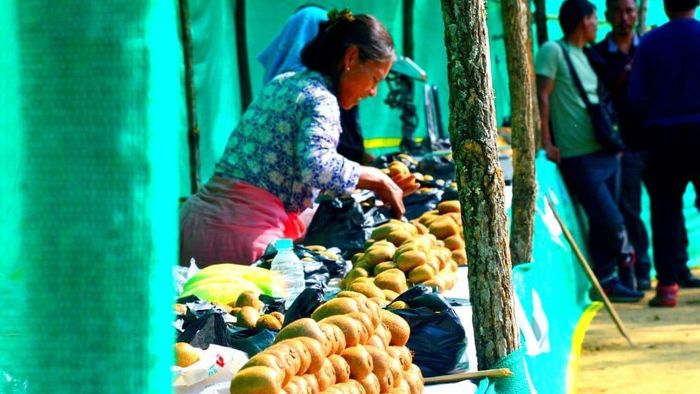
Kiwi cultivation in Manipur’s Senapati district has evolved from a small agricultural experiment in the early 2000s into a key economic activity, with farmers now calling for urgent infrastructure support as demand continues to outstrip supply.
Once introduced through the efforts of scientists at Krishi Vigyan Kendra, Hengbung, the crop has steadily expanded across the district and is now seen as a profitable alternative to traditional farming. Senapati has increasingly joined the list of regions in Manipur identified by specific produce, alongside Tamenglong oranges, Sirarakhong chillies and Kachai lemons.
Farmers say favourable climatic conditions have made kiwi a suitable crop in several parts of the district. The fruit, native to China and known for its high nutritional value, is now cultivated organically, offering local markets a fresh alternative to imported produce.
“Because of its high nutritional value, fresh and organic, demand for kiwi is growing,” said Panii Tao, secretary of the Senapati Producers Organisation of Organic Kiwi fruit (SPOOK). He added that kiwi farming has emerged as “a profitable alternative to traditional crops”.
Cultivation has spread across villages, including Thingba Khunou, Purul, Oinam Hill, Liyai and Makhan, contributing to Senapati’s growing identity as the “kiwi fruit capital of Manipur”. In Oinam village alone, at least 50 farmers are engaged in kiwi farming, which has become a primary source of income.
“Earlier we did paddy and seasonal vegetable cultivation, and our income was very low. But now our income has improved after kiwi plantation,” Tao said, while noting that the crop requires intensive maintenance and long-term investment.
Farmers typically begin to see yields only after three to four years, making initial support critical. Growers have urged the government to extend assistance to new entrants to sustain expansion in the sector.
According to SPOOK, which currently has around 80 members, the number of registered farmers is expected to cross 100 by 2026. Membership requires growers to cultivate at least 100 kiwi plants, reflecting the increasing scale of production.
Despite the growth, a major challenge remains the lack of storage infrastructure. Farmers say the absence of cold storage facilities leads to significant losses, particularly during disruptions such as landslides.
“Kiwi is a perishable item. It gets spoiled if stored for some time in unavoidable situations like landslides,” Tao said. “We badly need cold storage. When demand is more than production, seeing the product spoil is very disappointing.”
Individual farmers report rising incomes but also highlight operational difficulties. PK Rini, a grower from Oinam, said he earns around Rs 3 lakh annually from two acres of kiwi cultivation. However, he pointed to the need for proper fencing and support systems, which remain inaccessible to many.
“Maintenance of a kiwi farm is difficult. It requires proper fencing and support. It would be helpful if the government provided such equipment to every farmer,” he said.
Kiwi cultivation has already expanded beyond traditional sub-Himalayan regions to states such as Himachal Pradesh, Sikkim and Nagaland. With Senapati showing strong potential, farmers and stakeholders say targeted investment and consistent policy support could further strengthen Manipur’s rural economy.
(The story has been produced under the Award in Scientific Journalism Programme of CAU, Imphal. For further details, please contact Dr Indira Thounaojam, Information & Publicity Officer, CAU Imphal, at prmmcell@gmail.com)
MORE NEWS
Read more!