Manipur: Kuki-Zo groups reassert demand for Union Territory with legislature
Kuki National Organisation (KNO) and United People's Front (UPF), two umbrella groups representing Kuki-Zo armed groups under the Suspension of Operations (SoO) agreement with the Centre, on Thursday renewed their demand for a Union Territory with a legislature for the Kuki-Zo people in Manipur.
- Sep 10, 2026,
- Updated Sep 10, 2026, 9:45 PM IST
Kuki National Organisation (KNO) and United People's Front (UPF), two umbrella groups representing Kuki-Zo armed groups under the Suspension of Operations (SoO) agreement with the Centre, on Thursday renewed their demand for a Union Territory with a legislature for the Kuki-Zo people in Manipur.
In a joint statement, the groups said the situation in Manipur had "changed fundamentally" since the outbreak of ethnic violence in May 2023 and argued that a return to the pre-May 2023 arrangement was neither realistic nor acceptable.
"There can be no return to the pre-May 2023 status quo," they said.
The KNO and UPF said their earlier demand for a territorial council within Manipur had become obsolete following the developments of the past three years. They called for a Union Territory with a legislature modelled on Article 239A of the Constitution, saying it would address concerns relating to security, land and customary rights.
"We, therefore, reassert that a Union Territory with a legislature modelled under Article 239A needs to be the basis of a negotiated settlement in the political dialogue between Government of India and Kuki-Zo representatives," the groups said.
They maintained that the demand did not amount to seeking secession from India and urged the Centre to make it the principal subject of a time-bound political dialogue under the SoO framework.
The KNO and UPF also opposed any exercise to prepare or update the National Register of Citizens (NRC) in Manipur before completion of a full Census.
The groups particularly opposed using 1951 as the sole or primary baseline for determining citizenship or residency in the state's hill areas. They said allegations of abnormal population growth, demographic changes or illegal immigration involving the Kuki-Zo population should be established through official data rather than political claims.
"Census is the only credible national instrument to establish population facts," they said, arguing that an NRC exercise before the Census would be premature and could potentially be used to target the community.
They also claimed that enumeration in some remote hill settlements had historically been incomplete because of limited connectivity and access to government institutions, and warned that relying solely on historical records could exclude genuine residents.
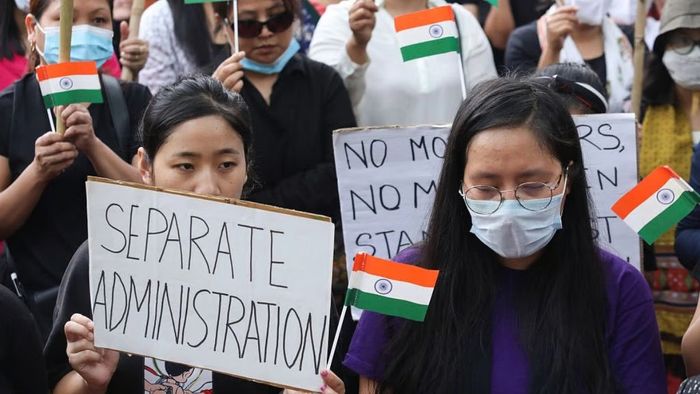
The two groups reiterated their demand for a "Separate Administration" under the Constitution, saying the displacement and physical separation of communities during the conflict had made the demand more urgent.
They also sought justice for women who were victims of sexual violence during the ethnic conflict between Kuki and Meitei communities, calling for credible investigations and accountability in cases involving sexual assault, killings and other serious crimes.
The groups rejected the description of the Kuki-Zo community as "illegal immigrants", arguing that citizenship and migration-related questions should be determined on the basis of individual evidence and due process.
They also alleged harassment, intimidation and selective targeting of cadres covered under the SoO agreement and urged the Centre and the Manipur government to adhere strictly to the pact and continue monitoring through the existing joint mechanism.
The SoO agreement, signed in 2008 among the Centre, Manipur government and Kuki-Zo armed groups, was intended to suspend hostilities and facilitate political dialogue.
The KNO and UPF said they remained committed to dialogue and a peaceful, constitutional settlement, and called on the Centre to initiate a time-bound political process on their demands.