Manipur’s Ima Keithel stands resilient as women traders defend unity and livelihoods
Manipur’s Ima Keithel market remains resilient amid challenges, showcasing strong unity among women traders. It continues to be a vital hub for local trade and women’s empowerment
- Feb 16, 2026,
- Updated Feb 16, 2026, 8:37 AM IST
Centuries-old Ima Keithel continues to function as Manipur’s economic backbone despite prolonged unrest and declining trade, with women vendors asserting that the market remains a rare space of unity across communities.
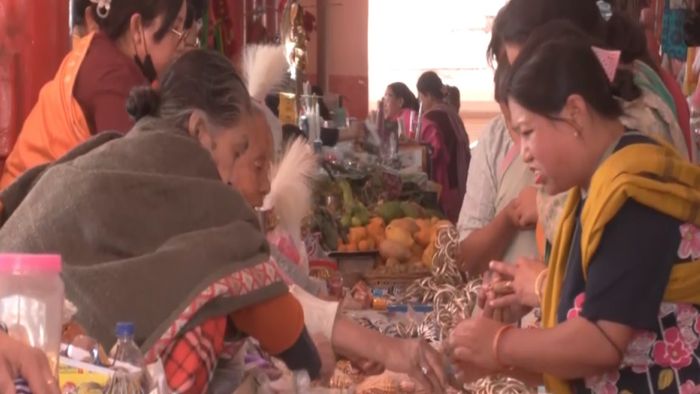
Regarded as the world’s largest all-women-run market, Ima Keithel — also known as the Mothers’ Market — is believed to be over 500 years old, with some accounts tracing its origins to the reign of Nongda Lairen Pakhangba. For generations, women from the hills and the valley have traded side by side, selling vegetables, fish, dairy products, handloom items and traditional goods.
“This market belongs to everyone,” said Nirmala, a senior vendor. “It is not only for Meitei, Naga, Kuki or Meitei Muslim. Women from every community come here, sit together and do business happily.”
Even as ethnic tensions have disrupted life across the state, vendors say the market floor reflects coexistence rather than division. Many women insist that within the market, they see one another not through community lines but as fellow Imas — mothers striving to support their families.
“We lived like a family here,” Nirmala recalled. “We want to see that picture again fully restored.”
The market’s importance extends beyond symbolism. It remains central to household incomes across Manipur. Many traders are primary earners, funding education and daily expenses through small-scale commerce.
Ibemcha, who sells curd, milk and honey, has been trading at the market since before the COVID-19 pandemic. The plot she occupies once belonged to her mother.
“I have been selling here since before the beginning of the COVID-19 pandemic. Before the violence began in the state, market activity was strong. However, customer traffic has slowed. This particular plot where I sit was earlier occupied by my mother,” she said.
“Before I started coming to the market, I stayed at home and did other work to support my family. Now, from what I earn here, I can support my family to some extent,” she added.
Generational continuity defines much of Ima Keithel’s structure, with trading spaces often passed from mother to daughter. Elderly vendors say the market has enabled families to educate officers, doctors and other professionals over the decades.
“This is not just a market; it is a historical place,” one vendor said. “The hearts of the people of Manipur are with this market.”
Vendors acknowledge that the market’s organisation has changed over time. Earlier, products were sold in designated sections.
“Curd sellers were in one area, vegetable vendors in another. Now everything is mixed together. I wish the system could be organised like before,” Ibemcha said.
Economic challenges have intensified following months of unrest. Transport disruptions and highway blockades have raised costs, leading to higher prices. At the same time, footfall has declined.
“Prices are rising, customers are fewer, and selling has become harder,” Nirmala said.
Many goods now arrive from outside the state, reducing the share of purely local produce. Traders say better organisation, improved infrastructure and policy support are necessary to stabilise business while preserving the market’s historic character.
Ima Keithel is also closely linked to Manipur’s political history. The spirit of the Nupi Lan movements, when women led protests against colonial policies and injustice, is associated with the collective strength rooted in the market.
“Whenever there is a critical issue in Manipur, women take an active role,” Nirmala said. “Women are always at the forefront.”
Educated women and retired professionals have begun joining the market in recent years, reflecting social change while retaining tradition. Vendors are urging authorities to strengthen systems within the market and safeguard its identity. They are equally concerned about ensuring continuity.
“We want the younger generation to follow the footsteps of the past Imas,” an elderly vendor said. “They must preserve this market and keep its unity alive.”
As Manipur continues to navigate instability, Ima Keithel remains operational — sustained by women who see trade not only as livelihood, but as a living expression of unity.