Agricultural waste finds new use as vermicompost production picks up in Meghalaya's Garo Hills
Communities in South Garo Hills are restoring mining-degraded land while farmers convert agricultural waste into vermicompost. The efforts are creating alternative income streams, with women taking key roles in local initiatives.
- Nov 11, 2026,
- Updated Nov 11, 2026, 9:48 PM IST
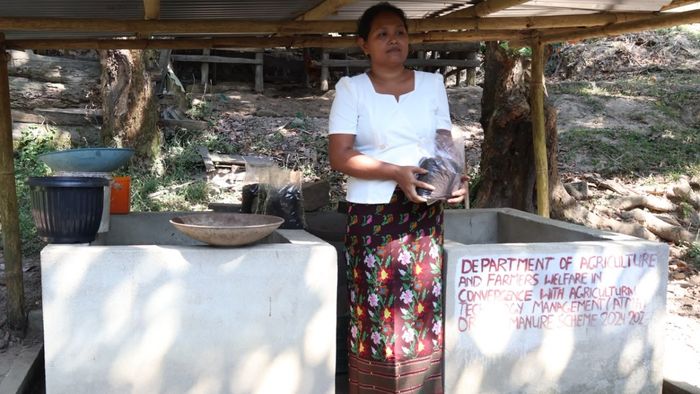
A farmer in Meghalaya’s South Garo Hills has turned agricultural waste into an additional source of income through vermicompost production, earning an estimated Rs 63,000 annually from the sale of organic manure and earthworms.
Sengkey Ch Sangma, 36, from Dabram village under Baghmara C&RD Block, started the activity with support from the Agriculture and Farmers Welfare Department under the Organic Manure Scheme for 2024–25.
With technical assistance from the Agriculture Department and ATMA, Baghmara, she set up two vermicompost beds, each measuring 6 ft by 3 ft, on August 28, 2025. The beds use locally available materials such as cow dung, banana leaves, banana stems and other agricultural waste.
Each bed produces around 150 kg of vermicompost per harvest, taking the combined output to approximately 300 kg. The compost takes about 45 days to mature.
Sangma sells a portion of the manure to other farmers and uses the rest in her garden. She also sells earthworms at Rs 4 each, providing another source of revenue.
With an initial investment of around Rs 25,000, she can produce approximately 1,200 kg of vermicompost annually through four harvests. At Rs 50 per kg, the compost generates an estimated Rs 60,000 in annual sales. She has additionally earned around Rs 3,000 from selling 750 earthworms.
The activity has also highlighted the potential for expanding vermicompost production in the district, where supply remains insufficient to meet demand. Sangma said around eight farmers are currently engaged in the activity in South Garo Hills.
Another beneficiary, Mengstone R Sangma, has earned Rs 18,000 by supplying 6,000 earthworms to the Horticulture Department at Rs 3 per worm.
The Agriculture Department established seven vermicompost units under the scheme during 2024–25, including four in Baghmara and one in Rongara, according to the figures provided. Eight more units were established during 2025–26, comprising five in Baghmara, two in Rongara and one in Chokpot, taking the total to 15 units over the two financial years.
The growing demand for organic manure, coupled with limited local production, points to opportunities for more farmers to take up vermicomposting as a supplementary livelihood. The practice also allows farmers to convert agricultural waste into a useful resource while reducing dependence on chemical fertilisers.