‘Illegal coal mining will not go unchecked’: 62 FIRs filed, 15,224 MT coal seized after EJH blast
Presenting enforcement figures during a suo motu statement, Sangma said 57 of the 62 FIRs were filed after the blast, while five had been registered earlier.
- Feb 16, 2026,
- Updated Feb 16, 2026, 1:15 PM IST
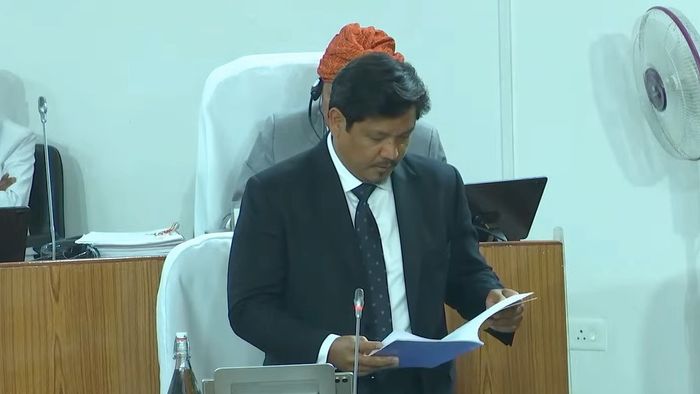
Meghalaya has registered 62 FIRs on illegal coal extraction and seized 15,224.72 metric tonnes of coal in the days following the February 5 explosion at an unlawful mining site in Mynsngat, Thangsko area of East Jaintia Hills, Chief Minister Conrad K Sangma told the Assembly on February 16.
Presenting enforcement figures during a suo motu statement, Sangma said 57 of the 62 FIRs were filed after the blast, while five had been registered earlier. Five additional FIRs relate to illegal transportation of coal and two to seizures of explosives. Seven persons have been arrested in these cases, apart from the seven arrested in connection with the mining incident.
Six cranes used for illegal extraction have been dismantled till February 13 under Section 152 of the Bharatiya Nagarik Suraksha Sanhita, and the process is ongoing. Six vehicles involved in illegal transportation have also been seized. Prohibitory orders under Section 163 of the same law have been promulgated in and around mining sites in East Jaintia Hills to prevent obstruction of enforcement operations.
Five additional teams comprising executive magistrates, police personnel and officials of the Directorate of Mineral Resources have been mobilised to conduct daily raids. Six additional gazetted officers, eight sub-inspectors and four platoons of armed battalion personnel have been deputed. Drones are being used to monitor remote mining areas.
“The state government is committed towards ensuring that Illegal coal mining and illegal transportation do not go unstopped,” Sangma said, asserting that the government is committed to sustained enforcement.
Referring to the blast, he said the explosion was reported on the morning of February 5 at an illegal mining site. Fire and emergency services and medical teams launched coordinated search and rescue operations. Eighteen bodies were recovered on the first day, four on February 6 and two on February 7. Eight injured persons were rescued, of whom four later succumbed to injuries on February 6, 9, 10 and 11 at the North Eastern Indira Gandhi Regional Institute of Health and Medical Sciences in Shillong and a private hospital in Guwahati. Two deaths reported by families on February 6 were subsequently verified by authorities.
“So, the total reported deaths as of today, February 16, 2026, number 33,” he said. Rescue operations were closed at 5 pm on February 9 after consultations with all agencies. Preliminary inputs indicate the explosion was likely caused by the use of explosive substances during illegal mining operations. Unstable ground conditions, confined underground passages, debris and the presence of machinery and explosives posed serious risks to survivors and rescue personnel.
A suo motu FIR has been registered at Khliehriat police station under provisions of the Bharatiya Nyaya Sanhita, the Mines and Minerals (Development and Regulation) Act and the Explosive Substances Act. A Special Investigation Team headed by the DIG, Eastern Range, was constituted on February 12 to probe the case.
Relief measures have been initiated for affected families. An amount of Rs 24 lakh has been disbursed to the next of kin of eight deceased persons, with the process underway for the remaining families, with daily communication maintained for documentation.
The state has also notified a Judicial Inquiry Commission under the Commission of Inquiry Act, 1952, on February 14. The panel, headed by Justice (Retd.) RS Chauhan, former Chief Justice of the Uttarakhand and Telangana High Courts, has been given six months to submit its report. Its mandate includes examining the circumstances leading to the tragedy, identifying any failure by authorities to prevent the February 5 incident, probing the root causes of illegal coal mining in Meghalaya and recommending administrative and institutional reforms.
Earlier, Governor C H Vijayashankar told the House that “thousands of people who depended on coal mining have lost their livelihoods” since the ban on rat-hole mining imposed by the National Green Tribunal in 2014 and upheld by the Supreme Court. He said the state is moving “steadily” towards regulated and sustainable mining, with three projects having received final approval and 20 more applications at advanced stages of clearance.
The budget for 2026–27 is scheduled to be presented on February 20. Illegal mining, regulatory oversight and governance reforms are expected to dominate the session, which will continue till February 27.