Japan emerges as Meghalaya’s strategic development partner, says CM Conrad Sangma
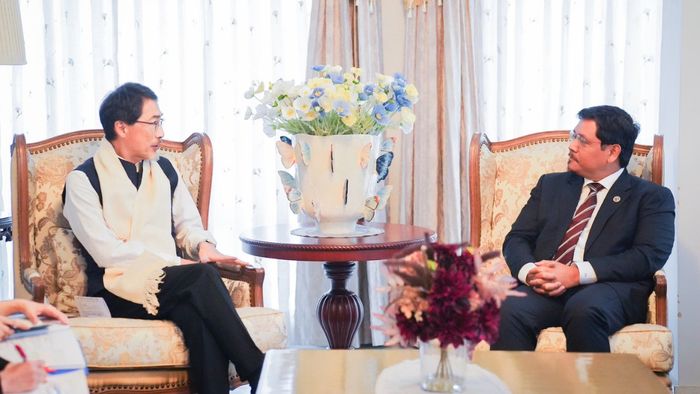
Meghalaya Chief Minister Conrad K Sangma on February 27 underscored Japan’s growing role as a key development partner of the state, stating that the relationship goes far beyond infrastructure to encompass youth empowerment, agriculture and sustainable livelihoods.
- Feb 27, 2026,
- Updated Feb 27, 2026, 1:33 PM IST
Meghalaya Chief Minister Conrad K Sangma on February 27 underscored Japan’s growing role as a key development partner of the state, stating that the relationship goes far beyond infrastructure to encompass youth empowerment, agriculture and sustainable livelihoods.
Addressing the inaugural session of the sixth India–Japan Intellectual Conclave ‘Kizuna’, Sangma said India–Japan ties are rooted in mutual respect, democratic values and a shared vision for economic cooperation and sustainable development, describing the theme ‘Kizuna’, meaning a lasting bond, as an apt reflection of the partnership.
Highlighting Meghalaya’s engagement with Japan, the chief minister said the collaboration focuses on investing in people as much as in physical assets. He noted that 47 nurses from the state have already been placed in Japan and that following his visit to the country in April 2025, a memorandum of understanding was signed with a Japanese company to train and place 500 youth this year, with plans to scale the programme to 5,000 placements over the next five years. He added that the state has partnered with another firm to facilitate skilled youth placements in Japan and has established a Japanese language training centre in Shillong to prepare aspirants with language proficiency.
In agriculture, Sangma said India’s first commercial production of shiitake mushroom blocks has begun in Upper Shillong with technology and marketing support from a Japanese company, with the facility capable of producing 1.5 lakh inoculated blocks annually and expected to benefit over 1,000 farmers. He also revealed that the state is exploring the production of locally brewed sake using indigenous rice varieties in collaboration with a Japanese brewery.
Referring to the long-standing association with the Japan International Cooperation Agency, the chief minister said the agency has made significant investments in infrastructure, sustainable forestry and tourism in Meghalaya. Under the JICA-supported MegLIFE project, 22,500 hectares of forest are being restored across 500 villages in 11 districts. He added that the renovation of the Umiam Hydro Power Station and the Umiam–Umtru Stage III Hydroelectric Power Station is being undertaken with JICA support, while the nearly 19-km river bridge linking Dhubri in Assam to Phulwari is also primarily funded by the agency.
Observing that 74 per cent of Meghalaya’s population is below the age of 35, Sangma proposed the creation of a Meghalaya–Japan Skill Corridor, saying the state’s youthful energy could be effectively paired with Japan’s technological expertise. He also highlighted growing cultural collaboration, noting that the Shillong Cherry Blossom Festival has featured an exclusive Japanese pavilion over the past two years showcasing traditions, cuisine and live performances.
Inviting Japanese businesses and academic institutions to deepen engagement with Meghalaya, Sangma identified priority areas such as the circular economy, climate resilience, technology, agriculture and sustainable tourism. Earlier in the day, he visited an exhibition of artefacts from the Imphal Peace Museum and the North East Archives. The event was attended by Ono Keiichi, N J Gangte from the Ministry of External Affairs, Takuro Takeuchi, and senior representatives of JICA India.