Meghalaya bar association president objects to boycott call, ‘Go Back Amit Kumar’ banners
High Court of Meghalaya Bar Association president KS Kynjing has challenged actions taken by secretary Kishore Ch Gautam over Advocate General Amit Kumar. He said the boycott call, public statements and protest banners bypassed procedure and risked disrupting justice.
- Oct 02, 2026,
- Updated Oct 02, 2026, 11:00 AM IST
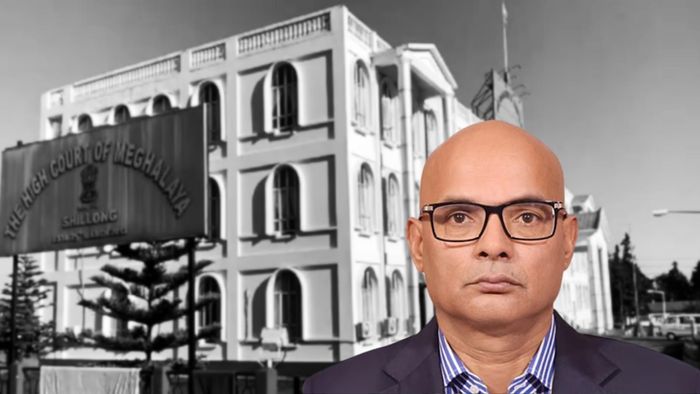
The President of the High Court of Meghalaya Bar Association, KS Kynjing, has expressed serious displeasure over what he described as unilateral decisions taken by the association’s secretary, Kishore Ch Gautam, in matters concerning Meghalaya Advocate General Amit Kumar.
In a letter to Gautam, Kynjing objected to a communication sent to the Secretary of the Supreme Court Bar Association (SCBA), press statements and a joint meeting that resulted in a call to boycott courts and tribunals across Meghalaya from October 1.
Kynjing said the communication to the SCBA dated August 17 was sent without being placed before or discussed by the Executive Committee of the High Court of Meghalaya Bar Association.
“Such an important matter, having a direct bearing upon the dignity, reputation and collective position of our Association, ought not to have been dealt with unilaterally by any office-bearer without prior consultation and authorisation of the Executive Committee,” he said.
He also objected to the language used in the communication, saying it did not reflect the “standards of civility, restraint and professional dignity” expected of members of the legal fraternity.
Kynjing further questioned the decision to hold a joint meeting of the High Court of Meghalaya Bar Association and the Shillong Bar Association on September 30 without informing or consulting him or other executive members.
According to him, the meeting resulted in a decision to boycott all courts and tribunals in Meghalaya from October 1.
Kynjing termed the decision “highly illegal” and referred to the Supreme Court’s judgment in Ex-Capt. Barish Uppal v. Union of India, (2003) 2 SCC 45, which held that lawyers have no right to strike or call for a boycott of courts.
The letter quoted the Supreme Court as holding that “lawyers have no right to go on strike or give a call for boycott, not even on a token strike”.
Kynjing also pointed to the participation of several office-bearers and members of the State Bar Council in a procession and their alleged abstention from court proceedings, saying the matter had become serious.
He said lawyers holding vakalat for clients could not refuse to appear in court because of a strike or boycott call and that Bar Councils and Bar Associations could not permit meetings for the purpose of considering such a call.
Kynjing said any decision involving the absence of advocates from court could be considered only in rare cases involving the dignity, integrity or independence of the Bar or Bench, and that the Chief Justice or District Judge would have to be consulted in such circumstances.
He also objected to press releases, media statements and a press conference being held in the name of the association without approval from its Executive Committee.
“Public statements made in the name of the Association necessarily carry the authority and reputation of the Association as a whole,” he said.
Kynjing said such actions had exposed the association and its members to “unnecessary controversy” and alleged that they had brought disrepute to the institution.
The association president also objected to banners bearing the slogan “GO BACK AMIT KUMAR” being displayed at various locations within the High Court of Meghalaya Bar Association premises.
He said the banners had allegedly been put up without prior approval from the Executive Committee or the General Body and called for their immediate removal.
“Any display of banners, posters, slogans or other such material within the Association premises ought to be undertaken only with the prior approval of the competent authority of the Association,” Kynjing said.
He argued that grievances against the Advocate General should be raised through authorised forums and procedures rather than through banners displayed on association premises.
Kynjing also urged Gautam not to escalate the matter further, pointing out that Amit Kumar had already tendered an apology in a letter dated August 13.
He noted that the state government has the prerogative to appoint the Advocate General within the constitutional and legal framework, adding that dissatisfaction with the appointment “cannot create a right in the local Bar to paralyse court proceedings until the Government changes its decision”.
Kynjing called for the entire issue, including the communication sent to the SCBA and subsequent media statements, to be placed before the Executive Committee for discussion.
He also appealed to members of the High Court of Meghalaya Bar Association and other bar associations to refrain from rallies, strikes and court boycotts that could hamper the administration and delivery of justice.
The letter, he said, was intended to reaffirm “collective decision-making, institutional discipline, professional courtesy” and the dignity of the High Court of Meghalaya Bar Association.
Kynjing asked Gautam to ensure that such unilateral actions were not repeated and urged lawyers to continue performing their duties in the interests of their clients.