Meghalaya bets on community-led tourism to protect its fragile destinations
Meghalaya outlined its community-led conservation model at a responsible tourism summit in Shillong. The approach seeks to protect fragile destinations while strengthening local livelihoods.
- Nov 20, 2026,
- Updated Nov 20, 2026, 8:21 AM IST
As Meghalaya finds itself on the global travel map, with the BBC naming it among 20 places to visit in 2027, the state is pushing a tourism model that places local communities, rather than visitor numbers, at its centre.
From restricting tourist access to ecologically sensitive sites to paying villages to protect forests, Meghalaya is seeking to link tourism growth with conservation and local livelihoods. These initiatives formed the focus of discussions at the Global Responsible Tourism Summit and Awards 2026, which opened in Shillong on November 19.
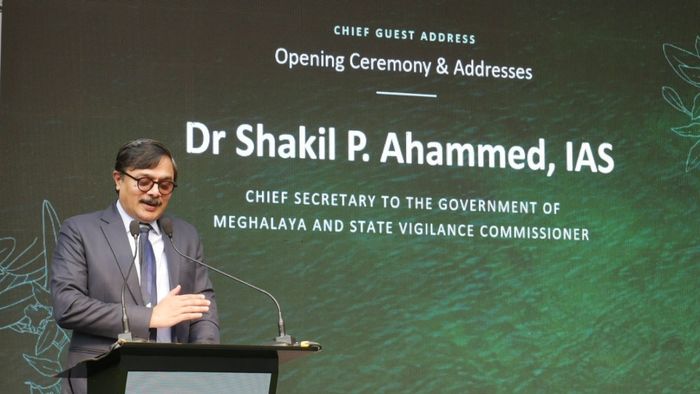
Chief Secretary Shakil P Ahammed inaugurated the two-day summit at The Grove, Ward's Lake. Organised by Outlook Traveller and Outlook Responsible Tourism in partnership with the Meghalaya Tourism Department, the event has brought together more than 50 speakers and 150 delegates from India and abroad.
Addressing the gathering, Commissioner and Secretary of the Tourism Department Vijay Kumar D said Meghalaya's traditional community institutions and conservation practices gave it an advantage in developing a model of tourism rooted in sustainability.
"If there is any place in India which should host the Global Responsible Tourism Summit, it has to be Meghalaya," he said, adding that the state's greatest strength lay in its communities.
He pointed to the traditional conservation practices of the Khasi, Garo and Jaintia communities, land protection provisions under the Sixth Schedule and the role of traditional institutions across nearly 7,000 villages. He said government interventions were being designed to build on these existing structures.
One of the prominent examples is Meghalaya's Living Root Bridges, which have been included in India's nomination for UNESCO World Heritage recognition in 2027. The nomination dossier, prepared over eight years, was submitted by an apex cooperative society representing 62 villages.
Highlighting the importance of the bridges to the state's tourism identity, Vijay Kumar said, "When you come to India, you should see the Taj Mahal; when you come to Meghalaya, you should see a living root bridge."
The state is also attempting to ensure that communities benefit directly from tourism-related projects. Vijay Kumar cited a community-public-private partnership initiative at Mawrah near Sohra, where a lake and cottages have generated employment for around 20 to 25 local residents.
Another initiative is the payment for ecosystem services programme, which covers approximately 60,000 hectares of forest. Under the scheme, communities receive an average of Rs 15,000 per hectare annually, with payments reaching up to Rs 20,000. The government is also exploring opportunities to connect the programme with carbon markets.
Managing tourist numbers at environmentally sensitive locations is another aspect of the state's approach. At Rangthylliang, the community has imposed a cap on visitors to its Living Root Bridge, while entry to Mawmluh Cave is restricted to a limited number of visitors, with charges of around Rs 3,000 per person.
The state's tourism strategy also extends to cultural initiatives. The Meghalaya Grassroots Music Programme provides paid performance opportunities to local musicians, while the Shillong Cherry Blossom Festival has developed into a major concert destination. The festival is currently in its sixth edition.
Chief Secretary Shakil P Ahammed, however, cautioned that tourism development must not come at the expense of the places and communities that sustain it.
"Sustainable tourism is a goal. Responsible tourism is the practice, the specific choices that we all make to reach the goal of sustainable tourism," he said.
Emphasising that tourism should improve the lives of residents, he added that a destination belongs first to the people who live there and should be left "better off, not merely busier".
Referring to Meghalaya's 79 community-protected fish sanctuaries, Ahammed urged visitors to respect local conservation efforts. He also raised concerns over littering at Mawlynnong and plastic waste found inside Mawmluh Cave.
"It is not for you to litter the place and the local community to clean it up for you. It is for you to imbibe the spirit of cleanliness," he said.
The summit will continue on November 20 with workshops, film screenings and other activities. A marketplace featuring more than 35 stalls has also been set up for visitors.
The Indian Responsible Tourism Summit and Awards 2026 – Meghalaya Chapter, marking its fourth edition, is scheduled to be presented by Chief Minister Conrad K Sangma on the concluding day.