Meghalaya boasts massive infrastructure plans, but funding-execution a tightrope walk
Meghalaya announces ambitious plans to enhance infrastructure, aiming for economic growth and better connectivity. Public-private partnerships are key to overcoming funding and logistical challenges
- Mar 06, 2025,
- Updated Mar 06, 2025, 5:09 PM IST
Meghalaya’s 2025-26 budget proposes massive infrastructure investments, with capital expenditure set at Rs 9,447 crore—seven times the 2017-18 level. The government is banking on public spending to drive economic growth, but concerns remain over funding sources, execution delays, and long-term sustainability.
The state’s infrastructure push covers roads, urban expansion, tourism, and industrial development. However, with over 67% of state revenue coming from central transfers and a fiscal deficit of Rs 1,970 crore, questions arise about Meghalaya’s ability to manage its financial commitments while ensuring timely project completion.
Road projects: Major allocations, but slow execution
The government has sanctioned nearly Rs 4,000 crore in road projects over the past seven years, including Rs 1,000 crore in the current financial year alone. Chief Minister Conrad K Sangma emphasised that this marks a major jump from the Rs 659 crore spent on roads between 1991 and 2018. “We recognise connectivity as the backbone for socio-economic growth,” he stated.
However, Meghalaya’s road infrastructure remains inadequate, especially in rural areas. The state has 1,700 unconnected habitations, with half expected to be covered under the next phase of the Pradhan Mantri Gram Sadak Yojana (PMGSY). The remaining villages will be linked through the Chief Minister’s Rural Connectivity Program, which aims to connect 100 habitations and construct 100 new suspension footbridges next year.
While these targets are ambitious, past performance raises doubts. Several national highway projects, including the Shillong-Dawki road and the Shillong Western Bypass (Rs 1,800 crore), have faced delays due to land acquisition and environmental concerns. Moreover, the government’s reliance on externally aided projects (EAPs) and central schemes means that any reduction in central funding could disrupt infrastructure development.
Urban expansion: New Shillong and city decongestion plans
One of the most high-profile initiatives in the budget is the development of New Shillong, where projects worth Rs 2,000 crore are underway. This includes a new state secretariat, a unity mall, a heliport, and a 20 km network of pedestrian and cycling tracks aimed at making it India’s first "non-motorised city."
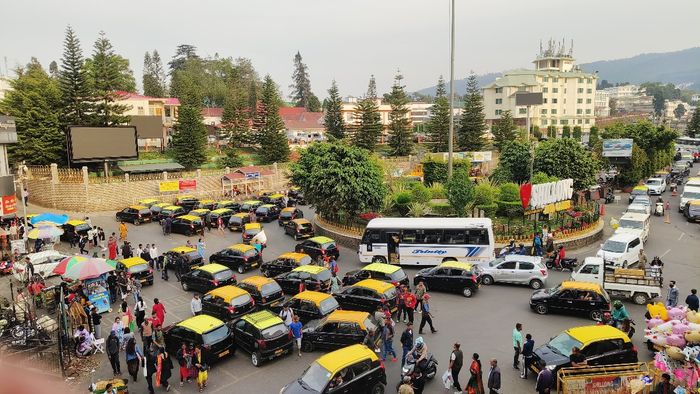
However, rapid urban expansion also brings challenges. Shillong’s congestion remains a pressing issue, with redevelopment plans for key areas like Khyndailad and Iew Duh set to begin in 2025-26. Relocation of the police reserve and central jail to New Shillong is also under discussion.
While these steps aim to ease congestion, land acquisition and implementation delays could slow progress. The government also plans to invest Rs 957 crore in urban infrastructure next year, but the impact of these projects on traffic management and housing remains uncertain.
Tourism push and private sector involvement
Tourism is another major focus area, with new projects worth Rs 450 crore initiated this year and an additional Rs 600 crore planned for 2025-26. Key developments include the redevelopment of Umiam Lake, a MICE (Meetings, Incentives, Conferences, and Exhibitions) tourism hub at Mawkhanu, a skywalk at Dympep, and luxury resorts in Sohra and Adokgre.
The government has also introduced incentives for private investment in the hospitality sector, leading to projects like Lemon Tree Hotels’ Rs 124 crore investment in Shillong and four new five-star hotels. However, sustaining investor confidence will require significant improvements in connectivity and infrastructure.
Fiscal risks and execution challenges
While Meghalaya’s infrastructure push aligns with its goal of becoming a $10 billion economy by 2028, the financial burden is substantial. The government has leveraged Rs 2,450 crore under the Special Assistance to States for Capital Investment (SASCI) in 2024-25 and expects Rs 2,695 crore in 2025-26. However, this funding is contingent on meeting reform-linked targets.
Further, the state’s heavy reliance on loans and central grants raises concerns about long-term debt sustainability. Meghalaya has increased its capital expenditure significantly, but without corresponding growth in state revenues, debt servicing costs could escalate. Interest payments are set to rise to Rs 1,347 crore in 2025-26, and loan repayments stand at Rs 2,406 crore.
“This is a 3-fold increase in expenditure over the 8-year period, which is one of the highest growth rates in the country,” Sangma noted. However, the key challenge remains whether Meghalaya can ensure the timely execution of projects without cost overruns and financial strain.
What lies ahead?
Meghalaya’s infrastructure plans are bold, but their success depends on execution efficiency, private investment uptake, and continued central support. The state’s track record of project delays, combined with financial constraints, could pose hurdles. While the government’s emphasis on urban development, roads, and tourism is strategic, whether these investments translate into sustainable economic benefits remains to be seen.