Meghalaya cave stalagmite reveals 6,000-year history of monsoon changes in Northeast India
Researchers analysed a Mawsmai Cave stalagmite to reconstruct nearly 6,000 years of monsoon change. The findings link shifts in Northeast rainfall to global climate systems and solar variability.
- Nov 04, 2026,
- Updated Nov 04, 2026, 6:19 PM IST
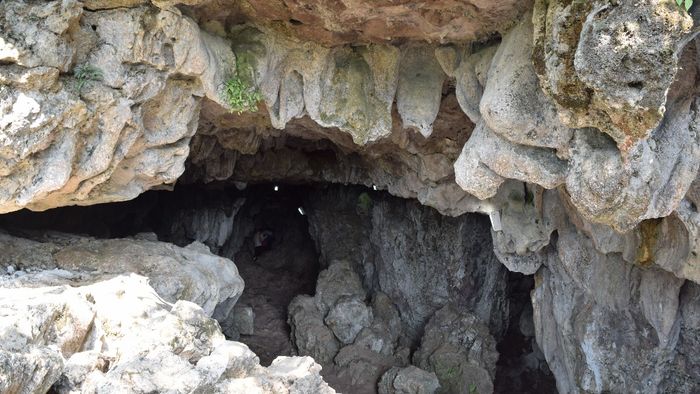
A stalagmite recovered from Meghalaya's Mawsmai Cave has offered a rare glimpse into nearly 6,000 years of monsoon history in northeastern India, revealing how rainfall patterns were shaped by global climate systems and variations in solar activity.
The findings, announced on November 4, are based on a study led by researchers from IIT Kharagpur and IISER Kolkata, who reconstructed changes in the Indian Summer Monsoon (ISM) between 11,807 and 5,622 years ago.
The research, titled 'Deciphering Holocene monsoon dynamics in northeastern India', was published earlier this year in the international journal Palaeogeography, Palaeoclimatology, Palaeoecology.
The study found that the Indian Summer Monsoon was considerably stronger during the early Holocene, before gradually weakening during the middle Holocene. The Holocene is the current geological epoch, which began around 11,700 years ago following the last Ice Age.
Researchers Yachna Verma and Anil K Gupta of IIT Kharagpur, along with Prasanta Sanyal of IISER Kolkata and co-authors Priyantan Gupta, Som Dutt, Pankaj Kumar and Abhijit Mukherjee, analysed an 11-cm-long stalagmite collected from Mawsmai Cave in Meghalaya's East Khasi Hills district, around 60 km south of Shillong.
By examining the stalagmite's stable oxygen isotope composition, mineralogical properties and petrographic characteristics, the team reconstructed historical rainfall patterns and changes in monsoon intensity.
The findings indicate that the monsoon remained particularly strong between 11,807 and 7,700 years ago. Lower oxygen isotope values during this period pointed to intensified monsoon activity. However, between 7,700 and 5,622 years ago, the monsoon gradually weakened, as reflected in rising oxygen isotope values.
The researchers also identified fluctuations in monsoon intensity over periods spanning several hundred years, suggesting that rainfall patterns in northeastern India were influenced by climate systems operating far beyond the region.
These changes corresponded with several North Atlantic climate events, identified as Bond events 8, 7, 6, 5b, 5a and 4. The researchers suggested that these events may have influenced the Indian monsoon through changes in the Atlantic Meridional Overturning Circulation (AMOC), a system of ocean currents responsible for transporting heat across the Atlantic.
The study further detected recurring climate patterns at intervals of approximately 118 and 110 years, consistent with the Gleissberg solar cycles, which are associated with long-term variations in solar activity.
According to the researchers, solar variability, interactions with the Pacific Decadal Oscillation (PDO), ocean-atmosphere dynamics and temperature differences between the Tibetan Plateau and the Indian Ocean also contributed to changes in monsoon intensity during the period.
The findings highlight how the Indian Summer Monsoon has been influenced by a combination of regional and global climate processes. The monsoon remains critical to water availability, agriculture and livelihoods across South Asia.
The researchers said northeastern India, given its geographical setting and sensitivity to climatic changes, offers an important opportunity to understand long-term monsoon behaviour.
While earlier studies have used cave deposits and other geological formations to reconstruct historical monsoon patterns, the researchers said combining petrographic evidence with conventional geochemical indicators offers an additional way to investigate prehistoric climate conditions in the region.
The stalagmite was collected from a chamber located around 300 metres inside Mawsmai Cave, where relative humidity exceeded 95 per cent.
The researchers acknowledged the assistance of the Meghalayan Adventure Association, led by B D Kharpan Daly, along with Ksan Kupar Mawlong and Kyrmen Skhembha Rani, during the fieldwork. IISER Kolkata provided facilities for isotope analysis, while IIT Kharagpur made its petrographic analysis facilities available for the study.