Meghalaya CM rejects claims of job policy failure, says employment schemes delivering results
Meghalaya Chief Minister Conrad K Sangma on February 26 dismissed opposition allegations that the state’s employment policies have failed, asserting that multiple job-creation schemes are yielding tangible results for the youth.
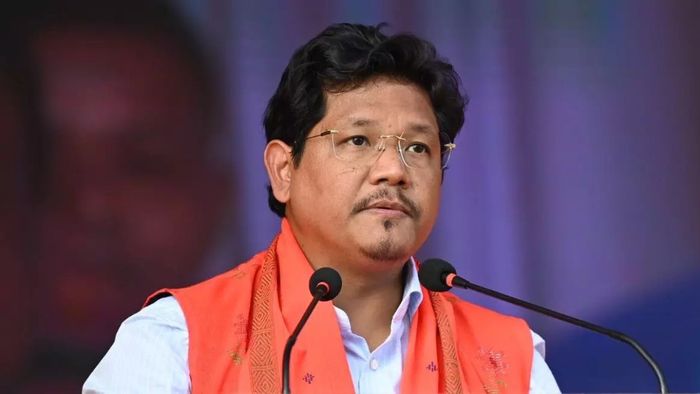
- Feb 26, 2026,
- Updated Feb 26, 2026, 7:08 PM IST
Meghalaya Chief Minister Conrad K Sangma on February 26 dismissed opposition allegations that the state’s employment policies have failed, asserting that multiple job-creation schemes are yielding tangible results for the youth.
Responding to concerns raised by Trinamool Congress legislator Dr Mizanur Kazi during Assembly proceedings, Sangma said it would be incorrect to conclude that government policies had failed, pointing out that unemployment figures vary across different surveys. Citing data, he said unemployment stood at 6.0 per cent in 2022–23 and 6.2 per cent in 2023–24 according to the Periodic Labour Force Survey, while CMIE estimates put it at 3.1 per cent.
The Chief Minister said approximately 3.66 lakh jobs have been generated in recent years and stressed that Meghalaya’s demographic profile, with nearly half its population below the age of 20, requires sustained and long-term employment interventions. “Maybe we have not yet fully fulfilled the goal, but it is a process, and we are on the right track,” he said.
Highlighting key initiatives, Sangma said ₹140 crore has been sanctioned under the FOCUS scheme to 22,500 producer groups, benefiting around 2.1 lakh people, while the FOCUS+ programme has reached another 1.5 lakh beneficiaries. Referring to the CM-Elevate programme, he noted that 22,000 applications were received within just 20 days, forcing the government to temporarily close the portal due to overwhelming response.
During the discussion, Sangma also touched upon the government’s move to mandate Khasi and Garo language proficiency for certain public sector posts. He suggested the idea of a short crash course in local languages for legislators themselves. “It would be nice if we have some classes for MLAs — a crash course for 10 or 15 days — where members from Garo Hills can learn Khasi and those from Khasi-Jaintia can learn Garo. This would send a good message that we are leading from the front,” he said.
Kazi had expressed concern that mandatory language requirements for District Selection Committee posts could disadvantage unemployed youth from plain belt areas where language training infrastructure is limited, urging the government to provide training facilities and adequate preparation time. Responding to this, Sangma clarified that the policy was not intended to exclude anyone and would require only basic communication skills rather than literary proficiency. “If they cannot speak Garo and Khasi, it will affect service delivery since they will be dealing with the local population. This is not meant to deprive anybody, but to ensure basic communication with the people we serve,” he said.
The Chief Minister also pointed to recent cabinet decisions mandating the teaching of Khasi and Garo in primary schools, with textbooks already under development, and said concerns related to grammar requirements could be examined. On governance reforms, Sangma said efforts are underway to digitise employment exchanges and highlighted the CM-Connect platform as an effective tool for grievance redressal and monitoring of government schemes.
“I assure the House that schemes and programmes will have greater impact in the days to come,” he added.