Meghalaya HC quashes POCSO case as couple raise two children under Khasi custom
The Meghalaya High Court quashed a POCSO case after finding that the couple now live together under Khasi customary practices and are raising two children. It also directed authorities to secure welfare benefits, education support and any eligible compensation for the woman and her children.
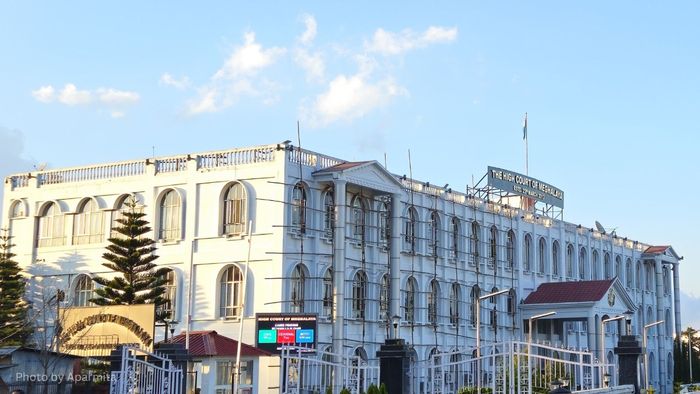
- Jul 14, 2026,
- Updated Jul 14, 2026, 6:59 PM IST
The Meghalaya High Court has quashed a POCSO case against a man after noting that he and the complainant, who was a minor at the time of the incident, are now living together as husband and wife under Khasi customary practices and are raising two children. The court also directed authorities to ensure that the woman and her children receive all eligible government welfare benefits.
The case arose from an FIR registered at the Umroi Women Police Station in Ri-Bhoi district on August 16, 2023, under Sections 3(a)/4 and 5(j)(ii)/6 of the Protection of Children from Sexual Offences (POCSO) Act. The petition seeking to quash the FIR was jointly filed by the accused, the woman and her mother, who was the original complainant.
The court noted that at the time of the incident, the accused was around 22 years old while the girl was about 17 years and eight months old. It observed that the couple are now about 25 and 20 years old respectively, have two children aged two years and eight months, and are recognised as husband and wife under Khasi customary practices.
A report submitted by the High Court Legal Services Committee found that the woman was "happy in her relationship", had "no objection to the quashing" of the proceedings, and that her mother also supported the plea because the couple were "living happily as a family together with their children". The report further stated that the woman wished to resume her education and pursue vocational training in cooking or horticulture if given an opportunity.
Referring to its earlier judgment in Shalenbor Wahlang vs State of Meghalaya, the High Court said, "The ground realities in the State of Meghalaya cannot be ignored and lost sight of," pointing to the prevalence of adolescent consensual relationships that result in early marriages or couples living together and raising children. The court reiterated that while POCSO offences are crimes against society, "the administration or enforcement of the law cannot be divorced from lived realities".
The court also reproduced its earlier observation that in exceptional cases, quashing of a POCSO case by consent is permissible, provided the victim's consent is genuine and informed, and all relevant factors, including the welfare of the victim and child, are considered. It stressed that "there cannot be any straitjacket formula" and that each case must be decided on its own facts.
Allowing the petition, the court said there was "no impediment" to quashing the proceedings, adding that if the case continued, "great and serious prejudice will be caused" to the woman and the two children born from the relationship.
The High Court further directed the District Child Protection Officer and the District Legal Services Authority in Ri-Bhoi to ensure the woman and her children receive all applicable Central and State government schemes, including victim compensation, healthcare, education and child protection benefits. It also instructed authorities to take steps to help the woman resume her education and enrol in vocational training. If compensation is awarded under the Victim Compensation Scheme, the court ordered that it be kept in a fixed deposit until she turns 25, while allowing her to receive the quarterly interest.