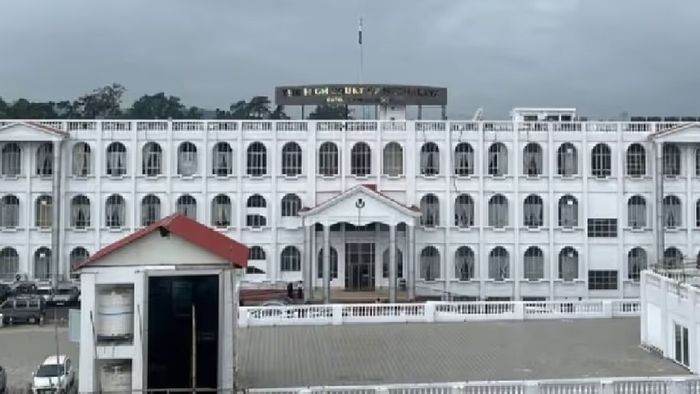
Meghalaya High Court clears way for Ri-Bhoi highway, dismisses PIL
The Meghalaya High Court has disposed of a public interest litigation challenging a proposed high-speed highway corridor in Ri-Bhoi district, stating that the concerns raised had been addressed and assurances given by authorities would be followed.
- Apr 23, 2026,
- Updated Apr 23, 2026, 8:11 AM IST
The Meghalaya High Court has disposed of a public interest litigation challenging a proposed high-speed highway corridor in Ri-Bhoi district, stating that the concerns raised had been addressed and assurances given by authorities would be followed.
The petition sought a halt to “all acquisition, survey and preparatory activities” and called for disclosure of environmental and social impact studies, public consultation, and exploration of less destructive alternatives.
The case centred on a 166.8 km greenfield high-speed corridor, with about 144.8 km falling within Meghalaya. The petitioner argued that the alignment passes through a fragile hill ecosystem prone to landslides, soil erosion and groundwater depletion, and flagged risks based on earlier highway projects that allegedly led to “ecological destabilisation, recurring landslides” and delays.
Concerns were also raised about the route passing through agricultural land, community-owned tribal areas, forests and water catchments, as well as its proximity to Lum Sohpetbneng, a site of cultural and religious significance.
Authorities, however, told the court that the project had been approved by the Cabinet Committee on Economic Affairs in May 2025 at a cost of Rs 22,864 crore and was intended to improve connectivity, logistics efficiency and strategic access in the North-East.
They stated that the corridor would “boost connectivity in the North-East Region” and ensure faster movement of goods, while also having “significant strategic and defence importance”.
In affidavits, officials said the project falls within 100 km of an international border and is therefore exempt from prior environmental clearance, though it must comply with a standard operating procedure on environmental safeguards. These include risk assessments, landslide management plans, drainage protection, and pollution control measures.
The project design includes 599 culverts, 79 minor bridges, 13 major bridges and 171 viaducts, along with slope stabilisation and erosion control systems. Authorities also said forest clearances and compliance with the Forest Rights Act would be obtained before construction begins.
On cultural concerns, the government maintained that the “core sacred area of Lum Sohpetbneng” lies outside both the land acquisition zone and the project’s direct impact area. It added that alignment changes were made following consultations with village headmen to avoid water sources and minimise impact on paddy fields.
Minutes of meetings cited in the affidavit noted that, after revisions, local representatives expressed satisfaction with the modified alignment and that “paddy fields, water sources have been avoided” in the project corridor.
The state government further clarified that current activities are preliminary and “do not constitute final land acquisition”, with affected stakeholders being given opportunities to raise objections under due process.
Taking note of these submissions, the court said it found no merit in the petition, observing that authorities had agreed to follow all statutory requirements and safeguards.
It recorded that steps would be taken to protect “the environment, natural streams, cultural sites”, and that necessary permissions would be obtained before the project proceeds.
The court also left the door open for future legal action, stating that the petitioner may file a fresh case if a new cause of action arises.
The petition was disposed of on April 17, 2026.