Meghalaya High Court flags staff shortage, equipment gaps at forensic lab; seeks urgent action
The Meghalaya High Court directed the state government to urgently address deficiencies at Shillong's forensic laboratory. The court warned that staffing, equipment and maintenance gaps could delay criminal cases.
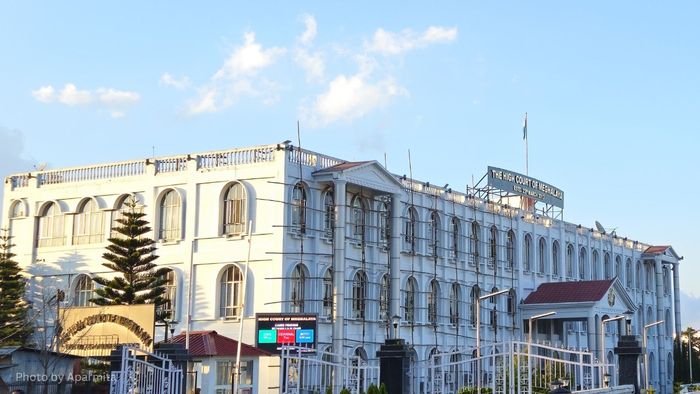
- Nov 10, 2026,
- Updated Nov 10, 2026, 5:05 PM IST
The Meghalaya High Court has raised concerns over infrastructure deficiencies, a shortage of scientific personnel and non-functional equipment at the Directorate of Forensic Sciences Laboratory in Shillong, warning that these shortcomings could delay criminal investigations and affect the administration of justice.
A division bench of Chief Justice Revati Mohite Dere and Justice W Diengdoh, in an order dated November 5, directed the state government to take urgent steps to address the deficiencies identified by amicus curiae K Ch Gautam after inspecting the facility. The court also sought action on pending approvals, vacancies and maintenance work.
The court observed that forensic reports play a crucial role in criminal investigations and that delays in forensic examinations could have serious consequences for investigations, the preparation of chargesheets and court trials.
The inspection report highlighted poor maintenance of the laboratory premises, inadequate sanitation and a shortage of housekeeping staff. Several sections of the building were found to be damp and inadequately maintained, while workstations in different divisions were described as unhygienic.
The court noted that the entire three-storeyed building has only one cleaner, forcing officials, including scientific officers, to clean and maintain their respective divisions.
The report also identified significant manpower shortages in the Chemistry, Biology/DNA, Documents, Cyber Forensics, Ballistics and Physics divisions. Vacant gazetted posts include those of two Deputy Directors and two Scientific Officers.
The court expressed particular concern that one Scientific Officer, assisted by only one person, was overseeing the Cyber Forensic Unit while also managing the Physical Division single-handedly. It also noted that several divisions required laboratory bearers and other support personnel to handle materials and exhibits and maintain laboratory spaces.
The report further stated that the present Director of the Directorate does not have a technical or scientific background in forensic science. The court described this as a "matter of serious concern", observing that the specialised nature of the institution required adequate technical and scientific supervision.
The laboratory is also facing shortages of equipment and essential consumables, affecting several forensic services. Citing the amicus curiae's report, the court noted that equipment in the Chemistry Division was non-functional, NDPS testing had been interrupted, shortages of chemicals were affecting DNA analysis, and the Biology/DNA Division lacked adequate equipment.
The Documents and Physical divisions require modern equipment, while the Cyber Forensics Unit needs updated hardware and software. The report also identified regular maintenance and calibration of scientific equipment as pressing requirements and flagged the need for air conditioners and fans across the facility.
The court was informed that the laboratory's generator, installed in 2024, had stopped working after a sudden high-voltage surge from the main power line. The Directorate sought government approval for its repair or replacement through a letter dated September 23, 2026.
The letter said the generator was a critical backup power source and that its downtime posed risks to daily operations, data safety and productivity. The laboratory houses sophisticated equipment requiring an uninterrupted power supply. However, the request remained pending before the Joint Secretary of the Meghalaya government's Home (Police) Department.
The state government also informed the court that requests to purchase consumables and equipment, along with the proposal to replace the generator, were awaiting approval from the Finance Department.
A quotation process to procure DNA consumables under the state fund had been initiated, and the technical evaluation of participating firms had been completed. However, the proposal forwarded to the government on October 8 was yet to receive approval.
Emphasising the implications of the deficiencies, the High Court said delays in forensic examinations could have serious consequences for criminal cases. "Deficiencies in forensic reports can also lead to acquittals," the bench observed.
The bench added that shortages of scientific and technical personnel contributed significantly to delays in examinations and reporting, particularly when the volume of cases exceeded the available technical capacity.
The court directed the state government to place the amicus curiae's report before the Secretary and Joint Secretary of the Home (Police) Department to facilitate prompt action on pending approvals, existing vacancies and other shortcomings.
It also directed the government to fill vacancies, including Grade-IV posts, at the earliest and treat maintenance of the laboratory building as a priority. The court said retired FSL employees could be engaged on a contractual basis, if required, until regular appointments were made.
The bench asked the Additional Advocate General to file an affidavit before the next hearing, detailing the steps taken by the government. It also directed the state government to pay Rs 50,000 to Gautam for his contribution and assistance to the proceedings.
The matter has been listed for further hearing on November 19, when the court will consider the government's response on staffing, equipment, consumables, power backup and maintenance at the forensic laboratory.