Meghalaya launches child protection project amid POCSO cases in East Khasi Hills
Meghalaya's legal services authorities and state government have launched Ka Jingkyrmen in East Khasi Hills. The project seeks to improve legal awareness, prevent abuse and strengthen community-level protection for children.
- Oct 16, 2026,
- Updated Oct 16, 2026, 8:31 AM IST
The Meghalaya State Legal Services Authority (MSLSA) and the District Legal Services Authority (DLSA), East Khasi Hills, have launched a child protection initiative following reports of 29 POCSO cases in Mawlai Block and 26 in Mawryngkneng Block.
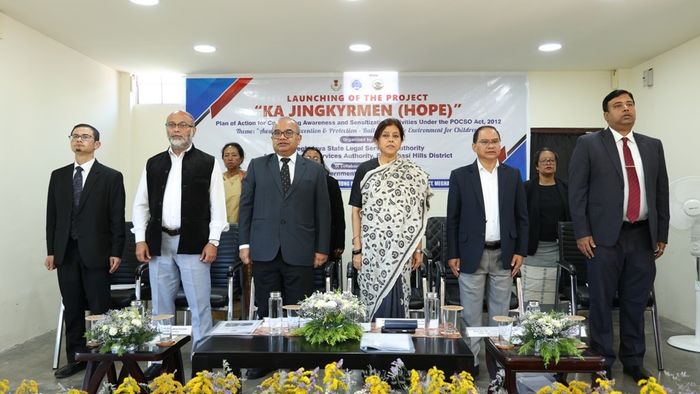
The project, named Ka Jingkyrmen (Hope), was launched on Friday in collaboration with the Meghalaya government. It aims to prevent offences against children, improve awareness of legal rights and strengthen community-level child protection mechanisms under the Protection of Children from Sexual Offences (POCSO) Act, 2012.
Chief Justice of the High Court of Meghalaya Revati Mohite Dere, who is also the Patron-in-Chief of MSLSA, said the initiative was conceived in response to cases encountered during judicial proceedings, including those involving adolescents in romantic relationships.
She stressed that young people need to understand the legal consequences of sexual activity involving minors, pointing out that consent given by a person below 18 years of age is not a defence under the POCSO Act.
Such cases can have far-reaching consequences, including school dropouts, pregnancy, arrest and prosecution, potentially affecting the future of both boys and girls, she said.
Emphasising the importance of education, the Chief Justice urged children to complete their studies and pursue their aspirations, describing education as essential for empowerment and access to future opportunities.
Commissioner and Secretary of the Social Welfare Department Pravin Bakshi said the project would focus on legal awareness, community sensitisation and coordinated intervention by government departments and other stakeholders.
He cited the 29 POCSO cases reported in Mawlai Block and 26 in Mawryngkneng Block as indicators of the need for sustained awareness and preventive measures.
Bakshi also outlined existing child protection measures, including Mission Vatsalya, which provides care and support to children in difficult circumstances, and Child Care Institutions that offer shelter, protection and rehabilitation to children in need.
He said the Child Helpline had been integrated with the Emergency Response Support System (112) and the Women Helpline (181) to improve access to assistance.
Justice H S Thangkhiew, a judge of the High Court of Meghalaya and Executive Chairman of MSLSA, said the initiative was formulated under the directions of the Chief Justice to improve awareness, particularly among vulnerable children and communities most affected by offences.
He stressed the need to communicate legal information in languages that children and local communities can understand, making awareness programmes more accessible and effective.
The project will cover children's rights under the POCSO Act, good and bad touch, consent, child safety and digital awareness, including protection against online risks and cybercrime.
It will also publicise helpline numbers, including the Legal Services Helpline (15100), Cyber Crime Helpline (1930) and Police Emergency Helpline (112), to help children and community members seek assistance.
The initiative will involve the Social Welfare, Health and Education departments, police, district administration, students, teachers, Anganwadi workers, para-legal volunteers and traditional village institutions.
Alongside preventing abuse, the project aims to reduce school dropouts by connecting children with guidance and support services.
Through the initiative, the legal services authorities and the state government intend to strengthen coordination between institutions and local communities to improve child safety, promote legal awareness and ensure access to protection and rehabilitation services.