Meghalaya launches eco-tourism project, open-air museum to spotlight Khasi heritage
Meghalaya inaugurated the Pine Home project and the Twahlongwar Open-Air Museum on August 17. The twin launches tie tourism growth to local participation, sustainable building and heritage research.
India TodayNE
- Aug 17, 2026,
- Updated Aug 17, 2026, 6:49 PM IST
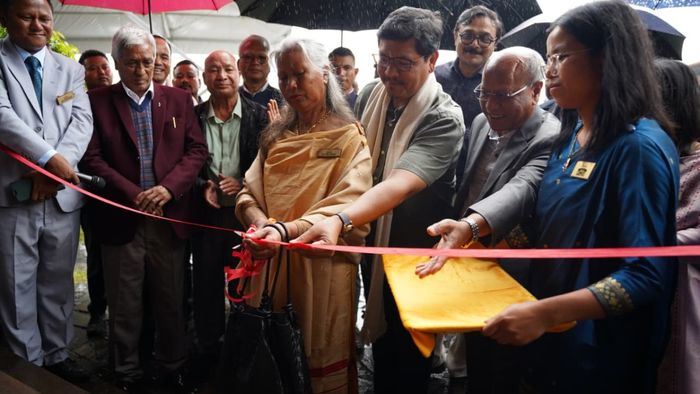
Meghalaya on August 17 inaugurated its first eco-sustainable habitat, the Pine Home project at Mawlangwir village in South West Khasi Hills, alongside the Twahlongwar Open-Air Museum in Mawsynram, as the state seeks to expand community-led tourism while preserving its cultural and archaeological heritage.
The Rs 4-crore Pine Home project combines local materials and traditional construction practices with modern architectural and engineering techniques. Built by local masons and artisans, the project uses indigenous materials including wood and bricks, along with recycled wool between walls to provide natural insulation.
The initiative has been developed through a collaboration involving the Picasso Pupils Art Society, Emage Architecture Studio of Slovakia and the Saitsnad Multipurpose Co-operative Society, with support from the Meghalaya Tourism Department. It is also linked to the state's homestay programme, under which local families are encouraged to develop tourism accommodation.
Chief Minister Conrad K Sangma said the government's role was to create an ecosystem in which local enterprises and organisations could grow.
“Our job is limited to providing the ecosystem and providing the support and the policies, for enterprise and for organisations to thrive,” Sangma said.
He said the use of local materials was central to the project's sustainability, pointing to the incorporation of recycled wool into the walls and the use of locally sourced wood and bricks.
The event also saw the remote inauguration of the Twahlongwar Open-Air Museum in Mawsynram, which has been developed around the remains of an early Khasi settlement dating to the mid-18th century.
The archaeological site contains more than 20 structures, megaliths, an old market, an iron furnace and remnants of historic trade routes. The government has sanctioned around ₹63 lakh for infrastructure and research related to the open-air museum.
Sangma said the project was aimed at ensuring that Meghalaya's history remained connected to its present.
“Our culture, our history, our traditions are what makes us unique,” he said.
He also announced the formation of a committee to undertake deeper research into the history of the Khasi, Pnar and Garo communities. The government has earmarked Rs 20 crore for the initiative, with 100 researchers expected to work with DNA testing agencies as part of the research.
Sangma also outlined development plans for South West Khasi Hills, including road infrastructure, tourism and employment initiatives. He said the Shillong airport would be ready to handle larger aircraft by next year, describing the development as a potential boost for Meghalaya's tourism sector.
The inauguration was accompanied by financial assistance for local tourism initiatives. Fifteen beneficiaries under the Chief Minister's Homestay Scheme received sanction letters worth ₹10 lakh each for tourism accommodation infrastructure. Three registered tourism societies were also sanctioned ₹5 lakh each to develop tourism sites in the region.
Tourism Commissioner and Secretary Rosetta Kurbah said the Pine Home demonstrated how local raw materials, traditional knowledge and modern science could be combined in low-carbon construction. She said the facility could eventually develop into a centre for learning, training and research on ecological construction.
Saitsnad Multipurpose Cooperative Society secretary Esfulding Marwein said the project had helped the community understand how local raw materials could be used in environmentally safer ways.
The two projects mark a shift towards combining tourism infrastructure with local participation and heritage conservation, with the government positioning both as models for community-based and sustainable tourism in Meghalaya.
MORE NEWS
Read more!