Meghalaya, Mizoram lead India’s cleanest air list in WHO data
Four of the five Indian locations with the lowest reported annual PM2.5 concentrations in the World Health Organization’s latest air-quality database are in the Northeast, with Meghalaya and Mizoram accounting for all four.
- Sep 22, 2026,
- Updated Sep 22, 2026, 8:52 PM IST
Four of the five Indian locations with the lowest reported annual PM2.5 concentrations in the World Health Organization’s latest air-quality database are in the Northeast, with Meghalaya and Mizoram accounting for all four.
According to the WHO Ambient Air Quality Database, Version 8.0, released in June 2026, Lunglei in Mizoram and Tura in Meghalaya recorded the lowest reported annual average PM2.5 concentration in the Indian dataset at 6 micrograms per cubic metre.
They were followed by Nongstoin in Meghalaya at 7 micrograms per cubic metre, while Dawki in Meghalaya and Kolasib in Mizoram recorded 8 micrograms per cubic metre.
The figures come from ground-level measurements covering human settlements across India and are part of a global WHO database containing annual average concentrations of PM2.5, PM10 and nitrogen dioxide from 8,023 settlements in 127 countries and territories.
Four of India's five lowest readings in Northeast
The data puts Meghalaya and Mizoram prominently on India's air-quality map.
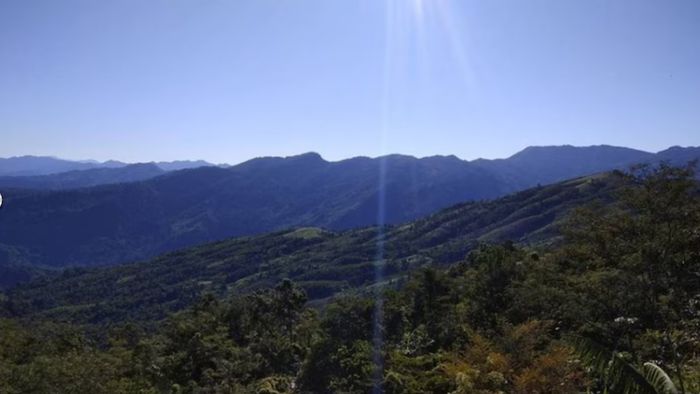
Lunglei, the headquarters of Mizoram's Lunglei district, recorded an annual average PM2.5 concentration of 6 micrograms per cubic metre. Located in southern Mizoram, the town lies in a largely hilly landscape and shares an international boundary with Bangladesh.
Tura, the headquarters of Meghalaya's West Garo Hills district, recorded the same level of 6 micrograms per cubic metre. The town is located at the foothills of the Tura Range and is surrounded by the Garo Hills.
Nongstoin, the headquarters of Meghalaya's West Khasi Hills district, recorded 7 micrograms per cubic metre.
Dawki in Meghalaya's West Jaintia Hills recorded 8 micrograms per cubic metre. Located close to the Bangladesh border, the town is better known for its border landscape and the Umngot River than for large-scale urban activity.
Kolasib in northern Mizoram also recorded 8 micrograms per cubic metre. The town, which borders Assam, is the headquarters of Kolasib district.
Important caveat: These are 2021 readings
The figures should not be interpreted as current 2026 air-quality readings.
All five of the lowest Indian measurements cited from the WHO database are from 2021. The WHO also cautions that its database is not comprehensive and that monitoring coverage and measurement methods vary between locations.
The figures therefore do not amount to an official WHO ranking of India's cleanest cities or towns.
PM2.5 refers to fine particulate matter measuring 2.5 micrometres or less in diameter. Such particles can originate from sources including fossil-fuel combustion and other human activities.
The WHO database uses ground-level measurements intended to represent air quality across a settlement rather than simply reporting a reading from a single monitoring station.
Why does the Northeast feature so prominently?
The concentration of low readings in Meghalaya and Mizoram stands out against India's broader air-pollution picture, particularly because the two states are characterised by hilly terrain and relatively smaller urban centres compared with India's major metropolitan areas.
However, the available data alone does not establish that geography, hills or forests are responsible for the lower PM2.5 levels.
Annual particulate concentrations can be influenced by several factors, including local emissions, transport, industrial activity, fuel use, weather, topography and the location and extent of air-quality monitoring.
A low annual average also does not mean that pollution is absent throughout the year. Short-term pollution episodes can occur even in locations that record relatively low annual PM2.5 concentrations.
Still, the WHO dataset offers a notable snapshot of the Northeast's air-quality profile: four of the five lowest reported annual PM2.5 readings in India's database came from Meghalaya and Mizoram.