Meghalaya seeks mining rules tailored to local conditions, Centre examining proposal: Conrad Sangma
Meghalaya has asked the Centre for mining rules suited to its terrain and land ownership patterns. The proposed framework is meant to balance legal extraction, worker safety, environmental safeguards and livelihoods.
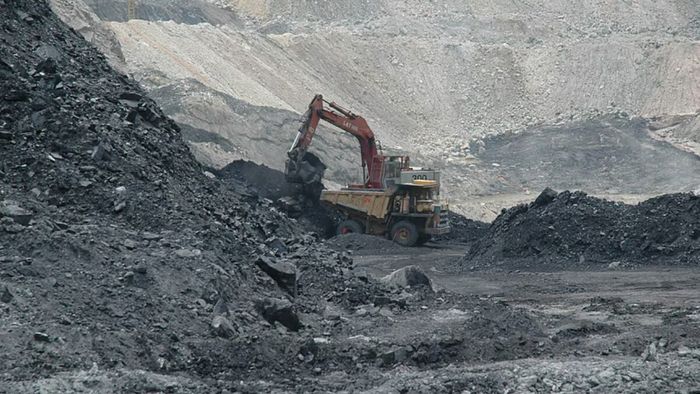
- Aug 25, 2026,
- Updated Aug 25, 2026, 9:34 PM IST
The Centre is considering a special framework to help Meghalaya shift from rat-hole coal mining to scientific extraction, Chief Minister Conrad K Sangma told the state Assembly on August 25.
Replying to a short-duration discussion raised by VPP president Ardent Miller Basaiawmoit, Sangma said the Union Coal Ministry had acknowledged that Meghalaya's mining conditions were different from those in other parts of the country and was looking at a separate approach.
The National Green Tribunal banned coal mining and the transportation of coal from Meghalaya in 2014, citing concerns over unscientific rat-hole mining. The Supreme Court subsequently allowed scientific mining in 2019, subject to compliance with existing laws.
Sangma said implementing scientific mining has remained difficult because coal-bearing areas in Meghalaya are largely under traditional land ownership and the state's steep coal seams make open-cast mining impractical in several locations.
"The Coal Ministry has been seeing the Meghalaya case differently, and it has to create a framework that balances safety and livelihood," Sangma said.
The chief minister said he recently met the Union Coal Minister in Delhi along with the MLA from Sutnga-Saipung to discuss the difficulties involved in the transition. According to Sangma, the Union minister directed officials to examine the issue and find a workable solution.
Sangma said he had sought a time-bound response and urged the Centre to reconsider the existing requirement of at least 100 hectares of land for mining. The state wants the threshold to be brought down to a level that can be realistically implemented by local mine owners, while retaining safeguards for workers and the environment.
He said the issue had also been raised with the Additional Secretary of the Coal Ministry, with the state government explaining why Meghalaya needed a different approach to scientific mining.
Sangma also highlighted the difficulties faced by indigenous miners, many of whom have limited technical knowledge and have struggled to adapt to newer mining methods following the ban.
The scale of mining in East Jaintia Hills adds to the challenge, he said, claiming that the district has around 22,000 coal mines.
"With this number of mines, you cannot even imagine. It is a struggle for the officials to ensure that the operations are carried out according to the law," Sangma said.
The chief minister acknowledged that illegal mining had led to mine closures and affected livelihoods. However, he said the government's aim was to allow mining to continue within a legal framework while cracking down on illegal operations.
The proposed framework, Sangma said, would have to balance three concerns — legal mining, worker safety and environmental protection — while ensuring that communities dependent on coal do not lose their livelihoods.