Meghalaya unveils Soil Lake at Williamnagar as state confronts fast-accelerating climate threat
Meghalaya unveils Soil Lake at Williamnagar to combat climate change. The initiative promotes sustainability and ecological balance in local communities
- Dec 12, 2025,
- Updated Dec 12, 2025, 2:45 PM IST
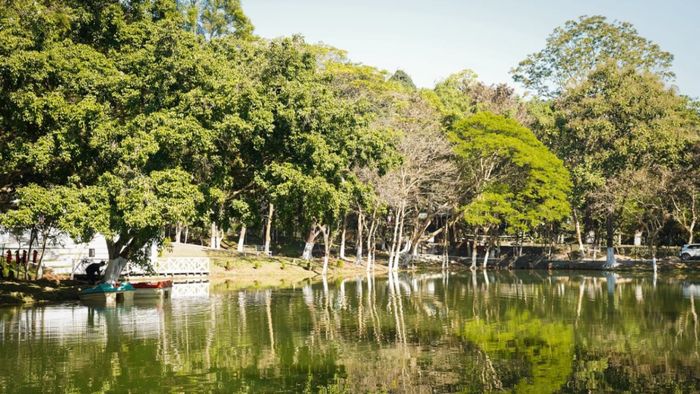
A renewed warning over Meghalaya’s worsening climate stress dominated Chief Minister Conrad K Sangma’s remarks as he inaugurated the Soil Lake at Williamnagar in East Garo Hills, developed under the Nengsang River Valley Project to rejuvenate a key water body and boost eco-tourism.
Sangma dedicated the lake to the people of Williamnagar, saying the intervention would enhance the town’s landscape while reinforcing long-term conservation. He recalled that the late PA Sangma had repeatedly pushed for the spring’s revival, noting, “That was the motivating factor for us to make this a reality today… It was his vision that guided us.”
He commended the Soil and Water Conservation Department for its sustained work and called the project “another shining example of the true commitment shown by the department’s officials.” But the Chief Minister issued a stark caution over environmental decline. “It may seem like we have enough time, but our race against climate change is becoming more difficult each day,” he said, pointing to studies suggesting Meghalaya may have “even crossed the tipping point” as impacts on water bodies, agriculture, and forests intensify.
Sangma warned that the next decade could bring substantial challenges, urging a sharper focus on interventions in rural areas, where most of the State’s nearly 70,000 springs are located. “You have started doing commendable work, but we need more,” he said, adding that community participation would be key to “conserve, preserve, and rejuvenate these water bodies.”
He also criticised the divisive commentary often seen on social media regarding development projects. He insisted the government follow an equitable approach: “Our government never excludes any region, community, or group. We are working for all districts and all communities of the State.”
Soil and Water Conservation Minister Marcuise N. Marak echoed concerns about climate pressure, noting a decline in spring discharge, irregular rainfall, and greater soil erosion over the past decade. He said, “nearly 70,000 springs sustain our rural households, and many of them are now under threat,” with over 40 per cent of villages reporting reduced water availability during lean seasons.
Marak outlined the government’s wider response — including the Meghalaya Climate Change Council and partnerships with national and international institutions — to advance scientific, community-led solutions. Flagship programmes such as spring rejuvenation, watershed development, and climate-adaptive water harvesting are underway, with more than 500 new structures planned to support irrigation, recharge groundwater, and moderate floods and droughts.
L. Shabong, Director of the Soil & Water Conservation Department, said the newly developed lake stands as a “classic example” of how conservation assets can be converted into sustainable eco-tourism resources. The 0.5-hectare water body, capable of holding nearly 10,000 cubic metres of water, offers both ecological and economic value.
He added that the department is building a detailed database of water-source discharge and has begun implementing a community-based water harvesting programme involving 533 structures to strengthen irrigation, flood control, and, where feasible, micro-hydropower generation.