Meghalaya’s freedom fighters: The forgotten battles that shaped the spirit of a state
Long before India became independent in 1947, the hills of present-day Meghalaya had already witnessed fierce resistance to British rule.
- Aug 15, 2026,
- Updated Aug 15, 2026, 1:09 PM IST
Long before India became independent in 1947, the hills of present-day Meghalaya had already witnessed fierce resistance to British rule.
From the Khasi and Jaintia Hills to the Garo Hills, indigenous leaders challenged colonial expansion, taxation and interference in their traditional way of life, often with limited resources but extraordinary determination.
As India marks its 80th Independence Day, Meghalaya's freedom story offers a reminder that the struggle for freedom was not confined to the major centres of British India. In the hills of the Northeast, resistance took its own form—through armed uprisings, defence of traditional institutions and even the power of the written word.
Among the earliest and most prominent figures was U Tirot Sing Syiem, the Khasi chief who led the Anglo-Khasi War against the British from 1829. His resistance began after the British sought to establish control and construct a road through Khasi territory. Tirot Sing and his followers launched attacks against the colonial forces, turning the Khasi Hills into a major theatre of resistance.
Armed primarily with traditional weapons such as bows, arrows and spears, the Khasi warriors confronted a far better-equipped British force. Tirot Sing eventually surrendered after years of resistance and was imprisoned in Dhaka, where he died in 1835. His name has since become synonymous with the Khasi resistance to colonial rule.
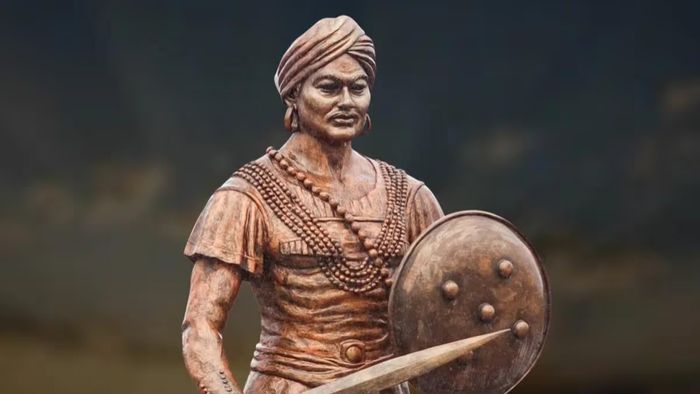
In the Garo Hills, another warrior rose against British expansion. Pa Togan Nengminza Sangma led the resistance of the Garo people against the colonial forces. With his warriors equipped largely with traditional weapons and shields, he confronted the British at a time when colonial authority was expanding into the region.
Togan Sangma was killed in the battle against the British, but his resistance became an enduring symbol of courage in the Garo Hills.
The Jaintia Hills produced another important figure in the form of U Kiang Nangbah, who led an uprising against British rule in 1862. The immediate trigger was opposition to British taxation and interference in the traditional administration of the Jaintia people.
Nangbah mobilised people against the colonial authorities and continued the resistance despite the overwhelming military advantage enjoyed by the British. He was eventually captured and publicly executed in Jowai in 1863. His final words and defiance have since become an important part of Jaintia historical memory.
But Meghalaya's resistance to colonial rule was not fought only with weapons.
At a time when colonial influence was transforming social and cultural life, a group of young Khasi men took up the task of protecting indigenous identity. In 1899, 16 young Khasi men, under the guidance of Babu Jeebon Roy, founded the Seng Khasi Movement.
The movement sought to preserve Khasi language, culture, indigenous faith and traditional practices at a time when colonial-era influences were rapidly changing society. Its contribution demonstrated another dimension of resistance—the struggle to preserve identity and cultural heritage.
The written word also became a weapon.
U Sib Charan Roy challenged colonial authority through journalism. He printed, published and edited U Nongphira (The Watchman), among the early bilingual newspapers of the region. Through his writings, he criticised British policies and imperial rule.
His journalism eventually attracted the attention of the colonial authorities. U Nongphira was banned by the British in 1915 following its criticism of the government.
These stories reveal that Meghalaya's freedom struggle was not a single movement led by one individual or confined to one period. It evolved across generations and took different forms—from armed resistance and opposition to colonial taxation to the preservation of indigenous culture and resistance through journalism.
The sacrifices of these figures have continued to occupy an important place in Meghalaya's public memory. In 2020, portraits of Pa Togan Sangma, U Tirot Sing Syiem and U Kiang Nangbah were unveiled at Raj Bhavan in Shillong as a tribute to the state's prominent freedom fighters.
Yet the relevance of their stories extends beyond remembrance.
The resistance of Tirot Sing, Togan Sangma and Kiang Nangbah was rooted in a determination to protect land, community and dignity. The Seng Khasi movement sought to safeguard identity, while U Sib Charan Roy used journalism to challenge colonial power. Together, their stories broaden the meaning of the freedom struggle in Meghalaya.
For a state where indigenous traditions, community institutions and cultural identity remain central to public life, their legacy also raises a larger question: what does freedom mean after independence?
For Meghalaya, the answer lies partly in preserving what its freedom fighters fought to protect while preparing a new generation to carry that legacy forward.
As the state looks towards Viksit Meghalaya and Viksit Bharat @ 2047, its freedom fighters remain more than figures from history books. Their courage, resistance and determination offer a historical foundation for a younger generation expected to shape Meghalaya's future.
The battles may have ended nearly two centuries ago, but the spirit that drove Meghalaya's patriots—to defend their land, identity and dignity—continues to define the state's story.