Northeast saw big gains in connectivity, science infra in decade: Jitendra Singh
Union Minister of State for Science and Technology Jitendra Singh reviewed science and technology institutions at NECTAR in Shillong and outlined the Northeast's infrastructure and research gains. He said stronger connectivity, better monitoring systems and grassroots technology would support livelihoods and regional development.
- Jul 13, 2026,
- Updated Jul 13, 2026, 9:17 PM IST
Union Minister of State for Science and Technology Jitendra Singh on July 13 said the Northeast has witnessed significant improvements in connectivity, scientific infrastructure and development over the past decade, describing the region as increasingly integrated with the country's growth trajectory.
Speaking to reporters after chairing a review meeting of science and technology institutions at the North East Centre for Technology Application and Reach (NECTAR) in Shillong, Singh said the region has undergone major infrastructure upgrades. He noted that states which previously lacked railway links are now being connected through expanding rail networks, while new airports and improved road infrastructure have reduced travel time and enhanced accessibility.
Highlighting developments in scientific infrastructure, Singh said the number of weather radars in the Northeast has risen from two before 2014 to 13, with more planned under Mission Mausam. He also said the number of seismological observatories and monitoring stations has increased from around 80 to more than 170, strengthening earthquake surveillance and disaster preparedness in one of the country's most seismically active regions.
He said these improvements have contributed to better connectivity and wider opportunities for people in the Northeast. According to Singh, young people from the region are making their mark in sectors such as aviation, tourism, healthcare and nursing. Referring to the recent recruitment of nurses for Japan, he said a large number of selected candidates were from the Northeast, particularly Meghalaya.
Singh credited Prime Minister Narendra Modi's sustained focus on the region for its progress, stating that the Prime Minister has visited the Northeast nearly 80 times. He also pointed to improvements in telecommunications and digital connectivity, saying they have further strengthened the region's integration with the rest of the country.
Earlier in the day, Singh inspected NECTAR's Mobile Food Processing Unit, developed jointly with the CSIR-Central Food Technological Research Institute, which is designed to bring food processing technology directly to farmers to support value addition and improve livelihoods.
He also visited the Vasundhara Soil Organic Carbon Detection Laboratory-cum-Manufacturing Unit, established under the PM-DevINE scheme using technology transferred from the Bhabha Atomic Research Centre for on-site soil testing.
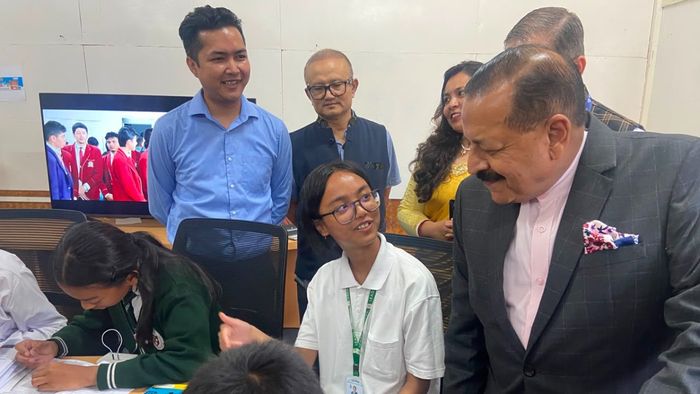
The minister interacted with students at NECTAR's STEM Education Laboratory, where he observed demonstrations in robotics, coding, artificial intelligence and 3D printing. He also inaugurated the centre's GeoInformatics Laboratory, equipped with drone, LiDAR and geospatial technologies aimed at strengthening research and applications in the region.
During the review meeting, heads of several science and technology institutions presented updates on ongoing projects, achievements and future plans focused on research, innovation, capacity building and socio-economic development in the Northeast.
Addressing the meeting, Singh called on scientific institutions to prioritise measurable outcomes and showcase initiatives that have tangible impacts. He highlighted the Centre's continued investment in the science and technology sector, including support for public-private partnerships and flagship programmes such as the National Quantum Mission and the IndiaAI Mission.
He also urged greater collaboration among scientific institutions, IITs, universities, industry, medical institutes and state governments to ensure research is translated into practical solutions. Stressing the need to take technology to the grassroots, Singh said scientific innovations should contribute to livelihood generation and employment while supporting the broader vision of Viksit Bharat 2047.
He congratulated NECTAR and its partner institutions for their work, saying their initiatives reflected the government's commitment to using science and technology to drive inclusive development and improve the quality of life in the Northeast.