Shillong’s Laban chosen for pilot plan to eliminate dog-mediated rabies by 2030
East Khasi Hills has launched a Laban pilot to eliminate dog-mediated rabies by 2030. The plan combines vaccination, sterilisation and tighter community oversight of pets and strays.
- Sep 02, 2026,
- Updated Sep 02, 2026, 8:41 AM IST
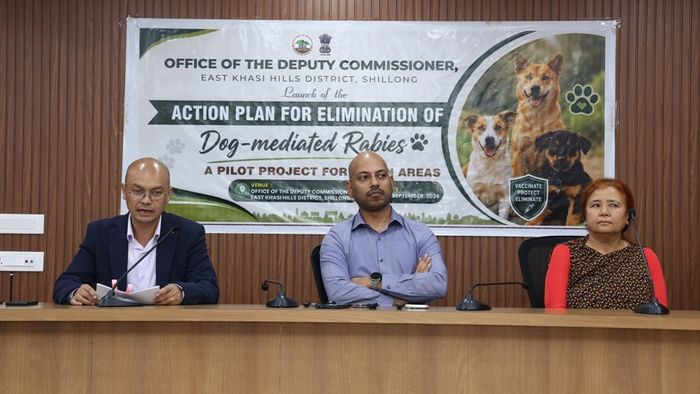
Shillong’s Laban area has been selected for a pilot programme aimed at eliminating dog-mediated rabies in East Khasi Hills by 2030, with the district administration launching an action plan on September 1.
The Action Plan for the Elimination of Dog-Mediated Rabies was launched at the office of the East Khasi Hills Deputy Commissioner as the administration moves to tackle dog-bite cases, rabies prevention and the growing stray-dog population.
The pilot will focus on enumerating, vaccinating and sterilising stray dogs, along with post-sterilisation care. It will also introduce measures aimed at improving pet ownership and regulating where stray dogs are fed.
East Khasi Hills Deputy Commissioner Abhilash Baranwal said the district records a high number of dog-bite cases each year, while acknowledging that some incidents may go unreported. He said concerns over stray dogs remain a recurring issue among residents.
The administration has held consultations with NGOs and Rangbah Shnong, with Baranwal identifying community leaders as a key part of the programme’s implementation.
The Laban pilot will initially cover vaccination of stray dogs. Once the vaccination phase is completed within the stipulated period, sterilisation will be taken up to help control the stray-dog population.
Additional Deputy Commissioner F.B. Basan called for coordinated action between the district administration, community leaders and residents. He urged Rangbah Shnong and other community representatives to support the programme and help implement it at the local level.
The administration plans to expand the programme to other parts of Shillong after the pilot and eventually extend it to rural areas of the district.
The action plan also places greater responsibility on pet owners. They will be required to register their dogs with their respective Rangbah Shnong and maintain valid vaccination records. The district administration will coordinate vaccination drives for pet dogs, while community leaders will help monitor and maintain vaccination records.
Community leaders and traditional institutions will also identify designated areas for feeding stray dogs. Feeding outside these locations will be prohibited under the proposed measures.
The administration has divided responsibilities among the district administration, Health Department, Police Department, other government agencies and community organisations as part of the plan.
The initiative comes with a dual focus: reducing the risk of rabies transmission and managing the stray-dog population through vaccination, sterilisation and community-level monitoring.