Two new microscopic snail species discovered in Meghalaya's limestone caves
Scientists have discovered two new species of microscopic and brightly coloured snails in Meghalaya's limestone cave systems, highlighting the rich but largely unexplored biodiversity hidden beneath the state's surface.
- Jun 24, 2026,
- Updated Jun 24, 2026, 5:06 PM IST
Scientists have discovered two new species of microscopic and brightly coloured snails in Meghalaya's limestone cave systems, highlighting the rich but largely unexplored biodiversity hidden beneath the state's surface.
The discovery, recently published in the European Journal of Taxonomy, was made by researchers Nipu Kumar Das and Neelavar Ananthram Aravind of the Ashoka Trust for Research in Ecology and the Environment (ATREE).
The newly identified species have been named Georissa meghalayaensis and Acmella bensoni. They were discovered in the Krem Puri and Arwah cave systems, respectively, and are among the smallest molluscs found in the region, requiring microscopic examination for proper identification.
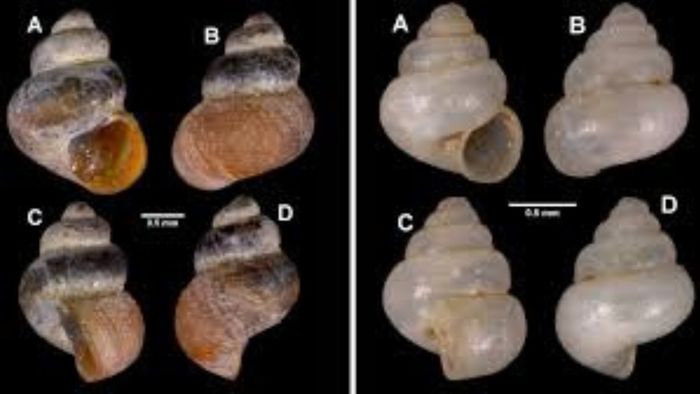
Georissa meghalayaensis was found near the entrance of Krem Puri cave and is distinguished by its striking orangish-red shell and intricate mesh-like ridges. The species differs from its close relatives, which generally possess yellowish shells with widely spaced spiral markings. Researchers named the species after Meghalaya, where it is currently known to exist exclusively.
The second species, Acmella bensoni, was discovered deeper inside the Krem Puri and Arwah cave networks. It is characterised by a tiny, slightly translucent whitish shell featuring deeply impressed grooves and densely packed fine ribs that give it a nearly smooth appearance. The species was named in honour of William H. Benson, a renowned naturalist considered a pioneer in the study of molluscs in India.
Researchers noted that Meghalaya, part of the globally significant Indo-Burma biodiversity hotspot, is home to more than 1,200 limestone caves. These caves provide ideal habitats for shell-bearing organisms and other specialised cave-dwelling species. However, much of the region's underground biodiversity remains poorly documented.
Apart from the two new species, the study also recorded several other micro-snails from neighbouring states, including Manipur and Mizoram, contributing to a broader understanding of the distribution of these little-known organisms across Northeast India.
The researchers have, however, expressed concern over growing threats to cave ecosystems. They warned that increasing tourist activity, including heavy footfall, installation of artificial lighting and construction of infrastructure such as stairways, could disrupt the fragile underground habitats.
They also highlighted limestone mining and habitat modification as major threats to these specialised species, stressing the need for stronger conservation measures to safeguard Meghalaya's unique subterranean biodiversity.