Mizoram charts ambitious long-term strategy as 2047 roadmap projects major economic transformation
Mizoram’s push for a long-term development blueprint took centre stage on December 10 as senior officials convened for a high-level workshop aimed at shaping the State’s trajectory up to 2047.
- Dec 10, 2025,
- Updated Dec 10, 2025, 5:16 PM IST
Mizoram’s push for a long-term development blueprint took centre stage on December 10 as senior officials convened for a high-level workshop aimed at shaping the State’s trajectory up to 2047.
Held at the Mizoram Assembly House Conference Hall, the exercise brought together key departments to refine a unified strategy under the Centre’s Viksit Bharat @2047 framework. The session, coordinated by the State Institute for Transformation (SIT) Mizoram, focused sharply on how the State can overcome structural constraints to achieve sustained economic expansion over the next two decades.
A central highlight was the presentation of the Transformed Mizoram Vision 2047, which sets aggressive targets for economic growth. Projections outline a shift towards a services-driven and innovation-led economy, with Gross State Domestic Product expected to rise from Rs 35,578.84 crore in 2023–24 to around Rs 25 lakh crore by 2047. Officials estimate an average annual growth rate of 20.3 per cent, alongside a projected surge in per capita income to approximately Rs 16 lakh.
The Chief Minister underscored the need for deliberate long-term decisions tailored to a small hill state facing ecological vulnerability and limited resources. He stressed employment generation, connectivity, human capital development and climate resilience as priorities requiring coordinated policy action.
The Chief Secretary described the exercise as a step towards “strategic visioning rooted in data”, noting that SIT Mizoram would serve as the institutional mechanism to drive convergence and monitor outcomes across departments.
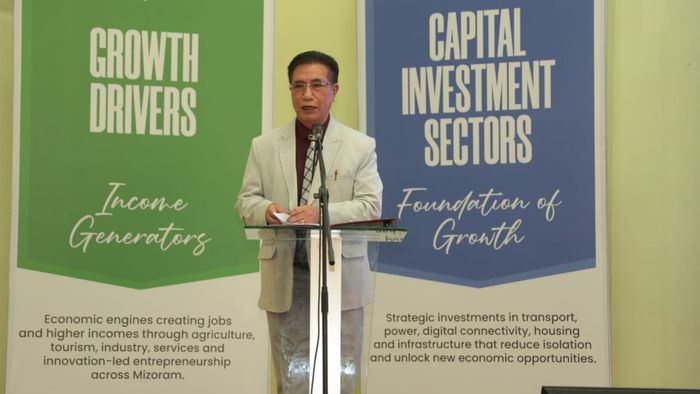
Throughout the day, departments outlined reform areas and flagship initiatives across four thematic pillars: growth drivers, capital investment sectors, social development enablers and transformation anchors. These discussions will feed into a draft Vision Document being prepared by SIT’s Programme Implementation, Monitoring and Evaluation Unit. Once finalised, the document is expected to guide annual planning, departmental strategies and performance assessments in the coming years.