Mizoram farmer to receive UN award for transforming strawberry farming into livelihood
Former teacher Z T Lalrithangi will receive an FAO honour in Rome for building a profitable strawberry farm in Mizoram. Her journey from self-taught cultivation to global recognition reflects rural enterprise, family support and persistence.
- Sep 24, 2026,
- Updated Sep 24, 2026, 1:08 PM IST
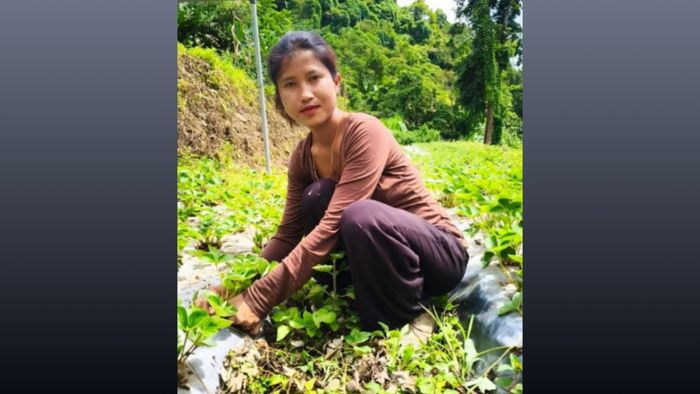
A 35-year-old former schoolteacher from Mizoram's Lawngtlai district is set to receive a United Nations award in Rome for her work in agriculture and rural development after turning strawberry cultivation into a profitable livelihood.
Z T Lalrithangi, popularly known as Pi Mari-i, from Sangau in south Mizoram, has been named among the FAO 100 Women Heroes in Agrifood Systems and Rural Development by the Food and Agriculture Organization (FAO) of the UN. The recognition is part of the International Year of Women Farmers 2026.
Lalrithangi is among 100 women selected from more than 600 nominees across 131 countries. She is also one of two women from India to receive the recognition.
She was informed about her selection by the FAO through an email on September 21 and has been invited to receive the award at the World Food Forum at the FAO headquarters in Rome, scheduled from October 12 to 16. The Mizoram Horticulture Department had earlier informed her about the selection.
Lalrithangi began cultivating strawberries in 2024 after learning about farmers who had successfully taken up the crop in neighbouring Siaha district.
She started with around 1,000 saplings on a farm about 5 km from Sangau. After earning around Rs 1.5 lakh in her first year, she expanded the operation. She now grows more than 10,000 strawberry plants across two hectares, along with avocado, banana and other fruits and vegetables.
"We started and experimented with the plantation in 2024 in a small area after learning about successful strawberry cultivation by some farmers in Siaha district. After earning about Rs 1.5 lakh in the initial year, we thought it was worth continuing and expanded the cultivation," Lalrithangi told PTI.
Her strawberry earnings crossed Rs 10 lakh in 2025. She also processes part of the harvest into strawberry wine, which is sold in local markets.
Her work had already earned state-level recognition. Lalrithangi was adjudged the best farmer from Lawngtlai district at the Mizoram Horti Fair 2026.
Before taking up farming, Lalrithangi worked as a private-school teacher. She holds a postgraduate degree in Sociology from IGNOU and had appeared for several competitive examinations while seeking a government job.
"Initially, after my graduation and completion of my master's degree, I gave several competitive examinations for jobs but failed. Then I thought a government job should not be my only focus to earn a living, as there are other ways to have a good income if a person really works hard," she said.
She said the desire to become financially independent also influenced her decision to take up farming.
"Although my husband can support our family, I asked myself what the purpose of my education was unless I became self-dependent. All these thoughts motivated me to switch to farming," she said.
Her entry into strawberry cultivation was not initially backed by government support. Lalrithangi approached the authorities for assistance but was told that strawberries were not covered under the department's project at the time. She decided to proceed independently, although government assistance was later extended to her in different forms.
Without formal training in strawberry cultivation, she learnt through online farming tutorials and by observing other growers. Managing the farm alongside raising three children also meant studying cultivation techniques whenever she found time.
"I used to read and study from the internet, particularly farming technique tutorials available on YouTube. As a mother to three children, I have little time. So, I studied until late at night and sometimes while breastfeeding," she said.
Her husband, who works at a state-run primary school, and her parents-in-law have supported her farming activities. Lalrithangi and her husband also spend weekends at the farm, apart from hiring labourers when required.
"It is the collective support of my family that brings the farming to fruition and then the global recognition," she said.
Lalrithangi said she was happy to receive the international recognition and credited her family, the state Horticulture Department and what she described as God's guidance for her achievement.
She is currently completing the mandatory travel documentation ahead of her trip to Rome.