Mizoram's Natural History Museum becomes India's 21st biodiversity repository
The Union environment ministry has designated Mizoram's Natural History Museum a repository under the Biological Diversity Act. The move expands India's specimen conservation network and strengthens biodiversity documentation in the Northeast.
- Jul 07, 2026,
- Updated Jul 07, 2026, 9:51 PM IST
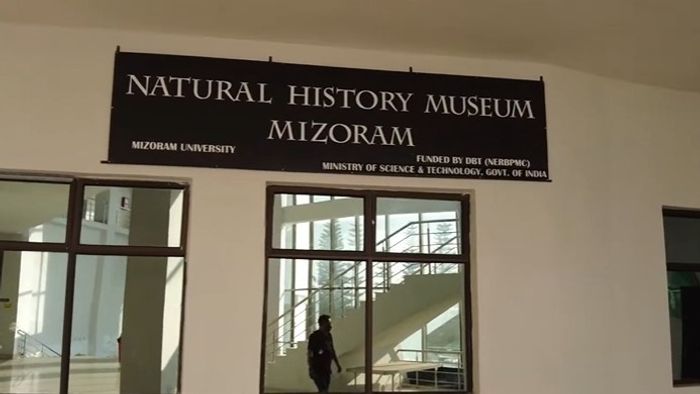
The Union Ministry of Environment, Forest and Climate Change has designated the Natural History Museum (NHM) in Mizoram as a Designated Repository under the Biological Diversity Act, 2002, making it the 21st such repository in the country, officials said on July 7.
The notification was issued by the central government on June 19, 2026, following a recommendation from the National Biodiversity Authority.
"Based on the recommendation of the National Biodiversity Authority and after due examination of the proposal, the central government notified the institution as a Designated Repository on June 19, 2026," a senior ministry official said.
The official added that the recognition makes NHM "India's 21st Designated Repository", further strengthening the country's biodiversity conservation efforts and scientific infrastructure.
Designated repositories form a key part of India's biodiversity governance framework by preserving authenticated biological specimens collected under the Biological Diversity Act. These collections provide verified reference material for scientific research, species identification and long-term conservation.
According to the ministry, the museum will preserve voucher specimens of selected plant groups, including pteridophytes and macrofungi, along with animal specimens such as reptiles, amphibians, fishes, moths, beetles and butterflies. It will also serve as the designated depository for type specimens of newly discovered species from the region.
Officials said these authenticated collections will improve species identification and traceability, strengthen scientific research and help safeguard India's biological resources. They added that the collections could also support ecological restoration in cases of habitat loss, natural disasters, or species decline.
Established in 2022 under Mizoram University, the museum is located within the Indo-Burma Biodiversity Hotspot, one of the world's richest biodiversity regions. The Northeast is home to more than 7,500 species of flowering plants and over 2,000 faunal species.
The ministry said the museum's expertise in pteridophytes, macrofungi, moths, beetles and other lesser-studied groups fills an important gap in India's existing network of designated repositories while strengthening scientific documentation of the region's biodiversity.
"The repository will also support the documentation and conservation of endemic species unique to the region," the official said, citing the recently described amphibian Leptobrachella tamdil, discovered in the forests of Mizoram, as an example of the Northeast's significance as a centre of biodiversity and species discovery.
Officials said the designation complements repositories maintained by institutions such as the Botanical Survey of India and the Zoological Survey of India. It also supports National Biodiversity Target 4 under India's National Biodiversity Strategy and Action Plan (2024–2030) by strengthening ex situ conservation and the protection of genetic diversity, in line with the Kunming–Montreal Global Biodiversity Framework.