Why has the fear of ‘666’ kept 67 Mizoram residents away from the SIR process?
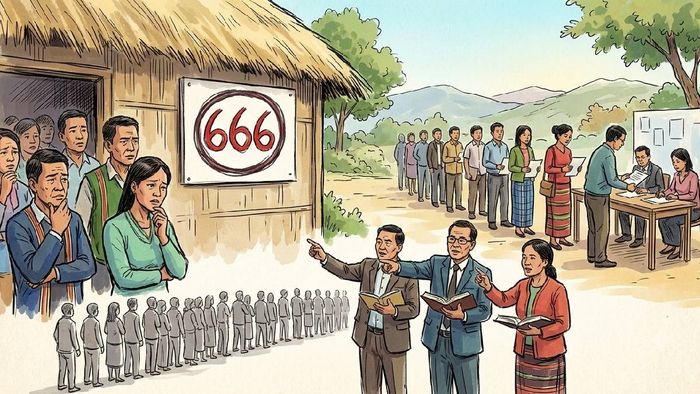
In Mizoram’s border town of Champhai, a small religious community has chosen to remain outside the state’s formal systems of identification, with its members saying that official documents could conflict with a deeply held religious belief surrounding the number ‘666’, described in the Bible’s Book of Revelation as the “Number of the Beast”.
- Sep 05, 2026,
- Updated Sep 05, 2026, 12:59 PM IST
In Mizoram’s border town of Champhai, a small religious community has chosen to remain outside the state’s formal systems of identification, with its members saying that official documents could conflict with a deeply held religious belief surrounding the number ‘666’, described in the Bible’s Book of Revelation as the “Number of the Beast”.
The belief has kept 67 members of the “Delete Church” away from the electoral roll and, in some cases, from schools, welfare schemes and other institutions that require formal identification.
Members of the community told Mizoram Chief Electoral Officer (CEO) Garima Gupta that they had deliberately stayed away from the ongoing Special Intensive Revision (SIR) of electoral rolls. Their position was unequivocal: they did not want their names added to the electoral roll because voter registration and the associated documentation were incompatible with their religious beliefs.
Gupta travelled to Zotland, a neighbourhood in Champhai town near the Myanmar border, to meet the community and understand its concerns. The visit came after a day of meetings with election officials, civil society representatives and political parties in the district.
The interaction was cordial, but the community maintained its decision not to register as voters.
The concern centres on the number 666, which appears in Revelation 13:18 and has acquired significance in Christian theological and popular traditions as the “Number of the Beast”. The specific fear of the number is known as hexakosioihexekontahexaphobia.
For the members of the Delete Church, however, the issue extends beyond the number itself. Their apprehension about encountering or carrying the number through official identification systems has resulted in some members declining documents and services that are otherwise part of everyday civic life.
Members of the denomination have reportedly avoided Aadhaar cards, bank accounts, driving licences and ration cards. Some have also declined formal school enrolment for their children.
Of the 67 members of the community, an estimated 30 to 40 are believed to be eligible for voter registration, while more than 20 are minors. Their absence from the electoral system therefore reflects a religious choice rather than a lack of awareness about the ongoing revision exercise.
The Delete Church is among several small denominations in Mizoram whose followers have rejected formal identification on religious grounds. Their position presents an unusual challenge for an electoral system designed to ensure that every eligible citizen is included in the voter list while also operating within the constitutional framework protecting freedom of religion.
Gupta was accompanied during the visit by Joint CEO Ethel Rothanpuii, Champhai District Election Officer Ngulzathuama and Lalchhuanawma Ralte, Assistant Electoral Registration Officer for the Champhai South Assembly constituency.
The meeting took place as Mizoram’s SIR exercise, which began on May 20, entered its final phase. The final electoral roll was scheduled to be published on Monday, September 7.