Dimapur–Kohima rail link gains momentum as NFR targets historic connectivity by 2029
The Northeast Frontier Railway is steadily advancing work on the strategically significant Dimapur (Dhansiri)–Kohima (Zubza) New Railway Line Project, a landmark initiative set to connect Nagaland’s capital city to the national railway network for the first time.
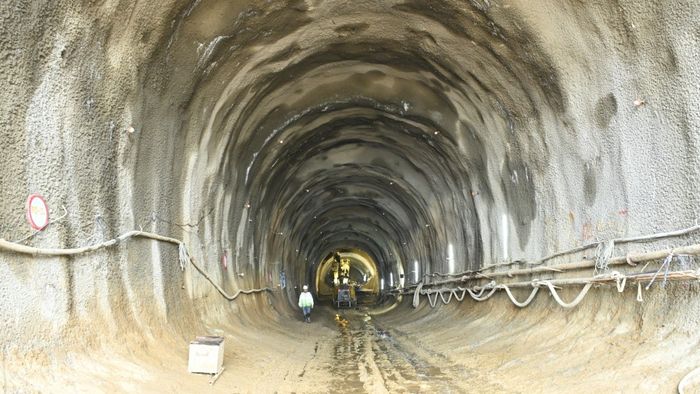
- Jan 23, 2026,
- Updated Jan 23, 2026, 6:24 PM IST
The Northeast Frontier Railway is steadily advancing work on the strategically significant Dimapur (Dhansiri)–Kohima (Zubza) New Railway Line Project, a landmark initiative set to connect Nagaland’s capital city to the national railway network for the first time.
The project is seen as a major boost to rail connectivity and infrastructure development across the North-Eastern region.
Spanning a total length of 78.42 kilometres, the railway line passes through Karbi Anglong district of Assam and the Chumukedima and Kohima districts of Nagaland. The project comprises eight stations—Dhansiri, Dhansiripar, Shokhuvi, Molvom, Pherima, Piphema, Menguzuma and Zubza. Of these, Dhansiri, Shokhuvi and Molvom stations have already been completed. The alignment involves challenging engineering work, including 20 tunnels stretching a combined length of 31,169 metres, 27 major bridges and 149 minor bridges, with significant portions of these structures already in place.
The project has been commissioned in phases, with the Dhansiri–Shokhuvi section of 16.5 kilometres becoming operational in October 2021, followed by the commissioning of the 14.64-kilometre Shokhuvi–Molvom section in March 2025. Currently, regular train services are operating from Shokhuvi, connecting it with Guwahati in Assam and Naharlagun in Arunachal Pradesh, offering passengers safer and more reliable travel options. The commissioning of Molvom station has made it the third major railway station in Nagaland, and freight operations at the station commenced in September 2025.
Once fully completed, the Dimapur–Kohima rail link is expected to significantly enhance access to education, healthcare, employment opportunities and markets, while reducing dependence on road transport by providing a comfortable, affordable and time-efficient mode of travel. Work on the remaining sections is ongoing, and the Northeast Frontier Railway has set a target to complete the entire project by 2029, marking a historic milestone in connectivity and overall development for Nagaland and the wider North-Eastern region.