From heritage to growth engine: How Nagaland’s cultural economy is powering sustainable development
Despite infrastructural and market constraints, the state’s high literacy, youthful creative energy, and rich cultural capital position it as a potential model for a production-led, self-reliant economy where tradition and modern enterprise move in tandem
- Jan 20, 2026,
- Updated Jan 20, 2026, 11:16 AM IST
In an era where culture is increasingly being recognised as capital, Nagaland offers a compelling blueprint for sustainable growth rooted in identity, creativity, and community livelihoods. Tucked away in India’s eastern frontier, the hill state’s indigenous knowledge systems, traditional farming practices, handloom and handicraft heritage, and fast-evolving creative industries are quietly shaping a cultural economy with national relevance. From jhum cultivation and organic agriculture to globally admired textiles and the internationally known Hornbill Festival, Nagaland’s economy is not merely about production, it is about preserving heritage while generating dignified livelihoods.
Despite infrastructural and market constraints, the state’s high literacy, youthful creative energy, and rich cultural capital position it as a potential model for a production-led, self-reliant economy where tradition and modern enterprise move in tandem.
Agriculture remains the primary occupation for nearly 84% of Nagaland’s population. Rice is the main food grain cultivated in the state, while forests cover approximately 17.56 per cent of its total area. Nagaland is also endowed with minerals such as clay, coal, limestone, glass sand, and other forest-based resources.
Traditional farming systems, including jhum cultivationpractised over 84,800 hectares during 1999–2000along with organic farming, fermented foods, herbal medicine, and forest-based livelihoods, form a vital component of the cultural economy. Handloom and sericulture are important cottage industries linked closely to agricultural life.
These indigenous practices are environmentally sustainable and align well with growing global demand for organic, ethical, and traceable products. Agriculture and forestry together contribute a significant share of Nagaland’s Gross Domestic Product, reinforcing the importance of strengthening agro-cultural value chains.
Handloom and handicrafts form as the backbone of Nagaland’s cultural economy. The state is home to over 1.6 lakh weavers and artisans who produce traditional shawls, textiles, bamboo and cane products, wood carvings, pottery, and beadwork. Each Naga tribe has its own distinct motifs, colours, and techniques, giving these products a strong cultural identity and market value.
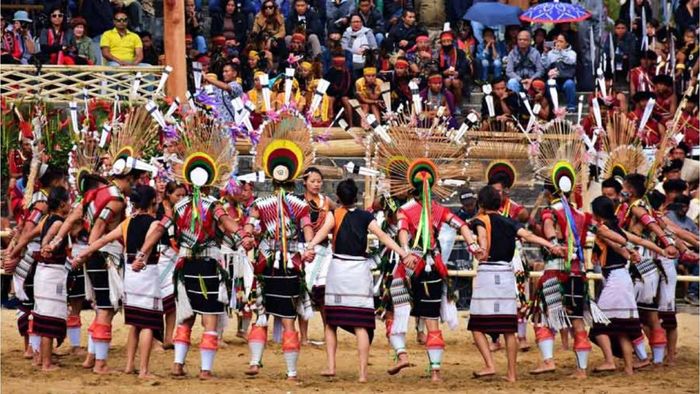
The Hornbill Festival, the state’s flagship cultural event, showcases traditional music, dance, cuisine, crafts, and indigenous sports, drawing thousands of visitors from across India and abroad. During the festival period, tourism and hospitality experience a major boost, increasing demand for hotels, homestays, transport services, food outlets, and local guides.
Rural communities around Kohima benefit through village tourism initiatives, cultural tours, and homestay programmes, ensuring that economic gains extend beyond urban centres. The festival has also become an important platform for contemporary creative expressions. Music concerts, rock competitions, fashion shows, and film screenings highlight the vibrant youth culture of Nagaland.
Despite limited infrastructure, Naga musicians, filmmakers, designers, and digital creators are steadily gaining recognition. These creative activities generate employment in music production, event management, media, and digital content creation, positioning Nagaland as an emerging creative environment in the Northeast.
Beyond immediate economic benefits, the Hornbill Festival plays a crucial role in branding Nagaland. Extensive media coverage and social media visibility project the state’s unique cultural identity to national and global audiences, strengthening long-term demand for Naga products, cultural tourism, and creative investments.
Cultural tourism offers vast but underdeveloped opportunities in Nagaland. Homestays, village walks, craft workshops, food trails, and oral storytelling traditions can provide sustainable income for rural communities while preserving cultural heritage. However, inadequate connectivity, limited professional training, and lack of coordinated promotion continue to constrain the sector’s growth.Targeted investments in infrastructure, hospitality skills, and destination branding could unlock Nagaland’s tourism potential and integrate it more effectively into the cultural economy.
Despite its strengths, Nagaland’s cultural economy faces several challenges. These include heavy dependence on imports and government spending, limited market access and logistics, inadequate documentation and protection of cultural intellectual property, and youthmigration driven by the lack of viable creative livelihood opportunities.
Strengthening Nagaland’s cultural economy requires focused investment in skill development, design and innovation, digital marketing, cultural entrepreneurship, and supportive policies. Linking cultural production with the Act East Policy, expanding access to e-commerce platforms, and encouraging international cultural exchanges can help transform Nagaland from a consumption-driven economy to a production-led, identity-based economy.
Nagaland remains largely consumption-driven, with heavy dependence on imports however Nagaland’s cultural economy is about creating dignified livelihoods, empowering youth, and building a self-reliant economy rooted in cultural pride and sustainable developmentmaking it a production-led cultural economy important