Mahila Jan Sunwai highlights need for stronger support systems for women in Nagaland
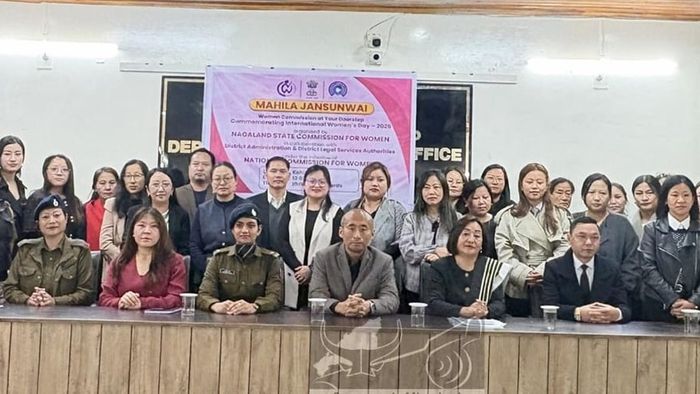
Mahila Jan Sunwai interaction session held in Nagaland's Kohima. Associations, churches and local organisations play an important role in supporting women and creating safe spaces where they can openly share their concerns, speakers highlighted.
- Mar 13, 2026,
- Updated Mar 13, 2026, 11:37 PM IST
Associations, churches and local organisations play an important role in supporting women and creating safe spaces where they can openly share their concerns, speakers highlighted during the Mahila Jan Sunwai interaction session held in Nagaland's Kohima.
Speaking at the programme, Vikuobinuo Nisa from the Women Police Station Kohima elaborated on the types of cases handled by women police stations and the procedures followed while dealing with complaints from women in distress.
She said that police personnel respond to such cases with sensitivity and confidentiality, ensuring a safe and supportive environment for victims. According to her, the police promptly register complaints, provide medical assistance when required, and coordinate with counsellors, NGOs and legal aid authorities to assist survivors. She also highlighted the importance of public cooperation in preserving crime scenes and assisting victims.
The Jan Sunwai interaction session was chaired by Kekhrienuo Meyase, who said the initiative serves as a platform for women to voice their grievances and directly interact with concerned authorities.
She noted that the Mahila Jan Sunwai initiative is being conducted across states to strengthen grievance redressal mechanisms for women and improve institutional responses to their concerns.
Meyase emphasised that addressing issues faced by women requires collective efforts from multiple agencies, including the police, legal services authorities, women’s commissions, civil society organisations and community institutions. She also stressed the importance of raising awareness about legal provisions, government schemes and institutional support systems available for women.
Highlighting a major challenge in the state, Meyase pointed out the lack of adequate forensic laboratory facilities in Nagaland. She explained that in many cases involving crimes against women, samples and evidence collected during investigations have to be sent outside the state for forensic examination.
This, she said, often leads to delays in receiving forensic reports, slowing down investigations and prosecution. There is also the risk of evidence being compromised during transit. She stressed that establishing a well-equipped forensic laboratory within the state would significantly strengthen investigations and ensure timely justice for victims.
Meyase urged the government and concerned authorities to strengthen forensic infrastructure and investigative support systems to expedite legal processes in cases involving crimes against women.
She also expressed concern over the growing cases of cyber harassment and online abuse, particularly affecting women and young people on digital platforms. According to her, there is a pressing need to enhance awareness, safety mechanisms and legal enforcement to effectively address emerging forms of cybercrime.