Nagaland Assembly budget session to commence from March 2
The budget session of the Legislative Assembly of Nagaland will begin on March 2 and will be conducted in two phases, officials said on February 25.
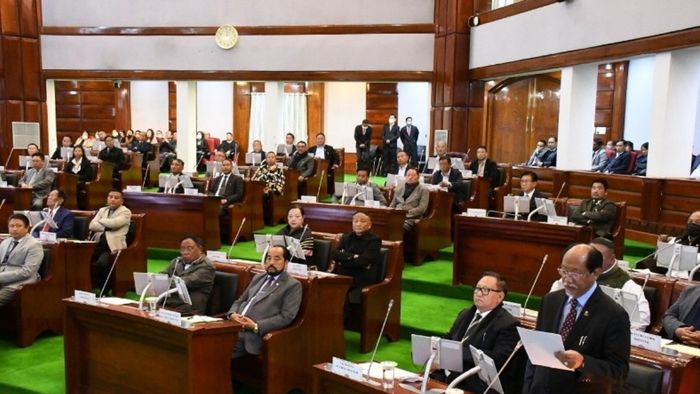
- Feb 25, 2026,
- Updated Feb 25, 2026, 9:09 PM IST
The budget session of the Legislative Assembly of Nagaland will begin on March 2 and will be conducted in two phases, officials said on February 25.
According to the provisional programme issued by the Assembly Secretariat, the session will open with the Governor’s address. The first phase is scheduled to continue till March 12, comprising five sittings. The dates for the second phase will be announced later.
The second phase is tentatively set to begin with the presentation of the state budget for 2026–27. Chief Minister Neiphiu Rio will present the budget during this phase, followed by a general discussion on the financial proposals.
During the initial phase, the House will take up starred and unstarred questions, discussions on matters of public importance, tabling of annual administrative reports and other official documents, and presentation of committee reports. Government and private members’ Bills and resolutions are also slated to be introduced, along with a debate on the Motion of Thanks to the Governor’s address.
The second phase will include the presentation of reports by the Comptroller and Auditor General (CAG), review of trends in receipts and expenditure, and supplementary demands for grants for the financial year 2025–26, among other legislative business.
Key discussions are also expected on the implementation of the agreement signed by Kohima and Dimapur to partially lift the Nagaland Liquor Total Prohibition Act, 1989, from their respective jurisdictions.
This will be the first Assembly session following the signing of the tripartite agreement on the Frontier Nagaland Territorial Authority (FNTA) among the Centre, the state government and the Eastern Nagaland People’s Organisation (ENPO). It will also mark the first budget session after the merger of the Nationalist Democratic Progressive Party (NDPP) and the Nationalist Congress Party (NCP) MLAs into the NDPP-led coalition government.